TL;DR
Tesla's authentication architecture is fundamentally different from BMW, Mercedes, or JLR — there's no traditional immobilizer module, no NASTF protocol, and no dealer-level diagnostic platform requirement. Authentication happens between the vehicle and the Tesla mobile app, with key cards as a backup credential. Per the Tesla Support knowledge base, key card pairing is owner-mediated through the Tesla app — no third party is technically required. But: physical key card hardware is Tesla-only, and the "pair via app" step trips up enough owners that mobile locksmiths still see regular Tesla calls.
Tesla's three credentials and how they interact
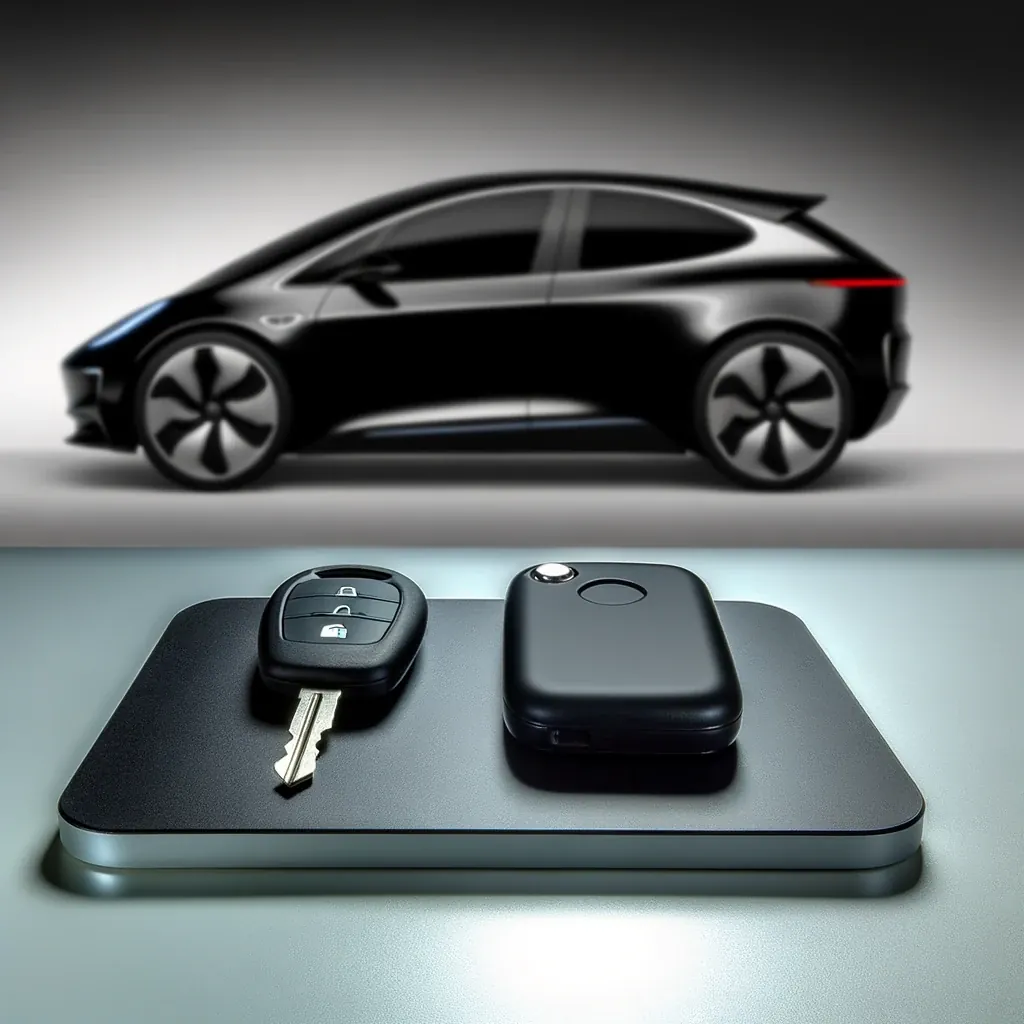
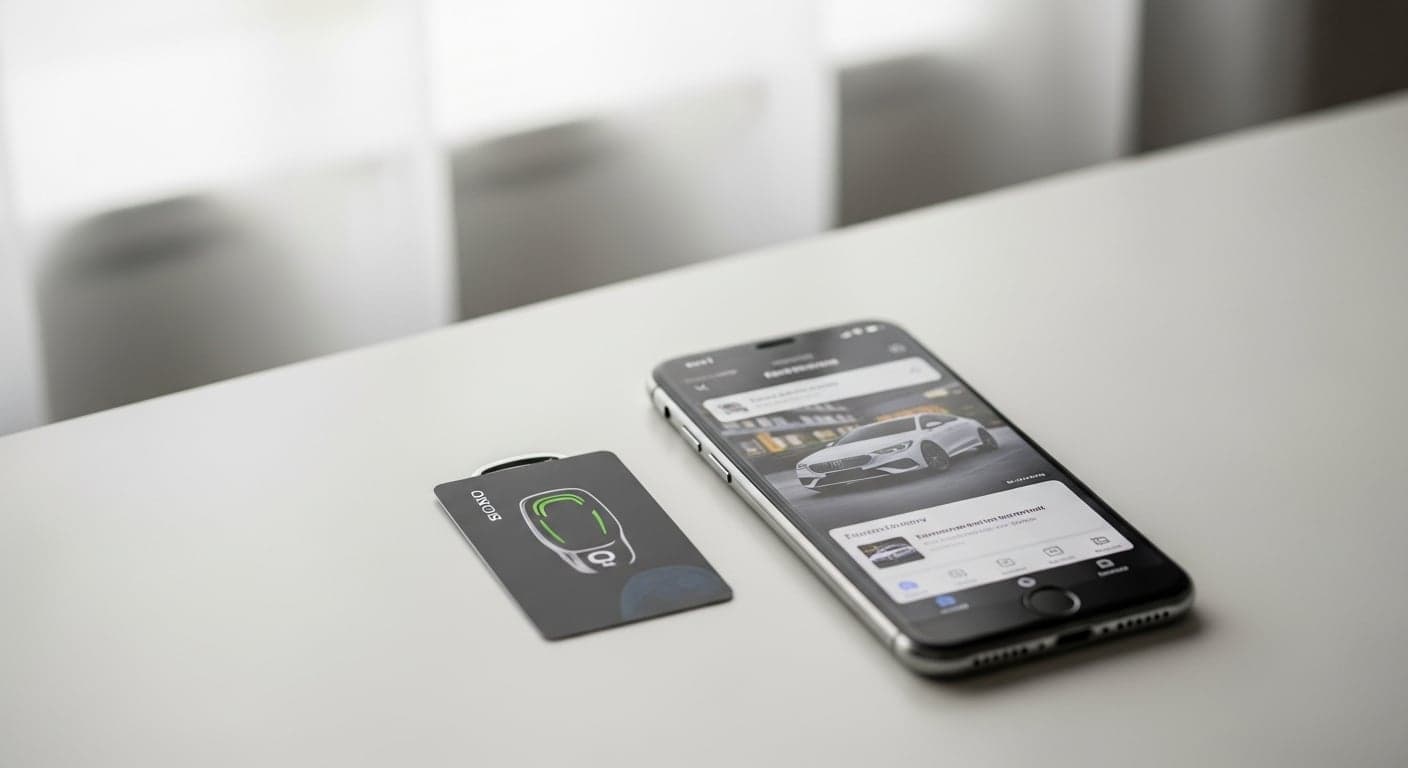
Every Tesla owner has access to three credentials, and the system requires understanding how they relate:
- Tesla mobile app (phone key). The primary day-to-day credential. Uses Bluetooth LE for proximity detection. Unlock, start, lock — all phone-app mediated.
- Key cards (RFID). Backup credential, primarily for valet, family member access, or when your phone is dead. Two cards ship with new Teslas; additional cards purchasable from Tesla.
- Key fob (optional, Model 3/Y only). Traditional-feel proximity fob. Sold separately by Tesla. Pairs via the app like a key card.
Per the Tesla Model 3 owner's manual, you must have at least one credential paired and working to drive the vehicle. If you lose all three, you need Tesla Service to restore access — a third-party locksmith cannot do this.
When you actually need a third-party locksmith for a Tesla
Most Tesla credential issues are resolvable in the Tesla app. The scenarios where a mobile locksmith adds value:
- Locked out with dead phone and lost key card. Mobile locksmith can perform non-destructive vehicle entry so you can reach the in-cabin USB port to charge your phone or pair a new device.
- Key card pairing keeps failing. The Tesla app pairing flow is occasionally finicky. A locksmith experienced with Tesla can walk you through the touchscreen steps + verify the card RFID is reading.
- Replacement key card or key fob hardware. Tesla sells the hardware; the locksmith bills for the pairing time and on-site walkthrough (10-25 minutes typically).
Tesla in Frisco: why it's a high-density market
Frisco is one of the highest Tesla-density metro areas in Texas. Per U.S. Census QuickFacts, Frisco's median household income (~$139,000), education level, and tech-industry employment all correlate with higher EV adoption rates. Model 3 and Model Y are the dominant Tesla configurations; Model S and Model X are well-represented in the upper-income brackets. Tesla service appointments at the nearest service center (Plano) frequently run 5-10 business days for non-emergency credential work — which is why mobile-locksmith assist has a niche.
Frisco 2026 Tesla pricing
| Service | Tesla Service Center | Mobile Locksmith |
|---|---|---|
| Key card pairing (hardware separate) | Free with appointment | $80 - $140 |
| Key card hardware | $35 / pair | Not stocked |
| Key fob (Model 3/Y) pairing | Free with appointment | $90 - $160 |
| Lockout (no credentials) | Roadside / tow | $120 - $180 |
The mobile-locksmith differential is timeline, not cost: when Tesla's nearest service center has a 5-10 business day appointment lag, paying $90-$160 for same-day on-site assistance is the rational trade.
A real-world example
Operator: Tesla Model Y owner, Frisco TX, anonymized. Phone broken and replaced with new device on Friday evening; family driving the car needed access for the weekend.
Path attempted: Tesla Service Center: earliest appointment 7 business days out. Tesla mobile service: 4 business days.
Resolution: Mobile locksmith arrived 90 minutes after the call. Walked through the in-vehicle process to pair the new phone using the existing key card as authentication credential. 40 minutes on-site total. $120 service call.
What experts say
“Tesla calls are short and easy money compared to BMW or Mercedes — there's no immobilizer fight, no NASTF protocol, no module to brick. The work is genuinely customer service: walk them through the steps Tesla's app documents but customers don't want to figure out solo. Every Tesla call we do, the customer saves a week of waiting for Tesla service.”
Frequently asked questions
Q: Can a third-party locksmith make a duplicate Tesla key card?
A: No. Tesla key cards are proprietary RFID hardware; the chip is provisioned at Tesla's factory. You can buy additional cards from Tesla's online store ($35/pair) and have any technician walk you through pairing.
Q: My Tesla won't start with my phone — is it the phone or the car?
A: Most often the phone. Check: Bluetooth on, Tesla app logged in, phone-key permission enabled in app. If those are correct and start still fails, try the key card as backup. If the car responds to the key card, the issue is phone-side (likely app cache or Bluetooth driver).
Q: Should I get a Tesla key fob instead of relying on phone + key card?
A: Personal preference. The fob is $175 from Tesla, ships unpaired, and offers the traditional "key feel". Phone + card covers all functional use; the fob is convenience-only.
Q: Can a locksmith help me reset Tesla PIN-to-Drive if I forgot it?
A: PIN-to-Drive reset requires Tesla Service authentication — only Tesla can reset it. A locksmith can't bypass this.
Q: Is Tesla key card more secure than a traditional key fob?
A: Different security model. Key cards are RFID-only with no rolling code, so they're technically more susceptible to relay attacks than a rolling-code fob. Tesla's defense is the PIN-to-Drive layer, which a key card alone cannot bypass.
Next steps
For Tesla credential assistance or after-hours lockout, see our contact page. For 24/7 emergency dispatch, see our lockout service. We cover Frisco and all surrounding Collin and Denton county areas.