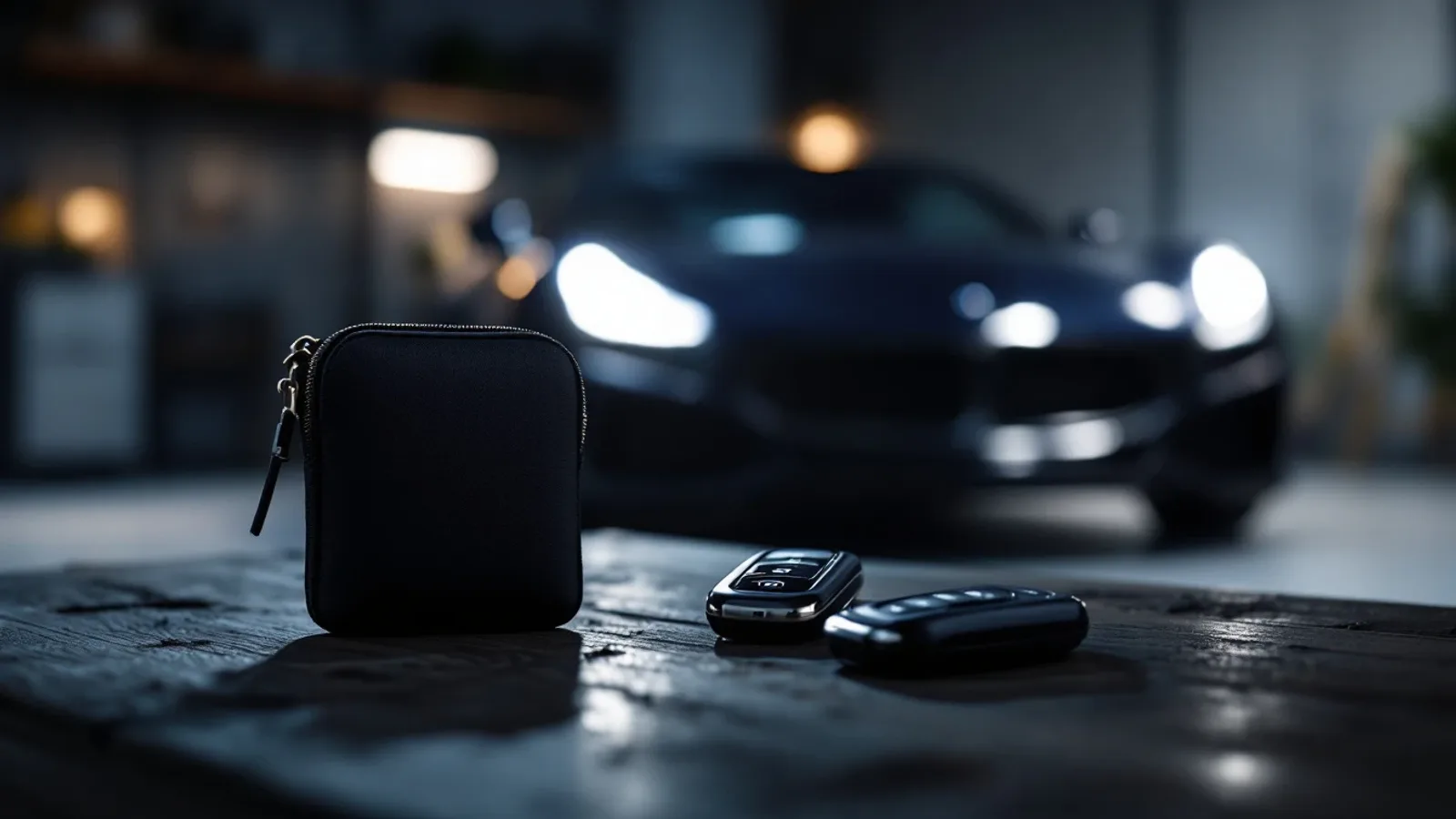
CAN Injection & Keyless Theft Protection in Frisco, TX
As of 2026, CAN injection and relay theft target new luxury cars and EVs in Frisco, TX. How the attacks work, protection that helps, and honest limits.
The Theft That Doesn't Need Your Key: CAN Injection and Keyless Attacks in Frisco
For years, the keyless-theft story was simple and, frankly, a little reassuring: thieves used a relay attack to extend the range of your fob's signal from inside your house to a car in the driveway, tricking the car into thinking the key was near. Park the fob far from the door, put it in a metal tin, and you were largely covered. That advice is still worth following. But as of July 2026, a newer and more troubling technique has been targeting the most modern luxury cars and EVs — one that does not need your fob's signal at all. It is called CAN injection, and understanding it is the difference between real protection and a false sense of security.
This is a security deep-dive, written by a mobile automotive locksmith who works on exactly the kinds of vehicles these attacks target across Frisco and Collin County. It explains how CAN injection differs from ordinary relay theft, why it specifically threatens newer cars, the protective measures that genuinely help versus the ones that are theater, and — importantly — the honest limits of what any of us can promise. Nobody can make a car unstealable. But you can make yours a far harder, slower, less attractive target, and that is what actually keeps it in your garage.
Frisco Car Key is fully mobile and helps owners across Collin and Denton County harden their vehicles' physical security. For a straight conversation about your specific car, call or text (469) 402-9781 or email contact@friscocarkeys.com.
First, the vocabulary — these are two different attacks
People lump all keyless theft together, but relay and CAN injection are genuinely different, and the defenses differ too.
- Relay (signal-extension) attack: Two thieves work together. One stands near your house with a device that captures and relays your key fob's signal; the other stands by the car with a device that rebroadcasts it, fooling the car into unlocking and starting as if the key were present. The defense is about the fob's signal — block or distance it and the attack fails. We covered the classic version in depth in relay theft and keyless security for luxury cars.
- CAN injection attack: The thief bypasses the key entirely. They gain physical access to a wiring point on the car's internal network — the Controller Area Network, or CAN bus, that lets the car's computers talk to each other — often reached through a headlight housing, a wheel-arch connector, or another accessible harness. Then they inject spoofed messages that impersonate the key's "valid key present" authorization, telling the car to unlock and start. The fob never enters the equation. Keeping your key in a tin does nothing against this one.
That last point is why CAN injection unsettles people: the trusted advice — distance the fob, use a Faraday pouch — does not stop it, because the attack does not use your fob at all.
Why CAN injection targets the newest cars
There is an irony worth sitting with. CAN injection tends to threaten newer, more connected, more feature-rich vehicles precisely because they are more computerized. The more the car relies on networked electronic modules talking over the CAN bus to do everything from lighting to entry to ignition, the more surfaces exist where a spoofed message can be injected. Older cars with simpler wiring and a mechanical ignition are, oddly, less exposed to this particular technique.
This does not mean modern cars are less safe overall — the immobilizer technology in them has, by any measure, driven vehicle theft dramatically down over the decades, as documented by the National Highway Traffic Safety Administration and studied by the Insurance Institute for Highway Safety (nhtsa.gov; iihs.org). CAN injection is a sophisticated, targeted response to strong security, not evidence that the security is weak. But it does mean that if you drive a newer luxury car or EV in an affluent area like Frisco, you are in the demographic these attacks care about, and generic "keep your fob in a tin" advice is no longer the whole answer.
The protection that genuinely helps — layered, not magic
There is no single silver bullet. Real protection is layered: several measures that each add time, difficulty, and visibility, so that a thief working against the clock moves on to an easier target. Here is an honest rundown of what helps and how much.
| Protection | What it stops | Honest limit |
|---|---|---|
| Faraday pouch / signal-blocking box for the fob | Relay attacks (blocks fob signal) | Does nothing against CAN injection |
| Distancing the fob from doors/windows overnight | Relay attacks | Same — no effect on CAN injection |
| Mechanical steering-wheel lock | Both — visible physical deterrent | Can be defeated with time; deters, not prevents |
| OBD-II port lock / hidden OBD relocation | Some diagnostic-port attacks | Not every attack uses the OBD port |
| Aftermarket ignition/immobilizer kill switch | Both — car won't start without secret step | Professional install; model-dependent |
| GPS tracker (hidden, self-powered) | Neither prevents theft — aids recovery | Recovery, not prevention |
| Garage parking + locked garage | Both — removes physical access | Only when you're actually home to use it |
| CCTV / visible cameras / motion lighting | Both — deterrence | Deters casual thieves, not determined ones |
Read that table honestly. The Faraday pouch — the thing most articles lead with — is genuinely useful against relay attacks and completely useless against CAN injection, because CAN injection never touches your fob. That is not a reason to skip the pouch; relay attacks are still common and the pouch is cheap. It is a reason to not stop at the pouch and imagine you are covered.
The measures that punch above their weight
If we had to prioritize for a Frisco luxury-car or EV owner, this is the order that gives the most real-world protection per dollar and per minute of hassle:
- Park in a locked garage whenever the car is home. This is unglamorous and it is the single most effective thing on the list. CAN injection and relay attacks both require physical access to the vehicle. A car behind a closed, locked garage door is simply not available to a driveway thief. If you have a garage and park the luxury car in the driveway "because it's easier," you are trading away your best defense for a small convenience.
- A visible mechanical deterrent — a good steering-wheel lock. Thieves optimize for speed and low visibility. A bright, obvious steering lock signals "this one will take extra time," and time is the thing they cannot spare. It is old-fashioned, and it works precisely because it is physical and cannot be spoofed by any message on the CAN bus.
- A professionally installed hidden immobilizer or kill switch. A well-installed secret cutoff means that even a thief who spoofs "valid key present" cannot actually start and drive the car without knowing your hidden step. This is model-dependent and should be done by a qualified professional, but it directly counters the goal of a CAN injection attack.
- A self-powered GPS tracker for recovery. This does not prevent theft, and honesty demands saying so — but it dramatically improves the odds of getting the car back, and law-enforcement recovery is a real outcome. Treat it as insurance, not prevention.
- The relay-attack basics, still worth doing. Faraday pouch, fob away from exterior walls and windows at night. Cheap, easy, and effective against the still-common relay attack.
"Everybody wants the one gadget that makes their car theft-proof, and I have to tell them it doesn't exist. What exists is layers. The customers who never get hit are boring about it — car in the garage, wheel lock on, a hidden cutoff, tracker in case. None of it is exciting. All of it works better than any single thing you can buy." — an automotive locksmith, name withheld by request
The habits that matter as much as the hardware
Hardware gets the attention, but behavior closes most of the gap. None of these cost anything.
- Use the garage. Said twice on purpose — it is that important.
- Don't leave the car unlocked or the fob inside it, ever, even in your own driveway "for a minute."
- Vary nothing that helps a thief — but be alert to surveillance. Targeted thefts are sometimes scouted. If you notice someone lingering near parked luxury cars in your Frisco neighborhood, report it; community awareness is a real deterrent.
- Keep your key firmware and car software updated. Automakers push security improvements over the air and through service. Manufacturers have been actively hardening against CAN injection; staying current matters.
- Don't advertise. Social posts tagging your driveway, your travel dates, or your new exotic can turn a general risk into a specific target.
- Know your car's own security features. Some vehicles offer a PIN-to-drive or motion-alarm setting that adds a real barrier. Turn on what your car already includes.
Where a mobile locksmith fits — and where we're honest about limits
Let us be clear about our lane, because integrity here matters more than an easy sale.
Where Frisco Car Key genuinely helps:
- Assessing your vehicle's physical security and advising on realistic, layered hardening for your specific model.
- Immobilizer and kill-switch guidance and, where appropriate, installation of physical anti-theft measures suited to your car.
- Spare and replacement keys done to proper security standards — because good key hygiene (having the right number of keys, stored properly, with no loose copies floating around) is part of the security picture. That is standard smart key programming, car key replacement, and ignition repair work.
- Ownership-verified, above-board practice. We treat secure key data per the frameworks used across the trade, consistent with the National Automotive Service Task Force's Secure Data Release System (nastf.org), and we verify ownership before any key work — the same discipline that keeps a thief from having a "spare" made for your car.
Where we will not overpromise:
- No one can make a car unstealable. Any locksmith, shop, or product that guarantees "theft-proof" is misleading you. The Federal Trade Commission warns consumers to be wary of exactly these too-good security claims and to understand what a product actually does before paying (ftc.gov).
- The deepest software-level defenses against CAN injection are the automaker's job. Network segmentation, message authentication, and firmware hardening happen inside the car's engineering. Keep your car updated and lean on the manufacturer for recalls and security campaigns.
- We don't sell fear. The realistic goal is to make your car a harder, slower, less attractive target than the next one — not to promise an impossible absolute.
Professional standards and where to learn more
The ethics of this work are not optional. A reputable provider verifies you are the owner or an authorized driver before any key or access service, carries insurance, and can speak to its regulated status — a discipline reflected in the professional standards published by the Associated Locksmiths of America (aloa.org). For general vehicle-security and roadside consumer education, AAA offers accessible resources (aaa.com), and the anti-theft research and immobilizer data from NHTSA and IIHS are the authoritative backdrop for understanding why modern keys are secure in the first place (nhtsa.gov; iihs.org).
For any key or access work we perform, bring your government-issued photo ID and proof of ownership — registration, title, or a finance/lease agreement in your name. That verification is not friction; it is one more layer of the security you are trying to build.
A realistic security plan for a Frisco luxury or EV owner
Put it together and it is not complicated:
- Park in the locked garage whenever the car is home. Best single move, costs nothing.
- Add a visible mechanical deterrent — a quality steering-wheel lock.
- Consider a professionally installed hidden immobilizer/kill switch for your model.
- Fit a self-powered GPS tracker for recovery odds.
- Do the relay basics — Faraday pouch, fob away from walls at night.
- Keep software and firmware updated, and enable any built-in PIN-to-drive or motion alarm.
- Practice the free habits — lock it, don't leave the fob inside, stay alert, don't advertise.
No single item is magic. Together, they turn your car from an easy grab into a slow, risky, unattractive one — which is exactly how you keep it yours.
Serving Frisco and the surrounding area
Frisco Car Key is a fully mobile automotive locksmith serving Frisco, Plano, McKinney, Allen, Prosper, and The Colony. If you drive a newer luxury car or EV and want an honest, no-fear assessment of how to harden it against relay and CAN injection theft — plus proper key hygiene and, where suitable, physical anti-theft measures — we come to you. Learn more on our about page or reach us through the contact page.
Frequently Asked Questions
What is CAN injection, and how is it different from relay theft?
CAN injection is a theft technique where the thief gains physical access to a wiring point on the car's internal network — the CAN bus, often reached through a headlight or wheel-arch connector — and injects spoofed messages that impersonate a valid key, telling the car to unlock and start. It never uses your key fob at all. Relay theft, by contrast, extends your fob's actual signal from inside your home to the car. The key difference: a Faraday pouch stops relay attacks but does nothing against CAN injection.
Does a Faraday pouch protect against CAN injection?
No. A Faraday pouch or signal-blocking box works by blocking your key fob's signal, which defeats relay attacks. CAN injection bypasses the fob entirely and manipulates the car's internal network, so blocking the fob's signal has no effect on it. The pouch is still worth using against the common relay attack — just do not assume it covers everything.
Why do these attacks target newer luxury cars and EVs?
Because newer vehicles are more computerized, relying heavily on networked electronic modules communicating over the CAN bus for entry, lighting, and ignition. That creates more surfaces where a spoofed message can be injected. Older cars with simpler wiring and mechanical ignitions are less exposed to this specific technique. Affluent areas with concentrations of newer luxury cars and EVs, like Frisco, are where these targeted attacks tend to appear.
What is the single most effective way to protect my car?
Park it in a locked garage whenever it is home. Both relay and CAN injection attacks require physical access to the vehicle, and a car behind a closed, locked garage door is simply not available to a driveway thief. It is unglamorous and costs nothing, and it beats any single gadget. Everything else — steering locks, kill switches, trackers, pouches — layers on top of that foundation.
Can a locksmith make my car theft-proof?
No, and anyone who claims to can is misleading you. No car can be made unstealable. What a locksmith can genuinely do is help you assess your vehicle, advise on realistic layered protection, install physical anti-theft measures like a hidden immobilizer where appropriate, and ensure your key hygiene is sound. The honest goal is to make your car a harder, slower, less attractive target than the next one.
Is a GPS tracker worth it if it doesn't prevent theft?
Yes, as recovery insurance rather than prevention. A hidden, self-powered GPS tracker will not stop a determined thief, but it substantially improves the odds of recovering the car and can aid law enforcement. Think of it as the last layer — the one that helps after prevention has failed. Combine it with prevention measures rather than relying on it alone.
Does keeping my car's software updated actually help?
Yes. Automakers have been actively hardening their vehicles against CAN injection and other network attacks, delivering improvements over the air and through service campaigns. Keeping your car's firmware and software current, and enabling built-in features like PIN-to-drive or a motion alarm if your model offers them, closes gaps that older software leaves open. It is a free, ongoing layer of protection.
References
- National Highway Traffic Safety Administration — vehicle anti-theft, immobilizer technology, and theft-prevention data: https://www.nhtsa.gov
- Insurance Institute for Highway Safety (IIHS) — anti-theft, immobilizer, and vehicle-theft research: https://www.iihs.org
- National Automotive Service Task Force (NASTF) — Secure Data Release System and key/security frameworks: https://www.nastf.org
- Associated Locksmiths of America (ALOA) — professional and ethical standards for automotive locksmiths: https://www.aloa.org
- Federal Trade Commission (FTC) — consumer guidance on security-product claims and avoiding scams: https://www.ftc.gov
- AAA — vehicle security and roadside consumer resources: https://www.aaa.com
Frisco Car Key is a mobile automotive locksmith serving Frisco, TX and surrounding Collin and Denton County communities. Call or text (469) 402-9781 or email contact@friscocarkeys.com. Deep software-level defenses against network attacks are handled by your vehicle's manufacturer. This article is informational and not a guarantee against theft.
Related Guides

Hybrid Won't Enter READY Mode in Frisco, TX: Key or Battery?
Your hybrid presses to start but never shows READY. Is it the key, the fob battery, or the 12-volt? A Frisco locksmith's decision tree for Toyota, Lexus and luxury PHEVs.
Apple Car Key in Apple Wallet, Frisco TX: Which Cars, How to Add It, and Why Keep a Physical Key
What Apple Car Key in Apple Wallet does in Frisco, which cars support it, how to add, share, and remove keys, and why a physical fob still belongs in your pocket.
BMW Digital Key Plus on iPhone in Frisco, TX: How It Works & What a Locksmith Helps With
How BMW Digital Key Plus works on iPhone and Apple Watch, and the honest line between what runs through your BMW account and what a mobile locksmith in Frisco actually helps with.