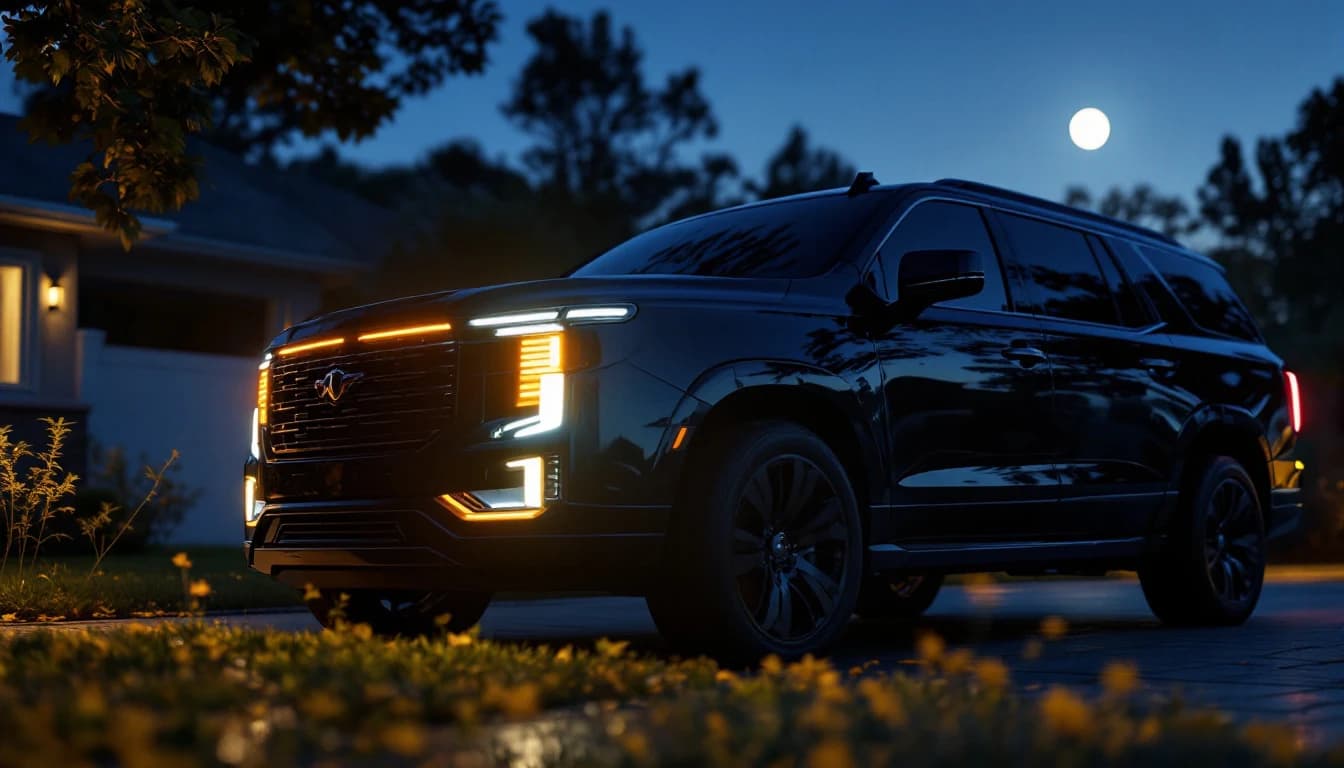
Chevrolet Tahoe & Suburban BCM and Key Relearn in Frisco, TX
2026 Chevrolet Tahoe & Suburban BCM and key relearn in Frisco, TX. Passlock generations, 10-30 minute relearn cycles, honest ranges. (469) 402-9781.
Chevrolet Tahoe and Suburban BCM and Key Relearn in Frisco, TX
There is a specific kind of frustration reserved for GM full-size SUV owners: sitting in a Tahoe that cranks perfectly, watching a small security telltale blink on the cluster, while the engine refuses to catch. Everything about the vehicle seems fine. The battery is strong. The starter spins. And yet the truck has decided you are not authorized to drive it.
That symptom, on a Tahoe or a Suburban, is almost always an anti-theft authorization problem rather than a mechanical one. Which generation of anti-theft you have determines whether the fix is a thirty-minute wait in your own driveway, a scan-tool procedure, or something that requires manufacturer-sanctioned online access.
Frisco Car Key is a fully mobile automotive locksmith with no storefront, which is the correct model for a vehicle that will not start. As of August 2026, Tahoe and Suburban security-light calls are among the most frequent GM jobs we run across Frisco, Prosper and McKinney. Call or text (469) 402-9781 with your model year and we will tell you which generation you are in before quoting anything.
Quick Answer
A Chevrolet Tahoe or Suburban that cranks but will not start, with a blinking security indicator, is failing anti-theft authorization. Early GM full-size SUVs used a Passlock system that reads a resistor value from the ignition lock cylinder rather than a chip in the key, and those often clear with a patient ten-minute relearn cycle you can perform yourself. Later generations moved to a transponder key managed by the body control module, where adding keys without a working original typically means a thirty-minute relearn built from three ten-minute cycles. The newest platforms use proximity keys and a far more integrated electrical architecture where module work requires sanctioned online programming access. Relearn and key work runs $85 to $450; module-level programming runs $200 to $800.
Frisco Pricing for Tahoe and Suburban Security Work
Honest bands as of August 2026, not quotes. Firm numbers follow VIN confirmation and an on-site look.
| Tahoe / Suburban Scenario | Typical Range | Notes |
|---|---|---|
| On-site security-system diagnosis | Included in service call | Identifies which anti-theft generation and fault |
| Transponder or proximity key programmed | $85-$450 | Adding or replacing keys to a healthy module |
| Spare key duplication with a working key | $50-$300 | Skips the entire all-keys-lost problem |
| Proximity / smart key fob replacement | $120-$500 | Push-button platforms |
| BCM or module programming | $200-$800 | Configuration to VIN, platform dependent |
| Ignition lock cylinder work | $150-$550 | Passlock-era cylinders and switch faults |
| Lockout, keys secured inside | $75-$200 | No security work involved |
We publish ranges because the honest cost of a Tahoe security fault spans an enormous distance. A ten-minute Passlock relearn on an older truck and a body control module configuration on a current-generation Suburban share a symptom and nothing else. The Federal Trade Commission advises consumers to insist on itemized estimates before authorizing automotive work, which is impossible without first identifying which job you actually have.
The Four Anti-Theft Generations of GM's Full-Size SUVs
Generation One: Passlock, the Resistor in the Lock Cylinder
The earliest full-size Tahoe and Suburban anti-theft implementations did something clever and, in hindsight, fragile. Rather than putting a chip in the key, GM put a sensor in the ignition lock housing that reads a specific electrical resistance value when the cylinder rotates. The body control module expects that exact value. Get it, and the module authorizes fuel delivery. Get anything else, and the truck cranks and dies while the security light illuminates.
The key itself has no electronics. This means a Passlock-era Tahoe can be started with any correctly cut blade, as long as the lock cylinder's sensor is reporting the right value. It also means the system's weak point is the sensor and its wiring rather than the key.
The famous consequence is the relearn procedure. When the module sees a wrong or missing value, it locks out fuel and requires a patient reset: key on, wait while the security light behaves in a documented pattern, cycle, repeat. Owners of these trucks learn the ten-minute wait the hard way, usually in a parking lot. It is genuinely something you can do yourself, and we tell customers that on the phone rather than driving out to charge for a procedure they could have performed while their coffee cooled.
Generation Two: Transponder Keys Managed by the Body Control Module
The next generation moved to a real transponder chip embedded in the key head, read by an antenna at the ignition, with the body control module holding the stored key data and making the authorization decision. This is a stronger design: a correctly cut blade with no chip will turn the ignition and accomplish nothing.
Adding a key to these trucks depends entirely on whether you have a working one. With a working key present, the procedure is comparatively quick. Without any working key, GM's design requires an extended relearn that is deliberately slow. The classic pattern is three consecutive ten-minute waits, totaling roughly thirty minutes of sitting with the ignition on while the module counts down, before it will accept new key data.
That thirty-minute window is not a malfunction and it is not padding on your invoice. It is an intentional anti-theft delay. A thief cannot stand in a driveway for half an hour with the ignition on without attracting attention, which is precisely the point. When we quote a Tahoe all-keys-lost job, that time is real labor time and we say so.
Generation Three: Proximity Keys and Push-Button Start
Higher trims then moved to proximity fobs and push-button start. There is no rotating ignition to wear out and no blade to cut for starting purposes, though an emergency blade still lives inside the fob for door access. Key programming here happens over the vehicle's communication network rather than through an antenna at a lock cylinder, and the responsibility is spread across more modules than before.
These trucks typically retain a documented backup method for starting when a fob battery dies, which is worth knowing before you find yourself needing it in a Frisco parking garage.
Generation Four: The Modern Integrated Architecture
The newest Tahoe and Suburban generation rides on GM's current electrical architecture, which consolidated an enormous number of functions and tightened security substantially. Module programming on these vehicles routes through GM's sanctioned online programming system, which requires a validated tool, an active subscription and authenticated access. This is not a hurdle we complain about; it is a legitimate anti-theft design.
What it means practically is that on the newest trucks the honest answer to "can you do this at my house" depends on your specific VIN and what it supports. A technician confirms your exact setup after VIN, and we tell you before dispatching rather than after arriving.
Common Tahoe and Suburban Problems We See
Cranks but will not start, security light blinking. The signature complaint. On Passlock-era trucks, frequently a sensor or wiring issue in the lock housing, often resolvable with a relearn. On transponder-era trucks, a key, antenna or module authorization issue.
Started fine yesterday, will not start today, nothing changed. Passlock sensors degrade gradually and then cross a threshold. So do antenna coils. Intermittent behavior that becomes permanent is the classic progression.
One key works, the other does not. That is excellent diagnostic news. If one key authorizes the vehicle, the module and antenna are healthy and the problem lives in the non-working key. That is the cheapest possible outcome.
All keys lost on a transponder-era truck. Fully solvable in most cases, but budget for the thirty-minute relearn. This is where owners who never made a spare pay for that decision.
A replacement body control module that did not work. Modules pulled from other vehicles carry that vehicle's configuration. Installing one does not produce a working Tahoe; it produces hardware that still needs to be programmed to your VIN, and on newer platforms that requires sanctioned online access. Buying the part is the easy step.
Aftermarket remote start interference. Poorly integrated systems can disturb the anti-theft handshake and produce symptoms indistinguishable from a failing module.
Key wear on cylinder-equipped trucks. Separate from anti-theft entirely. If the key will not physically turn, that is a mechanical lock problem and belongs with ignition repair rather than security programming.
"The best call I take on a Tahoe is the one where the customer says one key works and the other does not. That single sentence eliminates the module, eliminates the antenna, and tells me I am making a key rather than diagnosing an electrical system. It is why I always ask about the spare before anything else." - a Frisco Car Key mobile locksmith technician credentialed for automotive immobilizer work
Relearn Versus Programming Versus Replacement
Three phrases, three jobs, three price points. GM work is where owners most often get these blurred.
A relearn teaches an existing, healthy module to accept a key, or resets a Passlock system after it locked out fuel. No hardware changes. On some generations you can perform the relearn yourself with nothing but patience, and we will tell you when that is true.
Programming or configuring writes vehicle-specific data into a module so it knows which vehicle it belongs to and what options that vehicle has. This is required whenever hardware is replaced, and on the newest platforms it requires sanctioned online access.
Replacement is installing new physical hardware, which then still requires configuration, which then still requires key relearning. Three sequential operations.
Any shop quoting a single flat number without specifying which of these it is performing has not given you enough to make a decision. Our ECU and module programming service breaks this out explicitly, and our car key replacement service covers the key side.
For related reading on the same corporate family and on comparable module architectures elsewhere, see our guides to Cadillac XT6 and XT4 key replacement on GM's luxury side and to Mazda CX-30 and CX-50 immobilizer module programming for a contrasting manufacturer approach to the same problem.
The Honest Boundary
We will not tell you a body control module needs replacing when a relearn will clear the fault. On Passlock-era trucks in particular, we would rather walk you through a free relearn on the phone than drive out and bill you for it.
We will not describe reprogramming a module as equivalent to replacing one. Teaching existing hardware to accept a key and installing new hardware that must then be configured to your VIN are different jobs with different costs and different risks.
We will not bluff feasibility on the newest platforms. Where GM's sanctioned online programming is required, that is the path, and pretending otherwise would strand you with a partially completed job. The National Automotive Service Task Force exists precisely to give vetted independent technicians a lawful route to security information and vehicle access where a manufacturer supports it, and working inside that framework is how legitimate independents operate.
And one boundary specific to any conversation about modules generally: reprogramming or resetting a module is never a substitute for replacing physical safety hardware. If a vehicle has deployed airbags, those airbags must be replaced. Clearing a code does not restore a restraint system. That principle holds across every make and is not negotiable.
Why GM Owners Should Make a Spare Before They Need One
The thirty-minute relearn is the most persuasive argument for a spare key that exists in the automotive world, because it turns an abstract inconvenience into a concrete, measurable cost.
With one working key, adding a second is quick and scheduled. Without any working key, you are looking at a longer procedure, a deliberately enforced waiting period, and on newer platforms a materially more complex path. The American Automobile Association treats a backup key as basic vehicle preparedness, and on GM full-size SUVs the arithmetic is unusually stark.
There is a Frisco-specific wrinkle too. Tahoes and Suburbans are family logistics vehicles here. They carry car seats to school, gear to Toyota Stadium, and coolers to the lake. The morning your only key fails is statistically likely to be a morning with somewhere to be. Making a spare on a quiet afternoon costs a fraction of an emergency all-keys-lost call and saves the day it prevents.
Why the Security Layers Are Worth It
Anti-theft delays are annoying right up until you consider what they prevent. The National Highway Traffic Safety Administration has documented how substantially electronic immobilizers reduced drive-away vehicle theft after becoming standard equipment, and the Insurance Institute for Highway Safety has published parallel research on anti-theft effectiveness across manufacturers. Full-size SUVs are among the most desirable theft targets on the road, and GM's layered approach, including that intentional thirty-minute lockout, is a real deterrent.
The tradeoff is that every layer protecting your truck from a thief also adds procedure for the legitimate technician you hired. That is not a flaw. It is the system working as designed, and the correct response is to hire someone who understands the architecture rather than someone who will start replacing parts.
Serving Frisco and the Surrounding North Texas Communities
We come to you. Driveway, office lot, school pickup line, wherever the Tahoe decided to assert itself. We serve Frisco, Plano, McKinney, Allen, The Colony, and Prosper. Learn more about our team or contact us to schedule.
In Texas, locksmith and access-control companies operate under the Texas Department of Public Safety Private Security Program. We verify ownership before any key or security work, a practice the Associated Locksmiths of America treats as foundational to the trade.
Frequently Asked Questions
Why does my Chevrolet Tahoe crank but not start with the security light flashing?
That symptom means the anti-theft system is refusing to authorize the engine rather than anything mechanical being wrong. On earlier Passlock-equipped trucks the cause is often the sensor in the ignition lock housing reporting a wrong or missing resistance value, which frequently clears with a documented relearn procedure. On transponder-era trucks it points at the key, the antenna that reads it, or the body control module holding the stored key data. Diagnosis identifies which before any parts are considered.
What is the thirty-minute key relearn on a Tahoe or Suburban?
On transponder-era GM full-size SUVs, adding keys without a working original requires an extended relearn typically built from three consecutive ten-minute waits with the ignition on, roughly thirty minutes total, before the module will accept new key data. It is an intentional anti-theft delay, not a malfunction and not padded labor. A thief cannot sit in a driveway that long unnoticed, which is exactly the design intent. When you have a working key present, the process is far quicker.
Can I perform a Passlock relearn myself?
Often, yes, and we will tell you so on the phone rather than charging you to watch a clock. Passlock-era GM vehicles have a documented relearn sequence involving turning the ignition on, waiting while the security indicator follows a specific pattern, and cycling the key. If the underlying sensor or wiring has genuinely failed, the relearn will not hold and the fault returns, which is the signal that real repair is needed rather than a reset.
Do I need a new BCM if my Tahoe won't recognize keys?
Usually not. Most key-recognition faults trace to the key itself, the antenna that reads it, or a relearn that needs to be performed, not to failed body control module hardware. Replacing a module is the last resort, not the first move, because a replacement must then be configured to your VIN and on newer platforms that requires sanctioned online programming access. We diagnose before recommending hardware.
How much does Tahoe or Suburban key and module work cost in Frisco?
As of August 2026, programming a transponder or proximity key to a healthy module runs $85 to $450, and duplicating a spare from a working key runs $50 to $300. Proximity fob replacement runs $120 to $500. Module-level programming, when hardware genuinely needs configuration, runs $200 to $800. Ignition cylinder work on cylinder-equipped trucks runs $150 to $550. We quote firmly after diagnosis rather than guessing over the phone.
One of my two Tahoe keys works and the other doesn't. What does that mean?
That is the best diagnostic news you can give us. If one key successfully authorizes the vehicle, the module, the antenna and the whole security chain are proven healthy. The fault is isolated to the non-working key, which is the least expensive and fastest outcome available. We can typically make or reprogram that key on-site in a single visit.
Can you work on the newest Tahoe and Suburban generation at my house?
Sometimes, and it depends on your specific VIN. The current generation rides on GM's modern electrical architecture where module programming routes through the manufacturer's sanctioned online system requiring a validated tool and authenticated access. A technician confirms your exact setup after VIN, and we tell you before dispatching whether the job can be completed at your curb, so you never pay for a trip that could not finish.
Get Your Tahoe or Suburban Diagnosed in Frisco
Frisco Car Key identifies which anti-theft generation your SUV has, tells you honestly when a free relearn will fix it, and quotes real work when real work is needed. Call or text (469) 402-9781 or email contact@friscocarkeys.com with your year, model and whether any key still works. Mobile service across Frisco and North Texas, with a straight answer about what your specific truck requires.
References
- National Highway Traffic Safety Administration (NHTSA) - immobilizer technology and vehicle theft prevention: https://www.nhtsa.gov
- National Automotive Service Task Force (NASTF) - secure data and vehicle access for independent technicians: https://www.nastf.org
- Associated Locksmiths of America (ALOA) - professional locksmith standards and ownership verification: https://www.aloa.org
- Insurance Institute for Highway Safety (IIHS) - anti-theft system effectiveness research: https://www.iihs.org
- Federal Trade Commission (FTC) - consumer guidance on itemized automotive estimates: https://www.ftc.gov
- AAA - vehicle preparedness and spare key guidance: https://www.aaa.com
Related Guides
SMARTRA Immobilizer Programming Frisco | Expert Service
A deep technical look at the SMARTRA immobilizer control module used across Hyundai and Kia — how it pairs to the engine controller, why the security code matters, and what module-level work really involves in Frisco.
Jeep Wagoneer and Grand Wagoneer Module Programming in Frisco, TX: RF Hub, BCM, and the Secure Gateway
On a Wagoneer the key is the smallest part of the problem. The RF Hub, the body control module, the cluster, and the secure gateway all have to agree, and a used module bought online usually will not.
Subaru Solterra and Crosstrek Immobilizer Module Programming in Frisco, TX: One Badge, Two Security Families
The Solterra is an EV co-developed with Toyota and carries Toyota's security architecture. The Crosstrek is Subaru's own. Same badge, two immobilizer families, and two different answers when a module has to be programmed.