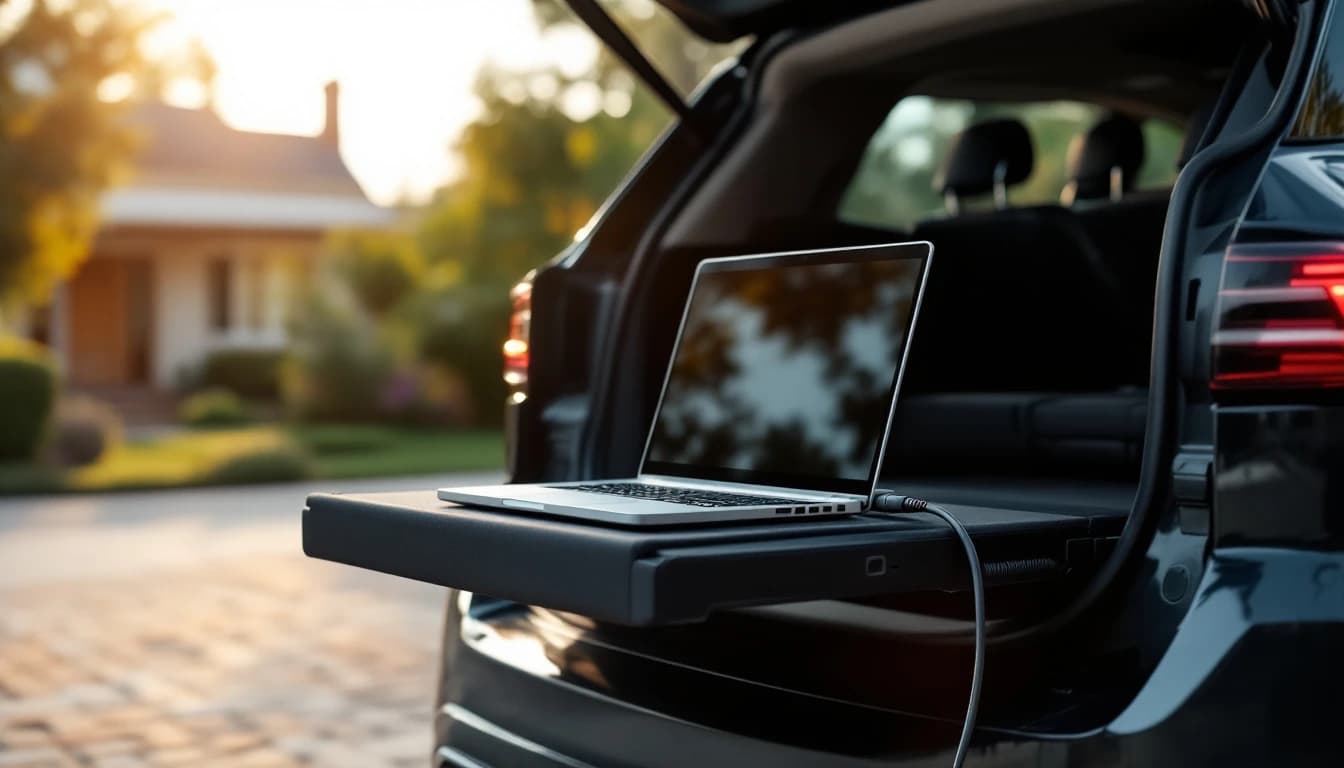
Jeep Wagoneer and Grand Wagoneer Module Programming in Frisco, TX: RF Hub, BCM, and the Secure Gateway
2026 guide to Jeep Wagoneer and Grand Wagoneer module programming in Frisco, TX. RF Hub, BCM, secure gateway access, used-module traps. Call (469) 402-9781.
Jeep Wagoneer and Grand Wagoneer Module Programming in Frisco, TX
When a Wagoneer will not accept a key, the key is rarely the interesting part. These are among the most electrically complex vehicles Stellantis builds, and the credential you hold in your hand is the last link in a chain of modules that all have to agree before the engine turns over. When one of those modules fails, gets replaced, or loses its relationship with the others, the symptom presented to the owner is almost always "my key stopped working."
Frisco Car Key is a fully mobile automotive locksmith serving Frisco and North Texas. As of August 2026, full-size Stellantis SUVs are among the more involved module-programming jobs on our board, and they reward getting the diagnosis right before anyone buys a part. Reach us at Frisco Car Key, (469) 402-9781, or contact@friscocarkeys.com.
This guide covers what the RF Hub actually is, how it relates to the body control module and the cluster, why the secure gateway changed independent service on these vehicles, the used-module trap that costs owners real money every month, and what an all-keys-lost sequence honestly looks like.
Quick Answer
Jeep Wagoneer and Grand Wagoneer immobilizer duties live in the RF Hub, the successor to the older SKREEM and WIN modules, working alongside the body control module and instrument cluster. Modern Stellantis vehicles also route diagnostic access through a secure gateway that requires authenticated access before any module can be written to. As of August 2026, module and control-unit programming in Frisco generally falls in the $200 to $800 range, with key replacement and smart key programming in the $120 to $500 band. A used module bought online is almost always paired to its donor VIN and is the most common way owners turn a repairable problem into an expensive one.
The Module Chain on a Wagoneer
Think of the start sequence as a conversation between four participants, all of which have to be present, healthy, and correctly related to one another.
The RF Hub
The RF Hub, sometimes written RFH, is the radio-frequency and immobilizer control module. It is the lineal successor to the older Sentry Key Remote Entry Module and Wireless Ignition Node that Chrysler-family vehicles used for years, and it carries the same essential responsibility: hold the vehicle's list of authorized key credentials and decide, on each start attempt, whether the fob presenting itself is on that list.
It also handles remote-function radio traffic and tire-pressure sensor reception on many configurations, which is why a failing RF Hub can produce a genuinely confusing symptom set: keys behaving intermittently, remotes working inconsistently, and tire-pressure warnings appearing for no mechanical reason, all at once. Owners describe three unrelated problems; a technician hears one module.
The Body Control Module
The BCM is the general-purpose body electronics controller: lighting, door locks, wipers, interior functions, and a great deal of gateway-ish message passing between subsystems. It participates in the start permission chain and holds vehicle configuration data. Replace it without proper configuration and you get a vehicle that is technically alive and functionally wrong.
The Instrument Cluster
On Chrysler-family architectures the cluster has historically been more than a display. It participates in the security conversation, and it holds configuration and, on many vehicles, security-relevant data. This is why cluster swaps between vehicles are a well-known source of no-start conditions and why odometer and configuration integrity matter to this discussion.
The Powertrain Control Module
The PCM ultimately controls whether fuel and spark happen. It expects to hear an authorization from the security chain. When it does not, you get the signature symptom: the engine cranks normally and then immediately dies, sometimes repeatedly. That symptom is enormously informative and we will come back to it.
The relationships among these four are not incidental. They are pairings, established at the factory and tied to the vehicle. That is deliberate security design, and the National Highway Traffic Safety Administration has documented how meaningfully immobilizer technology reduced drive-away theft across the industry. It works precisely because you cannot swap parts in from another vehicle and drive away.
The Secure Gateway: Why Independent Service Changed
This is the part that most owners have never heard of and that explains a great deal about why modern Stellantis service works the way it does.
Modern FCA and Stellantis vehicles include a secure gateway module, commonly abbreviated SGW, sitting between the diagnostic port and the vehicle's internal networks. Before it existed, anything plugged into the port could, with the right software, write to modules directly. That was convenient and it was also a security hole, one that the industry closed deliberately.
With a secure gateway in place:
- Reading is generally permitted. A scan tool can pull fault codes and live data without special authorization. This is why an owner's inexpensive code reader still shows codes on a Wagoneer.
- Writing requires authentication. Programming a key, configuring a module, running a security-related routine, or performing most anything that changes vehicle state requires the tool and the technician to authenticate through an authorized channel first.
- Legitimate independent access exists. Credentialed independent technicians obtain that access through the vetted framework administered by the National Automotive Service Task Force. It is a real, industry-recognized pathway with real vetting behind it, including identity verification and accountability for who performed which secure operation on which vehicle.
The practical consequence for you as an owner: the person who programs a key on your Wagoneer should be someone who holds legitimate credentials, not someone with a tool that claims to bypass the gateway. Bypass approaches exist in the gray market. They are exactly what the gateway was built to stop, and letting one near a $90,000 SUV is a poor trade.
"The gateway did not make this work impossible for independents. It made it accountable. Every secure operation traces back to a credentialed person. Frankly that is how it should have been all along, and it filters out the operators you would not want touching your vehicle anyway." — a Frisco Car Key mobile locksmith technician credentialed for automotive immobilizer work
The Used-Module Trap
This is the single most expensive mistake we see Wagoneer owners make, and it happens weekly across the make.
A vehicle throws a module fault. The owner researches, finds the part number, and discovers that a used unit from a salvage vehicle costs a fraction of a new one. They buy it, install it, and the vehicle is worse than before.
Why it fails: security-relevant modules on modern Stellantis vehicles are married to a VIN. A used RF Hub arrives carrying the key list, configuration, and VIN association of its donor vehicle. Installed in yours, it is a module that believes it belongs to a different car. Depending on the module and the vehicle, this can produce a no-start, a persistent security fault, mismatched configuration behavior, or in the worst cases a module that has to be handled through the dealer to be recovered at all.
What actually has to happen: a replacement module has to be properly configured and paired to your vehicle through an authenticated procedure. Some modules can be programmed to a new VIN through legitimate channels. Some cannot, by design. Which category applies depends on the module and the vehicle, and that determination should be made before money changes hands.
The honest advice: call before you buy. We will tell you whether the part you are looking at can be made to work on your VIN. That conversation is free and it has saved Frisco owners real money more times than we can count. This same trap is well documented across the Chrysler family, and our Dodge Ram 1500 and Charger SKIM and WIN module programming guide walks through how the older-generation modules in the same family behave, which is useful background for understanding the newer ones.
Reading the Symptoms
Cranks and immediately dies
The most useful symptom on any Stellantis vehicle. Cranking proves the battery, starter, and start-permission basics are functioning. An immediate stall means fuel or spark was cut deliberately, which is the anti-theft system doing exactly what it was designed to do because it did not receive a valid authorization. This points at the key credential, the RF Hub, or the relationship between the security chain and the PCM. It is genuinely locksmith territory.
Cranks strongly and never fires at all
Different problem entirely. The security system already approved the start. This is fuel, spark, compression, or a sensor, and it belongs at a repair shop. We will tell you this on the phone rather than driving out to tell you in person.
Keys work intermittently, remotes are flaky, tire-pressure warnings appear
The classic RF Hub composite symptom set. Three complaints, one module.
Nothing at all, no dash, no response
Check the 12-volt battery before anything else. A weak battery on a vehicle this electrically dense produces bizarre, module-flavored symptoms that resolve completely once voltage is correct. We have been called out for "module failures" that were a three-year-old battery more times than we would like to admit, and diagnosing a control module on low voltage is how technicians reach wrong conclusions.
Common Wagoneer Problems We See
- Single-key vehicles. Large SUVs frequently arrive from the used market with one fob, and on a vehicle this complex that is a poor position.
- Owners who bought a used module first. By far the most common self-inflicted wound.
- Aftermarket electronics gone wrong. Remote starters, alarms, and accessory installs that tap security circuits produce symptoms that mimic factory module faults perfectly. Always disclose these to your technician.
- Weak 12-volt batteries producing phantom module faults. Extremely common in North Texas after a hard summer.
- Heat-killed fobs. A Frisco July does real damage to fob electronics and coin cells, and we see a dependable seasonal spike.
Wagoneer Module and Key Costs in Frisco, TX
These are working ranges as of August 2026, not quotes. The final figure depends on which module, model year, configuration, and whether a working key exists. We confirm against the VIN and quote firmly on the phone before dispatch.
| Wagoneer Service | Typical Range | What It Covers |
|---|---|---|
| Diagnosis and secure-access assessment | Quoted before dispatch | Confirming which module is actually at fault |
| Spare smart key, working key present | $120–$500 | New fob, programming, emergency blade cut |
| Key replacement after one key lost | $120–$500 | New fob plus erasing the missing credential |
| All keys lost recovery | $85–$450 | Authenticated secure session, new keys, prior keys erased |
| RF Hub programming or replacement pairing | $200–$800 | Module configuration and key list rebuild |
| BCM or cluster related configuration | $200–$800 | Configuration and pairing work after replacement |
| Ignition or start-system component repair | $150–$550 | When the fault is a switch or cylinder, not a module |
| Lockout, keys inside the vehicle | $75–$200 | Damage-free entry, no programming work |
On pricing conduct: the Federal Trade Commission advises consumers to obtain clear, itemized pricing before authorizing service and to be alert to prices that escalate once a technician is on site. Module work is exactly where that pattern shows up in this trade, because the customer usually cannot evaluate the claim. Our practice is that you get the number before we drive, and that is the number you pay unless we find something genuinely unexpected and discuss it with you first.
Detail lives on our ECU and module programming, car key replacement, and smart key programming pages.
The All-Keys-Lost Sequence, Honestly
Here is what actually happens when a Wagoneer has no working key, in order.
- Verification first. Photo ID plus registration, title, or lease and finance documentation in your name. On a vehicle at this price point this is not a formality, and any locksmith willing to skip it is telling you something important about themselves.
- VIN and configuration confirmation. We determine model year, trim, and which security architecture the vehicle carries before committing to a path.
- Electrical baseline. Battery voltage confirmed and, if necessary, supported. Security-module programming on a marginal battery is how modules get bricked. This step is not optional and any technician who skips it is gambling with your vehicle.
- Authenticated secure-gateway access. Established through legitimate credentialed channels.
- Secure session with the immobilizer. The RF Hub is placed into a state that permits enrolling new credentials without an existing one to present.
- Key cutting. The mechanical emergency blade is cut to your vehicle's lock code so the new key is complete rather than partial.
- Credential enrollment. New keys added to the RF Hub's authorized list.
- Erasure of prior credentials. Every previously enrolled key is invalidated. If the old keys were lost rather than misplaced, this step is the difference between a recovered vehicle and a vehicle someone else can still start. It is not optional and we do not skip it.
- Verification. Start and stop repeatedly, confirm remote functions, confirm no new stored faults, confirm the cluster reports normally.
This is a longer appointment than a spare-key visit, by a wide margin. That is the entire argument for making the spare while you still have one working key: adding a credential to a vehicle that already trusts one is a fundamentally simpler operation than convincing a vehicle to trust something new from nothing.
Honest Boundaries
Newest configurations. Stellantis, like every manufacturer, continues to tighten security. There are specific vehicles and configurations where the dealer is the right or only path, particularly for certain module replacements that are deliberately not field-programmable. We confirm against your VIN before dispatch and tell you plainly if we cannot help, which costs you nothing.
We do not bypass gateways. The secure gateway exists for a reason and we work through it, not around it.
Not everything is a module. A worn ignition lock cylinder or failed start component is ignition repair, which is a different and generally cheaper job. A key visible on the seat is a car lockout. Diagnosing correctly before quoting is the whole job. For a look at how a different manufacturer's older architecture handles the same class of problem, our Cadillac SRX and ATS key replacement guide is a useful contrast.
Texas Licensing and Who Should Touch a Wagoneer
Automotive locksmiths in Texas operate under the Texas Department of Public Safety (DPS) Private Security Program. On a vehicle where secure-gateway credentials are involved, confirming licensure matters more than usual. Expect whoever you call to identify the business by name, verify your ownership before performing key or module work, quote clearly up front, and answer at a consistent phone number.
Professional standards published by the Associated Locksmiths of America treat ownership verification as a floor rather than a courtesy. The anti-theft engineering that the Insurance Institute for Highway Safety credits with meaningful theft-rate improvements depends entirely on the professionals authorized to make keys refusing to make them for strangers.
And the broader preparedness point stands: AAA has long grouped a backup key with jumper cables and a functional spare tire as basic vehicle readiness. On a vehicle where all-keys-lost means secure-gateway authentication and a full credential rebuild, that advice has never been more concretely valuable.
Serving Frisco and the Surrounding Communities
We are fully mobile across Frisco, Plano, McKinney, Allen, and Prosper. Large SUVs are difficult to tow and expensive to leave sitting, which is precisely why mobile service makes sense for this category. Because we are an all-makes locksmith, one appointment can also close spare-key gaps across the rest of the household fleet.
Learn more about our team or contact us to schedule.
Frequently Asked Questions
What is the RF Hub on a Jeep Wagoneer?
The RF Hub, or RFH, is the radio-frequency and immobilizer control module. It is the successor to the older Sentry Key Remote Entry Module and Wireless Ignition Node used across Chrysler-family vehicles, and it holds the vehicle's list of authorized key credentials while deciding on each start attempt whether the presented fob is on that list. On many configurations it also handles remote-function radio traffic and tire-pressure sensor reception, which is why a failing unit can produce keys, remotes, and tire-pressure symptoms simultaneously.
Can I install a used RF Hub or BCM from another Jeep?
Almost never successfully, and this is the most expensive mistake owners make. Security-relevant Stellantis modules are married to a VIN, so a used unit arrives carrying the key list, configuration, and VIN association of its donor vehicle. Installed in yours it believes it belongs to a different car, producing no-starts, persistent security faults, or configuration problems. Call before you buy the part; we will tell you whether that specific module can legitimately be paired to your VIN.
What is the secure gateway and does it stop a locksmith from working on my Wagoneer?
The secure gateway, or SGW, is a module sitting between the diagnostic port and the vehicle's internal networks on modern FCA and Stellantis vehicles. It permits reading fault codes freely but requires authentication before anything can be written to a module. It does not stop legitimate independent service; credentialed technicians obtain authorized access through the vetted framework administered by the National Automotive Service Task Force. It does stop unauthenticated tools, which is exactly what it was designed to do.
How much does Jeep Wagoneer module programming cost in Frisco?
As of August 2026, module and control-unit programming generally runs $200 to $800 depending on which module and what configuration work is required, key replacement and smart key programming run $120 to $500, and ignition component repair runs $150 to $550. Those are ranges rather than quotes. We confirm against the VIN and give you a firm figure over the phone before anyone is dispatched.
My Wagoneer cranks then immediately shuts off. What does that mean?
That symptom is unusually informative. Cranking proves the battery, starter, and basic start permissions are working. An immediate stall means fuel or spark was cut deliberately, which is the anti-theft system responding to a failed authorization. That points at the key credential, the RF Hub, or the relationship between the security chain and the powertrain control module, all of which is locksmith territory. If the engine cranks strongly and never fires at all, the security system already approved the start and the problem belongs at a repair shop.
Do I need to tow my Wagoneer to a dealer for key work?
Usually not. We are fully mobile and perform key programming, secure-session recovery, and most module pairing work wherever the vehicle is parked in Frisco and the surrounding communities. There are specific newest-generation configurations and certain module replacements that are deliberately not field-programmable, and in those cases we tell you plainly before dispatch so you do not pay for a trip that cannot finish.
How long does an all-keys-lost recovery take on a Grand Wagoneer?
Considerably longer than adding a spare, because the technician must authenticate through the secure gateway and then establish a secure session with the immobilizer from nothing, enroll new credentials, and erase every previously authorized key. The erasure step is essential when the old keys were genuinely lost rather than misplaced. Adding a second key while your first one works avoids that entire sequence, which is the strongest possible argument for scheduling it now.
Get the Wagoneer Diagnosed Before You Buy a Part
If your Wagoneer or Grand Wagoneer is throwing security faults, refusing keys, or you are about to order a used module online, call or text (469) 402-9781 or email contact@friscocarkeys.com first. Have your VIN and model year ready. We will tell you honestly what the part can and cannot do on your vehicle, quote the work on the phone, and come to you anywhere in Frisco and North Texas.
References
- National Highway Traffic Safety Administration (NHTSA) — immobilizer technology and vehicle theft prevention: https://www.nhtsa.gov
- National Automotive Service Task Force (NASTF) — secure data and vehicle access for independent technicians: https://www.nastf.org
- Associated Locksmiths of America (ALOA) — professional locksmith standards and ethics: https://www.aloa.org
- Insurance Institute for Highway Safety (IIHS) — anti-theft technology and vehicle theft research: https://www.iihs.org
- Federal Trade Commission (FTC) — consumer guidance on clear pricing and avoiding bait-and-switch: https://www.ftc.gov
- AAA — vehicle preparedness and backup key guidance: https://www.aaa.com
Related Guides
SMARTRA Immobilizer Programming Frisco | Expert Service
A deep technical look at the SMARTRA immobilizer control module used across Hyundai and Kia — how it pairs to the engine controller, why the security code matters, and what module-level work really involves in Frisco.
Subaru Solterra and Crosstrek Immobilizer Module Programming in Frisco, TX: One Badge, Two Security Families
The Solterra is an EV co-developed with Toyota and carries Toyota's security architecture. The Crosstrek is Subaru's own. Same badge, two immobilizer families, and two different answers when a module has to be programmed.
Mercedes-Maybach & S-Class Module Programming in Frisco, TX: EIS, ESL, and VIN Coding
A Frisco guide to Mercedes-Maybach and S-Class module programming, covering the EIS gatekeeper module, the ESL electronic steering lock, and why a replacement module has to be coded to your VIN before the car will accept it. Explains in plain language why used-module swaps so often fail, where the $200 to $800 band applies, and where the newest FBS4-era cars route to the dealer instead.