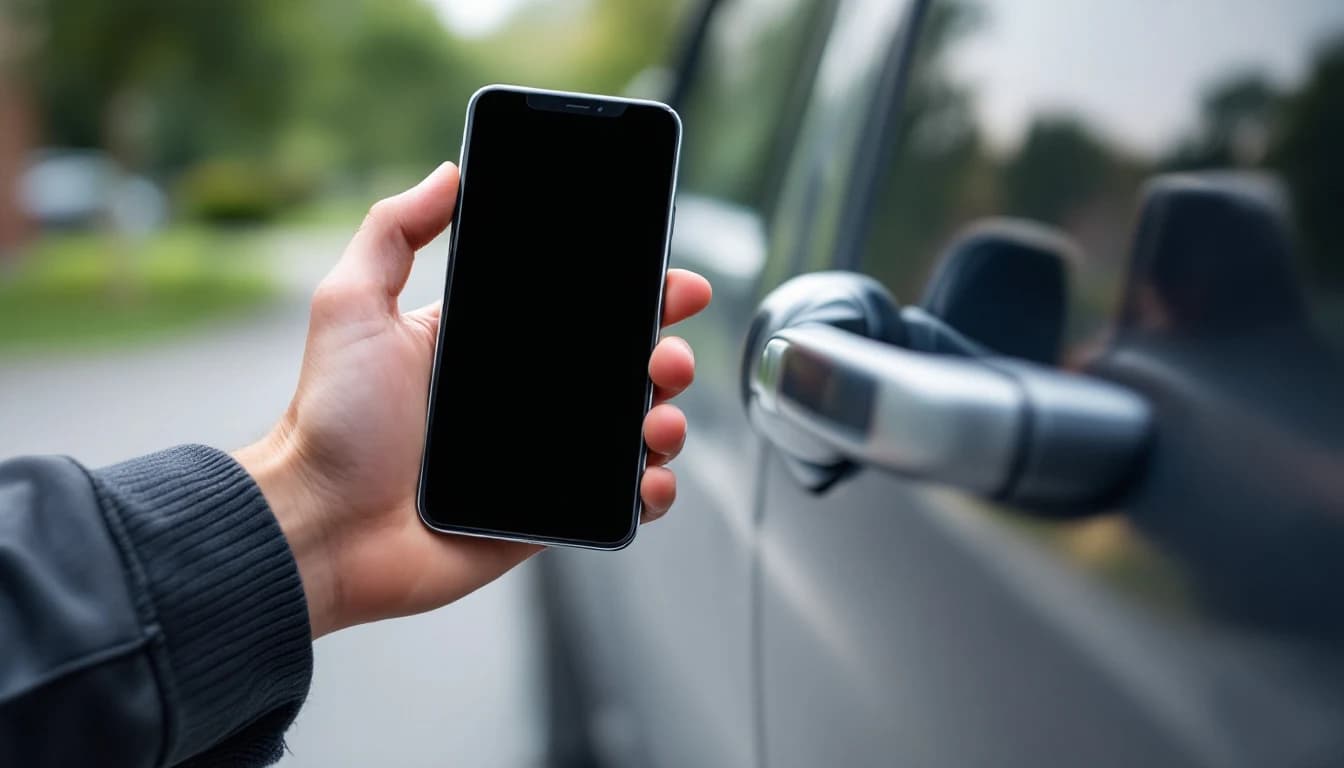
Hyundai Tucson & Santa Fe Digital Key and Spare Smart Key in Frisco, TX
2026 Hyundai Tucson and Santa Fe spare smart key and Digital Key guide for Frisco, TX. Immobilizer relearn, NFC card limits, mobile service. Call today.
Hyundai Tucson & Santa Fe Digital Key and Spare Smart Key in Frisco, TX
The Hyundai Tucson and Santa Fe are two of the most common vehicles in Frisco driveways, and they sit at an interesting technical moment. From roughly the 2022 model year forward, both carry a genuinely modern access stack: a proximity smart key, an immobilizer that will not tolerate an unauthorized credential, and on equipped trims Hyundai Digital Key, which turns a smartphone and a slim plastic card into working vehicle credentials.
As of August 2026, that combination creates a specific and very common owner problem. People adopt the phone key, stop carrying a fob, gradually lose track of where the second fob went, and then discover the hard way that a phone key is not the same thing as a spare key. This guide goes deeper into the technical detail than most owner-facing writing, because the Tucson and Santa Fe are exactly the vehicles where understanding the architecture saves you real money.
Frisco Car Key is a fully mobile automotive locksmith. We come to the vehicle in Frisco, Plano, McKinney, Allen, The Colony, and Prosper. Reach us at Frisco Car Key, (469) 402-9781, contact@friscocarkeys.com.
The Hyundai Access Stack, Layer by Layer
To understand what a locksmith can and cannot do for you, it helps to see the system as four distinct layers that happen to cooperate. They fail independently, and they are serviced independently.
Layer one: the mechanical emergency blade
Every Hyundai smart key fob on the Tucson and Santa Fe conceals a small metal blade. On most configurations it slides out of the fob body after releasing a catch. That blade opens the driver's door, and on many trims the driver's door lock cylinder is hidden behind a small cap that pops off with the blade itself.
This layer is purely mechanical. It works when the fob battery is dead, when the vehicle's 12-volt battery is dead, and when every piece of software in the vehicle has given up. It is also the layer most often neglected: a large share of aftermarket fobs arrive with an uncut blank blade, and if nobody cuts it to your vehicle's lock code, you own a fob with a decorative piece of metal inside it.
We cut that blade to code on every job. It is not an upsell, it is the point.
Layer two: the remote radio functions
The lock, unlock, panic, and where equipped remote-start buttons transmit on a radio frequency to a receiver in the vehicle. This layer is what fails when the coin-cell battery in the fob weakens. Symptom pattern: the buttons stop working at a distance before they stop working entirely, and proximity detection becomes unreliable near the vehicle.
A weak fob battery masquerading as a failing key is one of the most common false alarms we triage on the phone. It is a two-dollar part and a thirty-second fix, and we will tell you that rather than sell you a fob.
Layer three: proximity detection and the low-frequency antenna network
Passive entry works through a set of low-frequency antennas placed around the vehicle and inside the cabin. Touching a door handle or pressing the start button causes the vehicle to emit a low-frequency wake signal. If a valid fob is inside the detection field, it wakes and answers over radio frequency.
This layer explains a symptom owners find baffling: the fob works fine outside the vehicle but the vehicle refuses to start with the fob inside. That usually points at an interior antenna or a fob sitting in an electromagnetically awkward spot, not at a key credential problem. Hyundai provides a documented backup start method for a dead fob battery on push-button vehicles, typically involving holding the fob against a specific location on the steering column or start button so the vehicle can read the transponder at very short range. Your owner literature has the exact procedure for your model year, and it is worth reading once before you need it.
Layer four: the immobilizer credential
This is the security layer, and it is where all the real cost lives. The vehicle's smart key control unit and engine control unit hold a list of authorized cryptographic credentials. When the vehicle is asked to start, it challenges the credential and refuses unless the answer is correct.
This is the mechanism the National Highway Traffic Safety Administration (NHTSA) has credited with driving down hot-wire drive-away theft since immobilizers became standard equipment. It is also the reason an online fob is worthless until a credentialed technician enrolls it. There is no consumer-level bypass on a modern Hyundai, and any listing suggesting otherwise is describing a product that does not exist.
Hyundai Digital Key: What It Actually Is
Hyundai Digital Key, on equipped Tucson and Santa Fe trims, gives you two additional credential types beyond the traditional fob.
The NFC card key. This is a slim plastic card, roughly credit-card sized, that carries a near-field communication chip. You unlock the vehicle by holding the card against a specific spot on the driver's door handle, and you start the vehicle by placing the card on a designated pad, commonly in the wireless charging area or a marked location in the center console. Because near-field communication operates at extremely short range and draws its power from the reader's field, the card needs no battery of its own. That makes it genuinely robust.
The smartphone key. A paired phone running Hyundai's application can act as a credential over near-field communication and, depending on generation, other short-range wireless technology. Some implementations also allow sharing a digital key with another person's phone for a defined period, which is why Digital Key is popular with households that share vehicles among several drivers.
Both are real credentials. Neither is a complete substitute for a physical fob, and the reason is worth spelling out precisely rather than hand-waving.
Why a Phone Key Is Not a Spare Key
This is the central argument of this guide, so we will make it carefully.
A phone key introduces a dependency chain. For the phone to open and start your Tucson or Santa Fe, all of the following must be true simultaneously: the phone has charge, the phone's near-field communication or short-range wireless radio is enabled and functioning, the Hyundai application is installed and signed in with a valid session, the digital key registration for that phone is still active, and the phone is physically present and undamaged.
Each of those items is individually quite reliable. Chained together, they are meaningfully less reliable than a piece of plastic sitting in a drawer that requires nothing at all to exist.
The failure modes we actually see in Frisco are mundane rather than exotic:
- Phone battery dies at the end of a long day, and the vehicle is parked at a shopping center with no charger available.
- Phone is replaced or factory reset, the digital key registration does not survive the transition, and the owner does not notice until the next time it matters.
- Phone is stolen or lost together with a bag, which frequently also contains the only fob.
- The account session expires or the application requires re-authentication at exactly the wrong moment.
Now overlay the more expensive problem. If the phone key is your daily credential, you probably have not physically handled your second fob in a year or more. A large fraction of owners in this position genuinely do not know whether that fob still exists. They are a one-key household that believes it is a two-key household, and they find out on a weekday afternoon.
The NFC card is more robust than the phone because it needs no battery, but it shares the deeper problem: it is another card in a wallet, and wallets get lost, stolen, and left in the other jacket.
"Digital Key is a legitimately good feature and I recommend using it. What I will not do is let a customer treat it as their second key. The phone and the card are convenience credentials. The fobs are the redundancy. When someone tells me they have one fob and a phone key, I tell them they have one key." - a Frisco Car Key mobile locksmith technician credentialed for automotive immobilizer work
What a Mobile Locksmith Can and Cannot Enroll
Here is the honest boundary, stated as directly as we know how.
What we enroll routinely: traditional Hyundai smart key fobs, on both the Tucson and Santa Fe across the 2022 through 2026 range, and on both gasoline and hybrid variants. With a working key present this is a bounded, additive procedure. Without a working key it is a longer procedure with a stricter authorization path, but it remains within reach of a credentialed independent on most configurations.
What we cut and verify: the mechanical emergency blade, to your vehicle's lock code, on every fob we supply.
What we do not enroll: the smartphone digital key. Phone key registration is an account-level operation performed through Hyundai's own application and connected-services infrastructure, tied to your account credentials rather than to diagnostic equipment plugged into the vehicle. That is a feature, not a limitation. You would not want a technician on your driveway able to bind a stranger's phone to your vehicle. Phone key setup, transfer to a new phone, and revocation of a shared key are things you do through Hyundai's application and, where the account or subscription state is the problem, through Hyundai's support channels or a dealer.
Where the NFC card sits: the card is a physical credential, and depending on model year and configuration, obtaining and registering an additional card may be handled through the vehicle's own registration procedure, through the connected-services account, or through a dealer. We will tell you honestly which path applies to your specific vehicle rather than guessing at the counter.
The National Automotive Service Task Force (NASTF) provides the framework through which vetted independent locksmiths obtain security information and vehicle access where a manufacturer supports it. That framework is why traditional fob work is broadly available from independents. Account-bound digital credentials sit outside it by design.
Immobilizer Relearn on Hyundai: What Really Happens
The phrase "relearn" makes owners nervous. In practice it describes a structured exchange in which diagnostic equipment authenticates to the vehicle's smart key control unit and instructs it on which credentials to accept.
Two paths exist, and knowing which one applies to your job tells you almost everything about the cost and the duration.
Additive enrollment, used when you still have a working key, adds a new credential to the authorized list without disturbing the existing ones. Your original key keeps working. The procedure is comparatively short.
Erase-and-reprogram, used in all-keys-lost work, clears the authorized list and rebuilds it from the keys physically present at the appointment. This has a consequence people rarely anticipate and often appreciate: any old key still floating around, including one a previous owner quietly kept, stops working permanently. If you bought your Tucson or Santa Fe used and have ever wondered how many keys are out there, an all-keys-lost style reprogram is the definitive answer.
There is a third scenario that is neither of these, and it is the one owners misdiagnose most often: the smart key control unit itself has failed. In that case no amount of key programming helps, because the module that stores the credentials is the broken part. Our ECU and module programming service covers what is independently serviceable at the module level, and we refer the rest honestly. If you want the deeper technical background on how Hyundai and Kia immobilizer modules work and why they occasionally need module-level attention rather than key-level attention, our Hyundai and Kia SMARTRA immobilizer module programming guide is the companion piece to this article.
The Associated Locksmiths of America (ALOA) publishes professional standards that emphasize telling the customer which procedure will be performed before starting, precisely because these three scenarios carry very different costs.
Hybrid and Plug-In Hybrid Variants
Both the Tucson and the Santa Fe are offered in conventional gasoline, hybrid, and plug-in hybrid forms across the 2022 to 2026 range. For key and immobilizer work, the practical differences are smaller than owners expect, but they are not zero.
The credential architecture is fundamentally the same. The smart key, the immobilizer, and the digital key features work the same way across powertrains. A hybrid Santa Fe does not need a different category of key service than a gasoline Santa Fe.
The 12-volt system still runs the access electronics. This surprises hybrid and plug-in owners regularly. The high-voltage battery that moves the vehicle does not power the door locks, the body computer, or the key receiver. A conventional 12-volt battery does. If that 12-volt battery fails or drains, the vehicle behaves like any other dead car: no remote unlock, no push-button start, dark displays. The fob is fine. The vehicle simply cannot hear it. This is exactly the scenario the mechanical emergency blade exists for.
Plug-in vehicles that sit longer are at higher risk of this failure. A plug-in hybrid used mostly for short electric commutes, or a second vehicle that sits for weeks between uses, is a strong candidate for a drained 12-volt battery. Frisco households frequently keep exactly this kind of vehicle.
Silent operation changes owner habits. A hybrid or plug-in that is powered up but silent leads people to walk away from a vehicle they believe is off, or to leave a fob inside. Neither is a key defect, but both generate calls.
Hyundai Tucson and Santa Fe Key Service Cost in Frisco, TX
The table reflects our standard bands. Your firm number comes after we confirm the VIN, model year, trim, and working-key status.
| Hyundai Service Scenario | Typical Range | Notes |
|---|---|---|
| Spare smart key added, working key present | $120-$500 | Additive enrollment; original key unaffected |
| Smart key replacement, all keys lost | $85-$450 | Erase-and-reprogram; longer appointment |
| Extra fob for an additional household driver | $50-$300 | Third or fourth key in the set |
| Emergency mechanical blade cut only | $50-$300 | Restores physical driver's door access |
| Smart key control unit or module work | $200-$800 | Only when the module, not the key, has failed |
| Digital Key phone registration | Account-level, not a locksmith service | Handled in Hyundai's app or by the dealer |
| Lockout, key or fob visible inside | $75-$200 | Damage-free entry, always mobile |
Notice the Digital Key row. We could quietly leave it off the table and let you assume we handle it. We would rather tell you plainly that phone key registration is an account operation outside the locksmith scope, because the Federal Trade Commission is right that consumers deserve clear, itemized expectations before authorizing service, and scope clarity is part of pricing clarity.
Related service pages: smart key programming, car key replacement, and key duplication.
Diagnosing Your Own Symptom Before You Call
Owners save money by arriving at the phone call with a clear symptom. Here is how to sort yourself in about two minutes.
The fob works but only very close to the vehicle. Almost certainly a weak coin-cell battery in the fob. Replace it first. If the range returns, you are done.
The fob unlocks the doors but the vehicle will not start. This points toward the transponder or immobilizer side rather than the radio side, or toward the fob sitting outside the interior antenna's reliable field. Try the documented dead-battery backup start procedure in your owner literature.
Nothing works at all: no dash lights, no interior lights, no dome light on door open. This is an electrical problem, most likely the 12-volt battery, not a key problem. Use the mechanical blade to get in.
The vehicle starts fine but one specific fob has stopped being recognized. That fob may have lost its credential or failed internally. This is a straightforward re-enrollment or replacement with a working key present, which is the cheap version.
The key turns poorly in the door cylinder or feels gritty. That is mechanical wear rather than electronics. Compare with our Hyundai Sonata and Elantra key replacement guide, which covers the sedan side of the Hyundai lineup and the mechanical-versus-electronic distinction in more detail, and consider ignition repair if the ignition cylinder itself is the fault.
Telling us which of these you are experiencing lets us quote accurately over the phone and, in a meaningful number of cases, tell you that you do not need us at all.
How a Mobile Hyundai Spare Key Appointment Runs
- Phone triage. VIN, model, model year, trim, powertrain, and working-key status. We identify the correct fob variant, because Hyundai uses several across trims and years, and bringing the wrong one wastes everyone's day.
- Ownership verification on arrival. Photo identification and proof the vehicle is yours, every time, without exception.
- Blade cutting to code. The mechanical emergency blade is cut to your vehicle's lock code and physically tested in the driver's door.
- Credential enrollment. We connect to the diagnostic interface and enroll the new fob, using the additive path when a working key is present.
- Full function test. Lock, unlock, panic, remote start where equipped, proximity detection at each door, push-button start, and the mechanical blade.
A spare with a working key present is commonly completed within about an hour of arrival. All-keys-lost work runs longer.
Ownership Verification, Licensing, and Anti-Theft Practice in Texas
Texas locksmith and access-control companies operate under the Texas Department of Public Safety (DPS) Private Security Program, not the TDLR. That is the correct agency, and knowing it is a quick way to sanity-check anyone offering to program a credential into your vehicle.
We verify ownership before any key work, on every job. The Insurance Institute for Highway Safety (IIHS) has documented how substantially anti-theft technology reduces theft, but that technology is only as strong as the people authorized to work on it. A technician willing to program a key for anyone who asks has converted a security system into a formality.
What to Have Ready
- Valid government photo identification.
- Proof of ownership, meaning current registration, title, or a lease or finance agreement in your name.
- The 17-character VIN, readable through the windshield at the driver's side base or on the door-jamb sticker.
- Working-key status, one working fob or none.
- Model year, trim, and powertrain, so we bring the correct fob variant on the first trip.
- Whether Digital Key is set up, and whether your NFC card is still in your possession.
Having this ready is the same consumer-protection habit the FTC recommends generally, and AAA has framed a physical backup key as basic vehicle preparedness for decades.
We serve Frisco, Plano, McKinney, Allen, The Colony, and Prosper. Learn more about our team or contact us to schedule. If you are locked out right now with the fob visible inside, our car lockout service is the fastest path.
Frequently Asked Questions
Can a mobile locksmith add a spare smart key to my Hyundai Tucson?
Yes. The Tucson across the 2022 to 2026 range uses a smart key architecture that credentialed independent locksmiths work with routinely, on gasoline, hybrid, and plug-in hybrid variants alike. When you still hold one working key, the enrollment is additive, meaning your original key keeps working and the new fob is added alongside it. We cut the mechanical emergency blade to your vehicle's lock code, enroll the credential, and test lock, unlock, proximity detection, and push-button start before leaving. We confirm the VIN and trim on the phone so we bring the correct fob variant on the first trip.
Does Hyundai Digital Key mean I do not need a physical spare fob?
No, and this is the most expensive assumption we encounter. Digital Key is a convenience layer, not redundancy. The phone key depends on the phone having charge, the wireless radio working, the application being installed and signed in, and the registration remaining valid, and every one of those can fail. The NFC card is more robust because it needs no battery, but it is still a card that can be lost or stolen along with a wallet. Most importantly, owners who adopt Digital Key often stop tracking their second fob and become a one-key household without realizing it. Keep two physical fobs.
Can you program the Hyundai phone digital key for me?
No, and we would be suspicious of anyone who claimed they could. Phone digital key registration is an account-level operation performed through Hyundai's own application and connected-services infrastructure, tied to your account rather than to diagnostic equipment plugged into the vehicle. That design is deliberate and protects you, because it means a technician standing in your driveway cannot bind an unfamiliar phone to your vehicle. Phone key setup, transferring to a new phone, and revoking a shared key are handled in Hyundai's app or, when the account or subscription state is the problem, through Hyundai support or a dealer.
What does immobilizer relearn mean on a Hyundai?
It is the structured procedure in which diagnostic equipment authenticates to the vehicle's smart key control unit and tells it which credentials to accept. There are two paths. Additive enrollment adds a new key while leaving existing keys working, which is the normal case when you have a working key. Erase-and-reprogram clears the authorized list and rebuilds it from the keys present, which is typical of all-keys-lost work and permanently disables any old key still circulating. That second effect is genuinely useful if you bought the vehicle used and do not know how many keys exist.
My Hyundai hybrid is completely dead and the fob does nothing. Is my key broken?
Almost certainly not. On hybrid and plug-in hybrid vehicles, the high-voltage battery that moves the car does not power the door locks, body computer, or key receiver. A conventional 12-volt battery does all of that. If the 12-volt battery fails or drains, the vehicle behaves like any other dead car with no remote unlock and no push-button start. Plug-in vehicles that sit for long periods between uses are especially prone to this. The mechanical emergency blade hidden inside your fob is your way in, which is exactly why we cut it to code on every fob we supply.
How much does a Hyundai Tucson or Santa Fe spare key cost in Frisco?
As of August 2026, a spare smart key added while you still have a working key generally falls in the $120 to $500 band, depending on fob variant, trim, and model year. All-keys-lost smart key replacement runs in the $85 to $450 band and takes longer because the authorized list has to be rebuilt from scratch. A mechanical blade cut alone is roughly $50 to $300. If the smart key control unit itself has failed rather than the key, that is module-level work in the $200 to $800 range. We quote a firm figure after confirming the VIN.
I bought my Santa Fe used and only got one key. What should I do?
Two things, in order. First, add a spare while your single key still works, because that is the short additive procedure rather than the long all-keys-lost one. Second, consider asking for a full erase-and-reprogram rather than a simple addition. That clears the vehicle's authorized credential list and rebuilds it from the keys present at the appointment, which permanently disables any key a previous owner or a prior dealer may still have. It costs somewhat more than a straight addition, and for a used purchase it is frequently worth it for peace of mind alone.
Ready to Add a Hyundai Spare Key in Frisco?
If you drive a Tucson or Santa Fe and your honest answer to "where is your second fob" is a shrug, that is the whole reason to make one phone call today. Call or text (469) 402-9781 or email contact@friscocarkeys.com with your VIN, model year, trim, and working-key status, and we will quote accurately and come to you anywhere in Frisco and North Texas.
References
- National Highway Traffic Safety Administration (NHTSA) - immobilizer technology and vehicle theft prevention: https://www.nhtsa.gov
- National Automotive Service Task Force (NASTF) - secure data and vehicle access for independent locksmiths: https://www.nastf.org
- Associated Locksmiths of America (ALOA) - professional standards and scope disclosure: https://www.aloa.org
- Insurance Institute for Highway Safety (IIHS) - anti-theft technology effectiveness research: https://www.iihs.org
- Federal Trade Commission (FTC) - consumer guidance on clear service pricing and scope: https://www.ftc.gov
- AAA - vehicle preparedness and backup key guidance: https://www.aaa.com
Related Guides
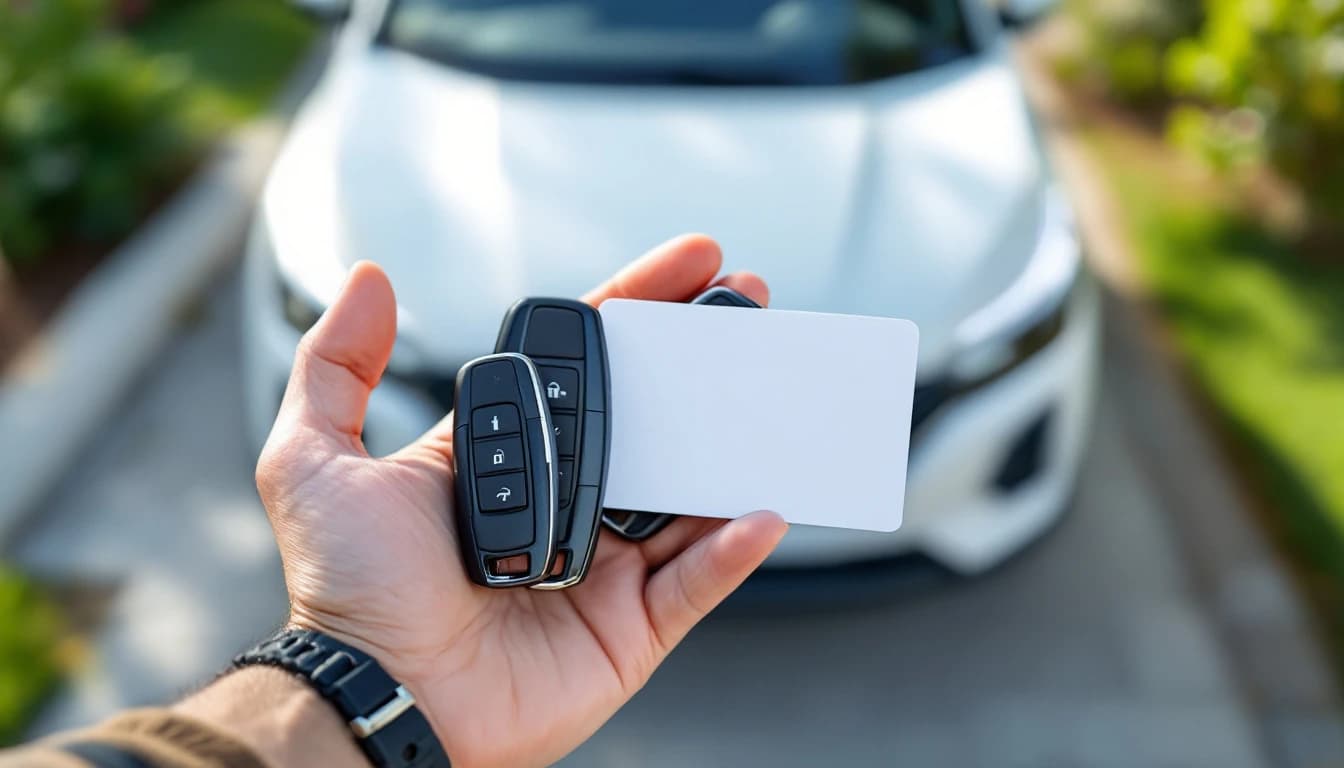
Kia Niro and Hyundai Kona Electric Spare Key in Frisco, TX
A technical spare-key guide for the Kia Niro and Hyundai Kona Electric, covering fob variants across hybrid and EV trims, the emergency blade, the 12-volt failure mode that strands owners, and which work is dealer-routed.
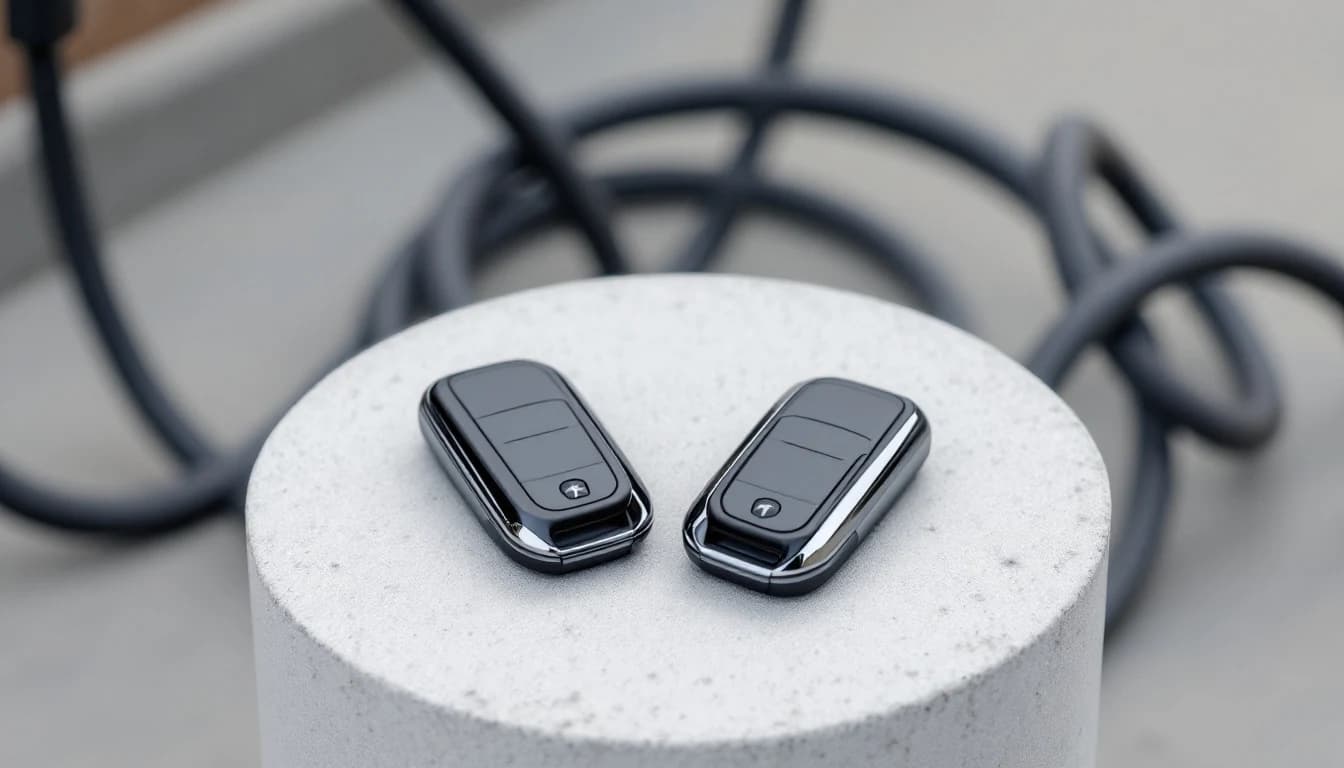
Audi Q8 e-tron & e-tron GT Spare Key in Frisco, TX: Why One Key Is a Real Risk
Why running an Audi Q8 e-tron or e-tron GT on a single key is a genuine operational risk in Frisco, how comfort access behaves on Audi's EV platform, and what actually happens to key access when the 12-volt battery dies. Includes an honest breakdown of which spare-key adds are mobile-serviceable and which ones route to the dealer, with cost bands and no invented figures.
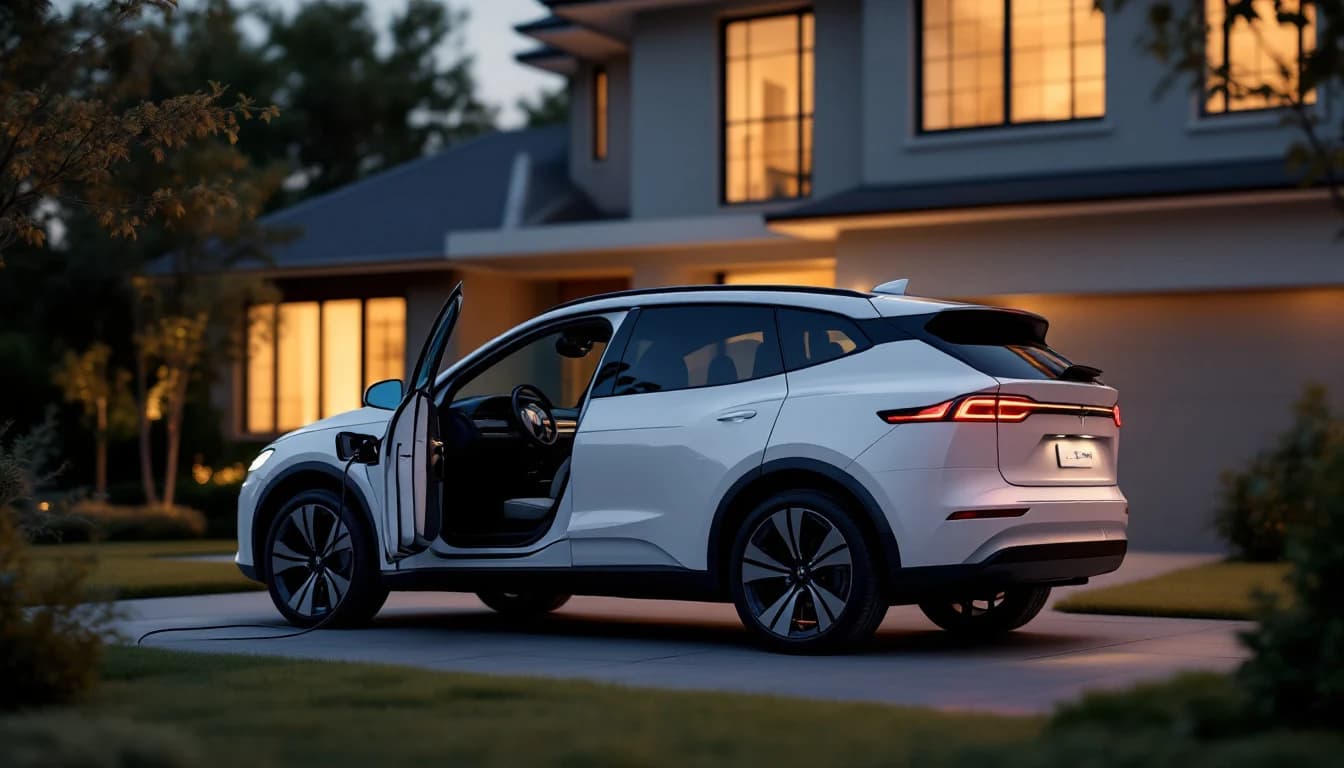
Kia EV9 Digital Key and Spare Smart Key in Frisco, TX: A Deep Guide
A deep technical guide to Kia EV9 key service in Frisco, covering the smart key, Kia Digital Key 2, the physical key card, why three-row EV households get stranded by a single key, and which enrollments are genuinely dealer-controlled.