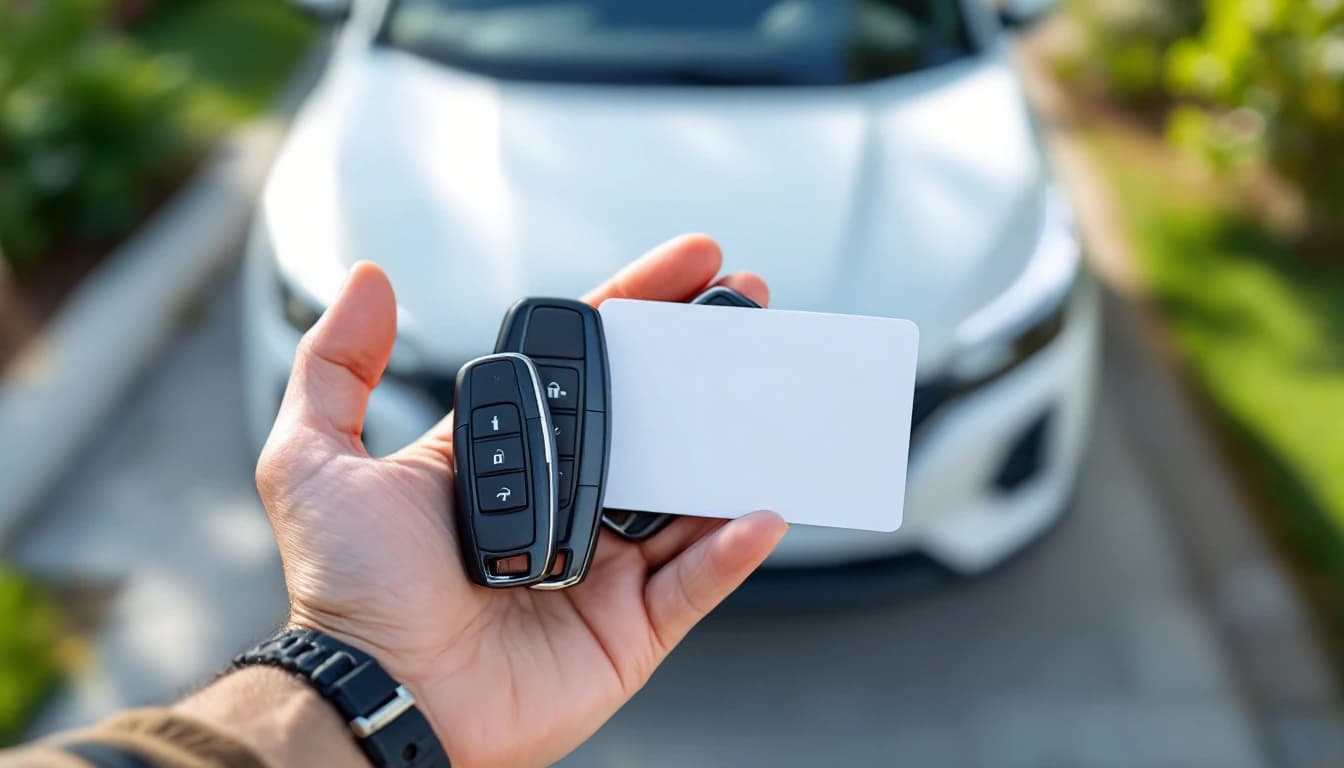
Kia Niro and Hyundai Kona Electric Spare Key in Frisco, TX
Spare smart key guide for the Kia Niro and Hyundai Kona Electric in Frisco, TX: fob variants, the 12-volt trap, digital key limits, and honest pricing.
Kia Niro and Hyundai Kona Electric Spare Key in Frisco, TX
Direct answer. As of August 2026, adding a spare smart key to a Kia Niro or Hyundai Kona Electric while you still have a working key falls in the $50 to $300 band, and a full smart key replacement runs $120 to $500. All-keys-lost is the expensive path and, on the newest model years, sometimes the dealer's path. The spare is cheap while the first key still works and never gets cheaper afterwards.
These two vehicles get grouped together for good reason. They are the compact electrified crossovers of the Hyundai Motor Group lineup, they share a corporate approach to keys and immobilizer architecture, and in Frisco they land in the same household role: the efficient second car that quietly becomes the primary commuter. Both also share a specific failure mode that has nothing to do with keys and strands owners anyway.
Frisco Car Key is a fully mobile automotive locksmith serving Frisco, Plano, McKinney, Allen, The Colony, and Prosper. We come to the vehicle. Frisco Car Key, (469) 402-9781, contact@friscocarkeys.com.
Know Which Variant You Actually Own
This is where quotes go wrong, and it is worth thirty seconds of precision.
The Niro is three vehicles. Kia sells the Niro as a conventional hybrid, a plug-in hybrid, and a fully electric model, across two design generations. They look closely related and they are not identical in electrical architecture, in trim-dependent equipment, or necessarily in fob part number.
The Kona is at least two. Hyundai sells the Kona as a conventional gasoline crossover and as the Kona Electric, and the electric version has its own platform considerations. Again, two generations, with real differences between them.
Trim changes the fob. Within a single model year, a base trim and a loaded trim can take different fob variants. Remote-start capability, remote parking features on equipped models, and digital-key support all affect which physical fob your vehicle expects. Fitting the wrong variant produces a key that pairs and locks the doors but silently fails to do one of the things you assumed it would.
We identify the exact variant against the VIN rather than by eye. A photograph of both sides of your existing key, texted before dispatch, resolves this in seconds.
The Access Stack, Layer by Layer
Both vehicles give you more ways in than a gasoline crossover of a decade ago. Each layer is a separate system with a separate failure mode, and knowing them separately keeps you from paying to fix the wrong one.
The proximity smart key
The standard credential: doors unlock when the key is in your pocket and you touch the handle, and a push button starts the vehicle. Inside the fob body is a hidden mechanical emergency blade that slides out after releasing a catch, opening the driver's door through a lock cylinder usually concealed behind a small cap on the handle.
That mechanical blade is the only layer that depends on nothing. Not software, not the fob's coin cell, not the vehicle having power. It is also the layer most commonly neglected, because aftermarket fobs routinely arrive with an uncut blank inside. A fob with an uncut blade is a fob whose emergency function does not exist. We cut every blade to the vehicle's lock code and physically test it in the door before we leave, and it is genuinely the step that most distinguishes a properly finished job from a cheap one.
The immobilizer credential
Beneath the convenience features sits the security layer. The vehicle holds a list of authorized cryptographic credentials, and it will not permit a start unless a presented credential answers a challenge correctly. This is the class of protection the National Highway Traffic Safety Administration credits with driving hot-wire drive-away theft down sharply since immobilizers became standard equipment.
The practical implication has not changed in fifteen years: a fob purchased online is an inert plastic shell until a credentialed technician enrolls it into your specific vehicle. There is no consumer-level bypass. Hyundai Motor Group's immobilizer architecture on these platforms has its own service pattern, which we cover in our guide to Hyundai and Kia SMARTRA immobilizer module programming.
Digital Key on equipped trims
On supported configurations, Hyundai and Kia offer a digital key that lets a paired smartphone, and on supported devices a smartwatch, act as a vehicle credential over short-range wireless. Several implementations also provide a slim near-field card that unlocks by being held against a marked area on the door handle and starts by being placed on a designated pad.
The card is genuinely good as a backup: it draws its operating power from the reader's field, so it carries no battery and cannot go flat. It is still a card in a wallet, and wallets get lost. It mitigates the phone-battery problem, not the everything-was-in-one-bag problem.
Digital key registration is not locksmith work. It is an account-level operation through the manufacturer's app and connected-services infrastructure, bound to your account rather than to diagnostic equipment plugged into the vehicle. That design protects you - nobody standing next to your parked Niro with a laptop can bind their phone to it. When a phone upgrade breaks it, the fix is free and lives in the app, as we walk through in our guide to a phone key that stopped working after a phone upgrade.
The 12-Volt Trap
This is the single most misunderstood aspect of owning an electrified vehicle, and on these two models it generates more panicked calls than key loss does.
The high-voltage traction battery does not power the door locks, the body control modules, the key receiver, or the interior electronics. A conventional 12-volt battery does all of that, exactly as in a gasoline car. The traction battery normally tops the 12-volt system up through a converter while the vehicle is awake, but if the 12-volt battery fails outright, or the vehicle sits long enough with a parasitic drain, the vehicle behaves like any other dead car.
From the driveway it looks like this: the fob does not unlock the doors, the handles do not respond, push-button start does nothing, the screens are dark. Owners look at a state-of-charge display reading 70 or 80 percent and reasonably conclude the battery cannot be the problem. It is precisely backwards - the big battery is fine and the small one is flat.
The tell is the interior dome light. If it is dead or very dim, you are looking at a 12-volt problem, not a key problem, and buying a fob will not help. Our detailed walkthrough is in dead 12-volt battery with a phone key, and the closely related no-start pattern on hybrids appears in hybrid will not enter ready mode.
If both of your fobs stopped responding on the same day, that is diagnostically meaningful in its own right, and our guide to both key fobs failing at once explains why the fault is almost never the keys.
Why Niro and Kona Households Get Stranded
There is a specific pattern here, and it is not generic advice.
The efficient car becomes the default car. These vehicles get bought as the sensible second vehicle and then, because they cost almost nothing per mile, quietly absorb every commute, every school run, and every errand. The household's driving concentrates on the vehicle nobody planned around, and its downtime hurts more than anyone expected.
Second keys are put somewhere sensible and forgotten. A compact crossover bought for practical reasons rarely gets the ceremonial two-fobs-on-the-hook treatment. The spare goes in a drawer, then a moving box, then nowhere anyone can name. Within two years most owners cannot say with confidence where it is.
Digital key adoption removes the daily reminder. On equipped trims, owners set up the phone key in the first week and stop carrying a fob entirely. That is the feature working as designed. The side effect is that the physical keys stop being part of anyone's daily awareness, and a fob that is never handled is a fob whose battery death goes unnoticed.
Used purchases arrive short. A meaningful share of these vehicles reach their second owner with exactly one key, because the original owner lost the spare years earlier and it never came up at the sale.
Put those together and the standard call is a two-year-old Kona Electric, one key, an owner who assumed there was a spare, and a Tuesday morning that is no longer going to plan.
"The compact EVs are the ones where I most often find a household that did not realise it was a one-key household. Nobody lost anything dramatically. The second fob just stopped being part of anyone's routine, and two years later it is genuinely gone. Two physical fobs is the entire fix, and it costs a fraction of the alternative while you still have one." - a Frisco Car Key mobile locksmith technician credentialed for automotive immobilizer work
What Is Locksmith Work and What Is Not
We would rather lose a job than take a trip charge for something we cannot finish.
Adding a spare smart key with a working key present is standard independent locksmith work and the procedure is additive: the new fob joins the authorized list and your existing key keeps working. This is the $50 to $300 band, roughly 20 to 45 minutes on site.
Full smart key replacement sits in the $120 to $500 band depending on fob variant, trim, and model year.
All keys lost is a longer procedure with a stricter authorization path, and on the newest model years across the industry it is exactly where the honest answer sometimes becomes the dealer. The National Automotive Service Task Force (NASTF) exists to give vetted independent locksmiths a legitimate channel to manufacturer security information where it is supported, but coverage is neither universal nor static. We determine which category your specific vehicle falls into during phone triage, before dispatch.
Cutting the mechanical emergency blade is ours, and we do it on every fob including customer-supplied ones.
Digital key phone and watch registration is not, for the architectural reasons above. Setting one up, moving it to a new phone, sharing it, and revoking a shared key are all app-and-account operations. Anyone claiming to do this with a laptop at your car is describing something that does not exist.
Module-level failure is its own category. If the smart key control unit itself has failed rather than the key, no amount of key programming helps, because the part that stores credentials is the broken part. Our ECU and module programming service covers what is independently serviceable, priced $200 to $800, and we refer the rest.
Price Table
| Situation | Service category | Price band (Aug 2026) |
|---|---|---|
| Spare smart key, working key present | Key duplication | $50 - $300 |
| Smart key replacement, proximity fob | Smart key programming | $120 - $500 |
| All keys lost | Car key replacement | $85 - $450 |
| Mechanical emergency blade cut only | Key duplication | $50 - $300 |
| Smart key control unit fault | ECU and module programming | $200 - $800 |
| Locked out, keys inside | Car lockout | $75 - $200 |
| Digital key phone registration | Not locksmith work - app and account | Typically free |
What the Appointment Looks Like
We confirm the vehicle and your documentation, then identify the fob variant against the VIN rather than by eye. We cut the mechanical blade to your vehicle's lock code. We enroll the credential. Then we test the whole set: lock, unlock, tailgate release, panic, remote start where equipped, proximity entry at each door, push-button start, and the mechanical blade physically turned in the driver's door.
That last test matters more than it sounds. A blade that was cut but never tried is a blade nobody has proven works, and the moment you need it will not be a convenient moment to discover otherwise.
In Texas, this work falls under the Texas Department of Public Safety (DPS) Private Security Program - not the TDLR, a persistent error in online advice. Expect any legitimate technician to ask for photo identification and documentation tying you to the vehicle. The Federal Trade Commission has documented locksmith fraud for years and the pattern is consistent: a very low phone quote, an unmarked vehicle, a technician who cannot name their business, and a price that multiplies once work begins. The Associated Locksmiths of America (ALOA) maintains the professional standards behind credentialed work, and asking about credentials is a normal question.
If You Bought It Used
Two recommendations, in order.
Add a spare immediately, while your single key still works, because that is the short additive procedure rather than the long all-keys-lost one.
Consider a full erase-and-reprogram rather than a straight addition. That clears the vehicle's authorized credential list and rebuilds it from only the keys present at the appointment, permanently disabling any key a previous owner may still hold. It costs somewhat more than an addition. On a used purchase it is usually worth it, and we raise it unprompted because most sellers never mention how many keys were ever cut.
Also check the digital key state. A used vehicle can arrive with a previous owner's device still registered, and clearing that is an account-side task through the manufacturer's app or support channel - free, but nobody does it unless someone points it out.
The One-Sentence Version
Two working physical keys, then use the digital key freely on top of them. Our smart key and push-to-start service and key duplication service cover both these vehicles across Frisco and the surrounding communities, and for the broader electric-vehicle cost picture our guide to EV key replacement costs has the full bands. Owners of the larger models in the same family will find the equivalent detail in our Ioniq 5 and Ioniq 6 and Kia Sportage and Seltos guides.
Frequently Asked Questions
How much does a spare key for a Kia Niro or Hyundai Kona Electric cost in Frisco?
As of August 2026, adding a spare smart key while you still have a working key falls in the $50 to $300 band, and a full smart key replacement runs $120 to $500 depending on fob variant, trim, and model year. All-keys-lost sits in the $85 to $450 band and takes materially longer because authorization has to be established from scratch. Module-level work, if the smart key control unit itself has failed, is $200 to $800.
Can you program a Kia Niro or Kona Electric key at my house?
Yes, in most cases. We are fully mobile and the equipment travels to the vehicle, so a spare added with a working key present typically takes 20 to 45 minutes in your driveway including cutting the blade, enrolling the credential, and testing every function. All-keys-lost takes longer and, on the newest model years, is sometimes genuinely dealer-routed - we determine which applies during phone triage rather than after taking a trip charge.
Why does the Niro have different fobs for different trims?
Because equipment differs. Remote start, remote parking features on models that offer them, and digital key support all affect which physical fob variant a given vehicle expects, and the Niro exists as a hybrid, a plug-in hybrid, and an electric model across two design generations. Fitting the wrong variant produces a fob that pairs and locks the doors but silently fails at one function you assumed it had, which is why we confirm against the VIN.
My Kona Electric is fully charged but nothing responds. Is my key dead?
Probably not. The high-voltage traction battery does not power the door locks, receiver, or modules - a conventional 12-volt battery does, exactly as in a gasoline car. If that 12-volt battery is flat, the fob, the handles, and push-button start all stop working while the charge display still reads 70 or 80 percent. Check the interior dome light: dead or very dim means a 12-volt problem, and a new key will not fix it.
Can a locksmith set up the digital key on my phone?
No. Digital key registration is an account-level operation performed through the Hyundai or Kia app and their connected-services infrastructure, bound to your account rather than to any diagnostic equipment. That is a deliberate security design - it means nobody standing next to your parked vehicle can bind their own phone to it. Setting it up, moving it to a new phone, sharing it, and revoking a shared key are all things you do in the app, or through manufacturer support when the account state is the actual problem.
Is the key card enough of a backup?
It is a good backup and not a sufficient one. The card is battery-free because it draws power from the reader's field, which makes it more robust than a phone, and it belongs in your wallet. But it is still a small object in a wallet, and it does nothing for the scenario where your wallet, phone, and only fob left the house in the same bag. It solves the dead-phone problem, not the everything-in-one-place problem.
I bought my Niro used with one key. What should I do?
Add a spare immediately, while the single key still works, because that is the short additive procedure rather than the long all-keys-lost one. Then consider a full erase-and-reprogram instead of a straight addition: it clears the vehicle's authorized credential list and rebuilds it from only the keys present at the appointment, permanently disabling any key a previous owner still holds. Also check whether a previous owner's phone is still registered as a digital key, which is a free fix through the manufacturer's app.
References
- National Highway Traffic Safety Administration (NHTSA) - immobilizer technology and vehicle theft trends
- National Automotive Service Task Force (NASTF) - secure data release for vetted independent locksmiths
- Associated Locksmiths of America (ALOA) - professional standards and credentialing
- Federal Trade Commission (FTC) - locksmith scam patterns and consumer guidance
- AAA - roadside assistance call category data
- Insurance Institute for Highway Safety (IIHS) - keyless entry and vehicle security research
- Texas Department of Public Safety, Private Security Program - Texas locksmith regulation
Related Guides
Audi Q8 e-tron & e-tron GT Spare Key in Frisco, TX: Why One Key Is a Real Risk
Why running an Audi Q8 e-tron or e-tron GT on a single key is a genuine operational risk in Frisco, how comfort access behaves on Audi's EV platform, and what actually happens to key access when the 12-volt battery dies. Includes an honest breakdown of which spare-key adds are mobile-serviceable and which ones route to the dealer, with cost bands and no invented figures.
Hyundai Tucson & Santa Fe Digital Key and Spare Smart Key in Frisco, TX
A deep technical guide to Hyundai Digital Key and spare smart keys on the 2022-2026 Tucson and Santa Fe, covering the NFC card, phone keys, hybrid and plug-in variants, immobilizer relearn, and what a mobile locksmith can and cannot enroll.
Kia EV9 Digital Key and Spare Smart Key in Frisco, TX: A Deep Guide
A deep technical guide to Kia EV9 key service in Frisco, covering the smart key, Kia Digital Key 2, the physical key card, why three-row EV households get stranded by a single key, and which enrollments are genuinely dealer-controlled.