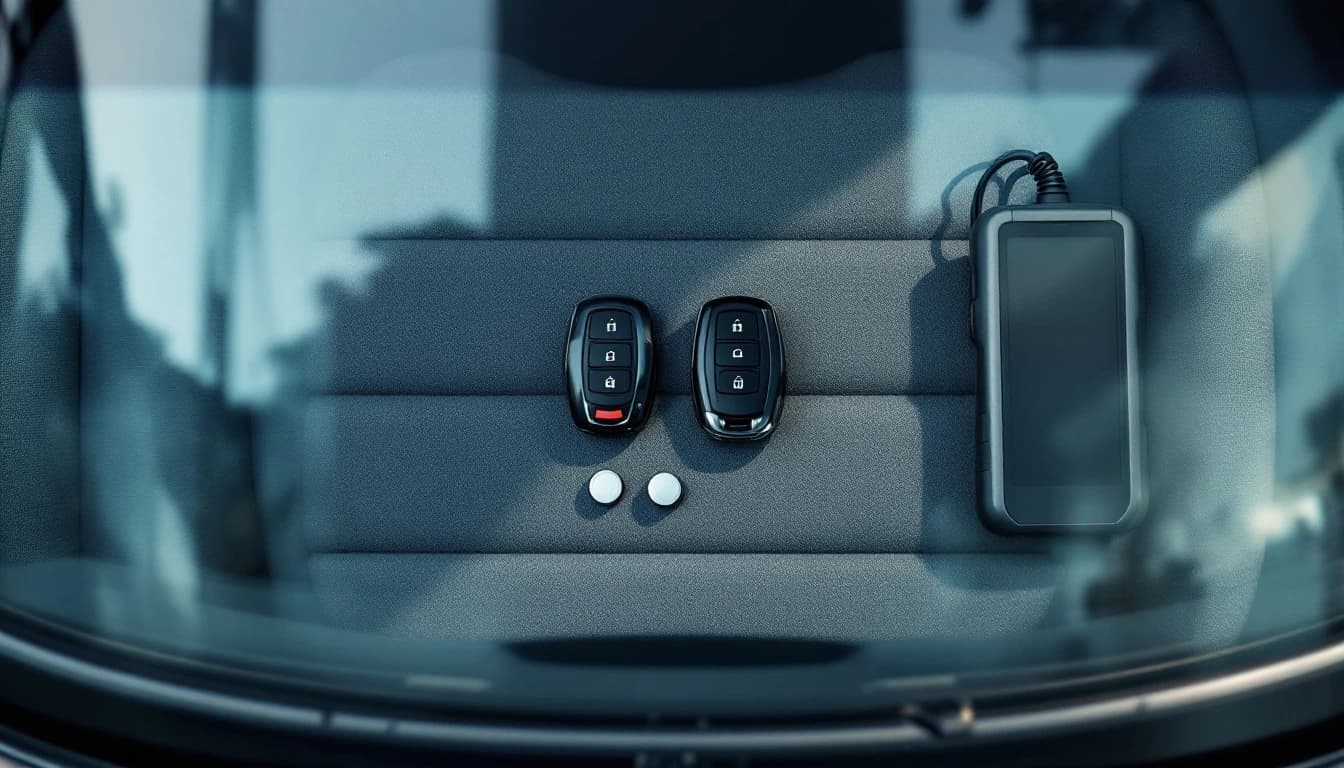
Both Key Fobs Stopped Working at the Same Time in Frisco, TX
When both car keys fail together the problem is almost never the keys. A diagnostic guide to receivers, body modules, 12-volt batteries, and repair costs.
Both Key Fobs Stopped Working at the Same Time in Frisco, TX
Direct answer. When two independent key fobs stop working on the same day, the problem is almost never the fobs. Two separate battery-powered devices do not fail simultaneously by coincidence. The fault is on the vehicle's side: most commonly a flat 12-volt battery, then a failed keyless-entry receiver or antenna, then a body control module fault, and occasionally strong local radio interference. Diagnose before you buy anything.
That matters financially. A new fob is $85 to $450. A module fault is $200 to $800. Buying the first when you needed the second means you have spent real money and your car still does not open.
Frisco Car Key is a fully mobile automotive locksmith serving Frisco, Plano, McKinney, Allen, The Colony, and Prosper. Frisco Car Key, (469) 402-9781, contact@friscocarkeys.com.
Why Simultaneous Failure Is Diagnostically Useful
Think of it as a shared-component problem.
Your two fobs share almost nothing. Different batteries, purchased at different times, different circuit boards, different physical histories - one lived in a purse, one in a kitchen drawer. The only things they have in common are the vehicle they talk to and the air between them and it.
So when both fail together, one of those two shared things is at fault. That single deduction eliminates the most expensive wrong turn in this whole scenario, which is buying replacement fobs.
There is exactly one common exception, and it is worth ruling out first: if both fobs were bought at the same time, from the same seller, and have never had their batteries changed, they may genuinely be reaching end of battery life together. Two coin cells from the same batch, installed the same week, in the same Texas heat, can die within days of each other. That is a real coincidence with a common cause, and it costs a few dollars to eliminate.
The Diagnostic, In Order
Step 1: Try the mechanical key
Almost every proximity fob hides a mechanical emergency blade. Release the catch, slide it out, and use it in the driver's door lock cylinder - often concealed behind a small cap on the handle.
If the door opens mechanically, you have confirmed you can get into the vehicle and you have bought yourself time to diagnose properly instead of in a panic.
If the blade will not go in, or turns nothing, note that too. Aftermarket fobs frequently ship with an uncut blank inside, which means the emergency function never existed. That is worth knowing before you need it - and it is one of the things we cut and physically test on every fob we program.
Step 2: Check the 12-volt battery
This is the highest-probability cause and the one owners overlook most consistently.
The symptoms of a flat 12-volt battery mimic total key failure exactly: fobs do nothing, doors do not respond, push-button start does nothing, dashboard dark. The vehicle is not ignoring your keys. It has no power with which to hear them.
Tells to look for: interior dome light dead or extremely dim, no click at all when you press start, headlights that produce nothing, an alarm that has been going off intermittently for days. If the vehicle sat unused for a couple of weeks - a second car, a vehicle parked at DFW during a trip - a parasitic drain is a strong candidate.
On electric and hybrid vehicles this is the single most misdiagnosed failure. The traction battery can be at 80 percent while the small conventional 12-volt battery that actually powers the locks, modules, and receiver is completely flat. Owners see a nearly full state-of-charge display and rule out battery problems, which is precisely backwards. Our guide to the dead 12-volt battery with a phone key covers this in detail, as does our walkthrough of a hybrid that will not enter ready mode.
Step 3: Change both fob batteries anyway
It costs a few dollars and it eliminates the one real coincidence scenario.
Use the correct cell type, seat it with the correct polarity, and make sure the case is fully closed - a case that has not clicked shut leaves the contact loose, and a loose contact behaves exactly like a dead battery. Frisco summers are hard on coin cells: sustained cabin heat accelerates self-discharge, and a fob left on a dashboard is in an oven. We wrote about that pattern specifically in our piece on Texas heat and key fob failures.
If new batteries in both fobs change nothing, you have now proven the fobs are not the problem, and that is genuinely valuable information.
Step 4: Test whether the immobilizer still works
This step separates two very different faults, and you can do it yourself.
Get into the vehicle - mechanically if needed - and try to start it. On a push-button vehicle, hold the fob directly against the start button or the marked backup location, which most manufacturers provide precisely for a dead-fob scenario. On a bladed-key vehicle, put the key in the ignition and turn it.
If the engine starts but the remote buttons still do nothing: the immobilizer side is healthy and the transponder credential is being read. What has failed is the remote keyless entry side - the receiver, its antenna, or the module handling it. Two different radio systems, two different failure points.
If the engine will not start either: the fault is deeper. The immobilizer, the body control module, or the vehicle's power supply is involved.
If a security or immobilizer warning light stays illuminated or flashes: that is the vehicle explicitly reporting a security-system fault, and it points at module-level work rather than key work. Our guide to the key not detected warning while driving covers the related intermittent version of this.
Step 5: Move the vehicle
If you can start it, drive it fifty yards and try the fobs again.
Strong radio-frequency interference genuinely disables keyless entry within a limited area, and it is more common than it sounds. Concentrations of transmitting equipment, certain commercial installations, some security systems, and even a failing electronic device in the vehicle itself can flood the band the fob uses. The signature is unmistakable once you look for it: nothing works in one specific parking spot and everything works normally fifty yards away.
Owners who park in the same spot every day can go weeks blaming their keys for what is actually a location problem.
Step 6: Now call somebody
If you have reached this point - both fobs with fresh batteries, a healthy 12-volt battery, no interference, and either no remote function or no start - you have a vehicle-side fault that needs equipment to diagnose. That is the point at which the diagnostic stops being free.
What Each Cause Costs to Fix
| Root cause | What it needs | Price band (Oct 2026) |
|---|---|---|
| Both fob batteries expired together | Coin cells | A few dollars |
| Flat or failing 12-volt battery | Battery service | Varies by vehicle |
| Fob damaged by water or heat | Car key replacement | $85 - $450 |
| Proximity smart key replacement | Smart key programming | $120 - $500 |
| Keyless receiver or antenna fault | ECU and module programming | $200 - $800 |
| Body control module fault | ECU and module programming | $200 - $800 |
| Immobilizer module fault | ECU and module programming | $200 - $800 |
| Ignition cylinder or switch fault | Ignition repair | $150 - $550 |
| Cannot get into the vehicle at all | Car lockout | $75 - $200 |
The Module Side, Explained Without Jargon
Three separate systems have to cooperate before a modern car opens and starts, and they fail independently.
The remote keyless entry system is the one you press buttons for. The fob transmits a rolling code; a receiver in the vehicle hears it and tells the body control module to actuate the locks. If the receiver or its antenna fails, the buttons stop working while the vehicle otherwise behaves normally - and crucially, the car may still start fine.
The immobilizer is the security layer. A coil around the ignition or a proximity antenna challenges the key's chip, and the engine will not run unless the answer is correct. This is the system the National Highway Traffic Safety Administration credits with driving hot-wire drive-away theft down sharply since immobilizers became standard equipment, and the Insurance Institute for Highway Safety tracks the same effect in loss data. It is also why a fob bought online is an inert plastic shell until a credentialed technician enrolls it.
The body control module coordinates a great deal else - lighting, door locks, alarm behaviour, and often the interface between the other two. When it faults, symptoms scatter across systems in ways that look unrelated: keys, interior lights, and wipers all misbehaving in the same week is a classic body-module signature.
Diagnosing which of the three has failed requires connecting to the vehicle and reading what its own modules report. A guess is expensive. On the Hyundai and Kia platforms particularly, the immobilizer architecture has its own service pattern, which we walk through in our guide to Hyundai and Kia SMARTRA immobilizer module programming.
"The call I want to intercept is the one where somebody already bought two fobs online because both of theirs stopped working. Two fobs, neither programmed, and the actual fault was a receiver. That is real money spent on the wrong layer, and a five-minute conversation before the purchase would have saved all of it." - a Frisco Car Key mobile locksmith technician credentialed for automotive immobilizer work
What We Do On Site
We start with the free eliminations, in front of you: mechanical entry if needed, battery state, fob transmission, whether the immobilizer reads a credential. Then we connect to the vehicle and read what its modules actually report rather than inferring from symptoms.
From there the outcome is one of four things. The keys genuinely are the problem and we cut and program replacements. The receiver, immobilizer, or body module is at fault and we quote ECU and module programming against the $200 to $800 band. The fault is mechanical in the ignition and belongs in ignition repair. Or the fault is outside automotive locksmithing - a charging-system problem, a wiring fault, a manufacturer-specific module that must be dealer-routed - and we say so plainly rather than billing for the discovery.
The National Automotive Service Task Force (NASTF) provides the legitimate channel through which vetted independent locksmiths access manufacturer security information where it is supported, and the Associated Locksmiths of America (ALOA) maintains the professional standards behind that work. Where a specific procedure genuinely sits outside that framework, the honest answer is the dealer, and we give it during phone triage rather than after a trip charge.
In Texas this work is regulated under the Texas Department of Public Safety (DPS) Private Security Program - not the TDLR, a mix-up that appears constantly in online advice. Expect any technician to ask for identification and documentation tying you to the vehicle. The Federal Trade Commission has published for years on the locksmith scam pattern, and a technician who never asks who owns the car is a technician who will open somebody else's the same way.
The Related Symptom Worth Ruling Out
If your fobs work but the car intermittently refuses to acknowledge them - it starts on the third try, or only when the fob is pressed against the start button - that is a different and earlier-stage fault, usually a weakening fob, a marginal antenna, or a receiver beginning to fail. It is worth acting on while the vehicle is still drivable rather than after it strands you. Our guide to push-to-start not recognising the key fob covers that progression.
One make-specific version of this deserves a mention. On turn-key Hyundai and Kia models that received the manufacturers' anti-theft software update, the car now depends on its remote fob to disarm before it will start, so a single dead fob can look like a whole-car failure even though the metal key still turns. We cover that case in Hyundai or Kia won't start after the anti-theft software update. And where the diagnosis does land on a body or security module, the work looks much like what we describe in our guide to Jeep Wagoneer and Grand Wagoneer module programming: identify the module, confirm the fault with live data, and only then program or replace it.
And if you are on a Tesla, where there is no conventional fob and the credential set is the key card plus the phone, the failure pattern is different enough that our Tesla Model 3 and Model Y all keys lost guide is the better page.
Whatever the outcome, we come to the vehicle across Frisco and the surrounding communities rather than requiring a tow, and for straightforward key faults our car key replacement service resolves it in the same visit.
Frequently Asked Questions
Both my key fobs stopped working at once. Is it the keys or the car?
Almost certainly the car. Two independent fobs with different batteries and different histories do not fail on the same day by coincidence, and the only things they share are the vehicle and the air between them and it. Check the 12-volt battery first, then change both fob batteries to eliminate the one genuine coincidence scenario, then test whether the engine still starts with the fob held against the start button. What you learn from those three steps determines whether you need keys or module work.
Can a dead car battery make both key fobs stop working?
Yes, and it is the most common cause of this exact symptom. A flat 12-volt battery leaves the door locks, the keyless receiver, and push-button start with no power, so the vehicle simply cannot hear either fob. On electric and hybrid vehicles this is especially misleading because the large traction battery can be nearly full while the small conventional battery that runs the locks and modules is completely dead. Dim or absent interior lights are the giveaway.
How much does it cost to fix a keyless entry receiver?
Receiver, antenna, immobilizer, and body control module work all fall in our ECU and module programming band of $200 to $800 as of October 2026, depending on which module is involved, whether it needs programming or replacement, and how much diagnostic time the fault requires. That is a genuinely different service from key replacement at $85 to $450, which is exactly why diagnosing before buying parts matters.
My car starts but the remote buttons do nothing. What does that mean?
It means the immobilizer side is healthy and your key's security chip is being read correctly, while the remote keyless entry side has failed. Those are two separate radio systems in the same vehicle. The likely fault is the keyless receiver, its antenna, or the module handling remote functions - not the key itself. Replacing the fob in this situation usually changes nothing.
Could interference be stopping my key fobs from working?
Yes, and the signature is easy to confirm. Strong local radio interference can flood the frequency band keyless entry uses, disabling remotes within a limited area while everything works normally somewhere else. Test it by starting the vehicle, moving it fifty yards, and trying the fobs again. Owners who park in the same spot daily sometimes blame their keys for weeks when the actual problem is one specific parking space.
Should I just buy new fobs online to test the theory?
No. A fob bought online is an inert shell until a credentialed technician cuts its blade and enrolls its credential into your specific vehicle, so an unprogrammed fob proves nothing and tests nothing. If the actual fault is a receiver or module, you have spent real money on parts that would not have helped even fully programmed. Diagnose first, then buy the part the diagnosis points at.
Is this something a locksmith fixes or a mechanic?
It depends on which layer failed, and finding out is the first job. Key cutting, programming, immobilizer credentials, receiver and body-module work around vehicle access, and ignition repair are all automotive locksmith work. A charging-system fault, a wiring problem, or a manufacturer-specific module that must be dealer-routed is not, and a good technician tells you that plainly rather than billing you to discover it.
References
- National Highway Traffic Safety Administration (NHTSA) - immobilizer technology and vehicle theft trends
- Insurance Institute for Highway Safety (IIHS) - vehicle theft and anti-theft technology loss data
- National Automotive Service Task Force (NASTF) - secure data release for vetted independent locksmiths
- Associated Locksmiths of America (ALOA) - professional standards and credentialing
- Federal Trade Commission (FTC) - locksmith scam patterns and consumer guidance
- AAA - roadside assistance and battery failure data
- Texas Department of Public Safety, Private Security Program - Texas locksmith regulation
Related Guides
Hyundai or Kia Won't Start After the Anti-Theft Software Update: Causes and Fixes in Frisco, TX
After the free anti-theft update, a turn-key Hyundai or Kia depends on its key fob in a way it never did before. Lose the fob and the right key may no longer start the car. What is happening, and what it costs to fix.
Hyundai and Kia Spare Key Cost in Frisco, TX (2026): By Key Type, Not Just Model
A spare Hyundai or Kia key is priced by the kind of key, not the badge. Here is what a spare costs in Frisco for turn keys, flip keys, smart keys and digital keys, and the one rule that saves owners the most money.
Kia K4 Key Replacement in Frisco, TX: Smart Key, Spare Key and Digital Key 2
The Kia K4 replaced the Forte with a more connected key setup. Here is how the K4 smart key works, what a spare or replacement costs in Frisco, where Digital Key 2 fits, and how to avoid the expensive all-keys-lost visit.