
"Key Not Detected" Warning While Driving: What It Means and What to Do
Your dash flashed key not detected while you were driving in Frisco. Here is what causes it, what to do before you shut the engine off, and repair costs.
The Short Answer, Because You May Be Reading This at a Red Light
If your dashboard says "Key Not Detected" or "No Key Detected" while you are driving, the engine will not shut off. Modern vehicles deliberately keep running once started, so you are not about to stall in traffic. The real risk is switching the car off somewhere inconvenient and then being unable to restart it. Drive to a safe, planned location - ideally home or somewhere you would not mind waiting - and leave it running until you get there.
As of August 2026, the fix is usually cheap: a fob battery. Occasionally it is a receiver or antenna module, which is a larger job. This guide walks the diagnostic order from most to least likely.
Frisco Car Key, (469) 402-9781, contact@friscocarkeys.com - fully mobile, we come to the car.
First: What Not To Do
Do not shut the engine off to "reset it." This is the instinct almost everyone has, and it is the one action that converts a minor annoyance into a tow. The vehicle checks for a valid key at start-up. It stops checking, in the strict sense, once the engine is running. Turn it off in a parking lot at Stonebriar and you may be standing there with a car that will not restart.
Do not pull over on the shoulder of the Tollway to investigate. The warning is not an emergency. Roadside stops on high-speed roads are genuinely dangerous, and this is not a situation that warrants one.
Do drive somewhere useful. Home, your office lot, a well-lit parking area where a technician can reach you. If you have a spare key at home, that is the best destination available.
Why You Get This Warning at All
A push-to-start vehicle does not read your key through a slot. It broadcasts low-frequency signals from a set of antennas around the cabin and waits for the fob to answer with an encrypted response. If it stops hearing that answer, it tells you - because the manufacturer would rather warn you now than let you shut off in an unfamiliar place with a key the car cannot see.
That means the warning is genuinely useful information. It is telling you that the communication link between fob and vehicle has become unreliable. Something in that chain has degraded.
The Diagnostic Order
Work through these in order. The list is deliberately arranged from most common to least, because that is also cheapest to most expensive.
1. Fob battery (the answer most of the time)
A weakening coin cell is by far the most common cause. The failure pattern is characteristic: the fob works fine when it is close to the start button but drops out when it is in a back pocket, a purse on the rear seat, or a bag in the footwell. Range shrinks before the fob dies outright, and the warning usually appears in that shrinking window.
Test it: hold the fob directly against the start button or place it in the vehicle's designated backup key pocket (many cars have one - check the manual, often in the centre console or on the steering column). If the warning stops, you have your answer.
Cost: a coin cell is a few dollars. This is the outcome you want. Texas summers accelerate coin-cell failure, which is why we see a seasonal spike - more on that in Texas heat and key fob failures.
2. Radio interference
Frisco has a lot of it. Dense retail corridors, big parking structures, and - most commonly - accessories inside your own car. Phone chargers, dash cams, tyre-pressure sensors from aftermarket kits, and cheap USB adapters all radiate noise that can swamp a low-frequency key signal.
Test it: unplug everything from the 12-volt sockets and USB ports, then see whether the warning changes behaviour. Also try moving the fob away from your phone - two transmitters pressed together in one pocket is a surprisingly frequent culprit.
Cost: free, if the offending accessory is the cause.
3. Fob physical damage or moisture
Fobs get dropped, sat on, and washed. Water intrusion corrodes contacts quietly, and the symptom is exactly this: intermittent recognition that gets worse over weeks. If your fob has been through a laundry cycle or a pool, treat that as the prime suspect regardless of how well it seemed to work afterwards. We covered the failure sequence in key fob water damage on luxury cars.
Cost: replacement proximity smart key, $120 to $500 depending on platform.
4. Low 12-volt system voltage
On any vehicle, and especially on hybrids and EVs, a weak 12-volt battery produces bizarre electronic symptoms before it produces an obvious no-start. Key detection is one of the first things to get flaky, because the receiver modules are sensitive to voltage drop.
If your car is a hybrid or EV, this moves up the list considerably. A hybrid that will not enter ready mode is a related presentation - see hybrid will not enter ready mode - and on EVs the 12-volt is the single most common cause of apparent key failure, discussed in EV 12-volt battery dead and the phone key not working.
Cost: battery service, which is not our trade - we will tell you plainly to see a mechanic or battery service rather than sell you a key.
5. Antenna or receiver module fault
If a good fob with a fresh battery, held right at the start button, still produces the warning, the problem has moved into the vehicle. Interior antennas can fail, connectors corrode, and the receiver module itself can develop faults. This is the diagnosis of exclusion - you should only land here after ruling out everything above.
Cost: module and immobilizer programming runs $200 to $800, and the part cost is separate and varies enormously. This is where honest diagnosis saves real money, because nobody should sell you a module job that a $4 battery would have fixed.
6. Immobilizer or body-control fault
Rare, and usually accompanied by other symptoms - security lights, remote functions misbehaving, other modules throwing complaints. Related module work is described in guides like our Hyundai and Kia immobilizer module programming walkthrough.
Cost Summary
| Cause | Realistic cost | Who fixes it | How common |
|---|---|---|---|
| Weak fob battery | A few dollars | You, in two minutes | Most cases |
| Accessory or radio interference | Free | You | Fairly common |
| Damaged or water-affected fob | $120 - $500 (replacement smart key) | Automotive locksmith | Common |
| Weak 12-volt battery | Battery service pricing | Mechanic or battery service | Common on hybrids and EVs |
| Antenna or receiver module fault | $200 - $800 programming, plus parts | Automotive locksmith or dealer | Uncommon |
| Immobilizer or body-control fault | $200 - $800 programming, plus parts | Automotive locksmith or dealer | Rare |
| Emergency lockout if you shut it off | $75 - $200 | Automotive locksmith | Avoidable |
Every figure above is a range we quote from, confirmed against your VIN before work begins. We do not publish invented dealer comparisons.
The Backup Start Procedure Nearly Nobody Knows
Almost every push-to-start vehicle has a documented way to start with a dead fob. The two common designs:
- A designated key pocket or tray - usually in the centre console, the glovebox, or a marked spot in a cupholder. Place the fob there and press start.
- Touch the fob to the start button itself - the button contains a short-range coil for exactly this purpose.
Find yours in the owner's manual before you need it. Five minutes on a Saturday saves a callout fee on a Tuesday night. This is the same argument AAA has made about roadside preparedness for decades, and it is entirely free to act on.
"Nine times in ten this is a coin cell, and the customer has driven around anxious for a week. The tenth time it is an antenna module and the customer has already replaced two fobs chasing it. The order you check things in is the whole job."
- a working automotive locksmith with more than a decade of North Texas field experience, speaking on condition of anonymity
When It Is Intermittent - The Hardest Version
Intermittent faults are frustrating because the car behaves perfectly in front of whoever is trying to help. Some structure makes it tractable:
Keep a short log. Date, time, where the fob was (pocket, bag, cupholder), what was plugged in, whether the engine was cold or hot. Patterns emerge fast. A fault that only appears when the fob is in a rear bag is a range problem - battery or fob. A fault that appears only in the same parking garage is interference. A fault that appears only on cold mornings points at voltage.
Test with a second fob. If your spare never triggers the warning, the first fob is the problem and you are done diagnosing. This is the single most decisive test available, and it requires having a spare - which is the argument for keeping one in the first place.
Do not throw parts at it. The most expensive version of this repair is the one where a fob, then a second fob, then a module all get replaced in sequence. Diagnose in order.
A Note on Security
Keyless systems have attracted relay and signal-amplification attacks, and Frisco's vehicle mix makes it a market worth being thoughtful in. The Insurance Institute for Highway Safety and the National Highway Traffic Safety Administration both publish research on vehicle theft trends and anti-theft technology that is worth reading if you park a keyless vehicle outdoors overnight. Practical countermeasures are covered in relay theft and keyless security for luxury vehicles.
Worth stating clearly: a key-not-detected warning is not a sign that someone has attacked your car. It is almost always a battery. But the two topics share the same hardware, and owners who understand one tend to handle the other better.
Who To Call, and How Pricing Works
For fob, key and immobilizer-side problems, an automotive locksmith is the right call and can come to you - which matters when the risk is being unable to restart. For battery and charging-system problems, a mechanic or battery service is the right call, and we will say so rather than sell you something.
When you call us, we ask for the year, model, VIN, and what exactly the warning does. Then we give you a firm price and an arrival window. We verify ownership on site - photo ID against registration or title - which is standard practice for any legitimate operator and reflects the framework the National Automotive Service Task Force has built around secure access to vehicle security information. The Associated Locksmiths of America publishes consumer guidance on vetting locksmiths, and the Federal Trade Commission's material on transparent pricing is a good primer before any emergency call.
Texas locksmith licensing runs through the Texas Department of Public Safety Private Security Program - not the TDLR, a mistake that appears constantly in online locksmith content. Confirming licensing is quick and worth doing.
We serve Frisco, Plano, McKinney, Allen, The Colony and Prosper. If it turns out you need smart key programming or a full car key replacement, that is a scheduled job we can usually handle in your driveway.
Frequently Asked Questions
Will my car stall if it says the key is not detected while driving?
No. Modern push-to-start vehicles are designed to keep running once the engine has started, precisely so that a key problem cannot cause a stall in traffic. The warning is telling you that the car may not be able to restart after you switch it off. Treat it as a planning problem rather than an emergency: keep driving to a safe destination of your choosing and leave the engine running until you arrive somewhere convenient.
What is the most common cause of a key-not-detected warning?
A weak fob battery, by a wide margin. The characteristic pattern is that the fob works when held close to the start button but drops out when it is in a pocket, bag, or the back seat - shrinking range is the warning sign. Coin cells fail faster in Texas heat, which produces a noticeable summer spike in these calls. Before spending money on anything else, replace the battery and see whether the symptom disappears.
Can I still start the car if the fob battery is completely dead?
Almost always, yes. Nearly every push-to-start vehicle has a documented backup procedure: either a designated key pocket or tray in the console, glovebox or cupholder, or the ability to touch the fob directly to the start button, which contains a short-range coil for the purpose. Look this up in your owner's manual before you need it - it takes five minutes and can save you an after-hours callout.
How much does it cost to fix a key-not-detected warning?
It depends entirely on the cause, which is why diagnosis order matters. A fob battery is a few dollars. A damaged or water-affected fob means a replacement smart key at $120 to $500. An antenna or receiver module fault means programming at $200 to $800 plus parts. A weak 12-volt battery is a battery-service cost and not our trade. Nobody should sell you a module job before ruling out the cheap causes.
Why does the warning only appear sometimes?
Intermittent faults usually mean a marginal signal rather than a dead component. Keep a short log of when it happens - where the fob was, what was plugged in, whether the engine was cold. A fault that only appears with the fob in a rear bag points at range, meaning battery or fob. One that only appears in a specific parking garage points at interference. One that only appears on cold mornings points at low system voltage.
Could this mean someone is trying to steal my car?
Almost certainly not. Key-not-detected warnings are overwhelmingly caused by battery, interference, or hardware faults, not by attacks. That said, keyless systems are a genuine target for relay-based theft techniques, and if you park a keyless vehicle outdoors overnight in an affluent area it is worth understanding the countermeasures separately. The two subjects share hardware but are different problems.
Should I call a locksmith or a mechanic?
Call an automotive locksmith for fob, key, immobilizer and receiver-module problems, and because we come to the vehicle - useful when the risk is being unable to restart. Call a mechanic or battery service if the diagnosis points at a weak 12-volt battery or charging system, which is common on hybrids and EVs. A good locksmith will tell you plainly when the problem is not theirs rather than selling you a key you did not need.
References
- National Highway Traffic Safety Administration (NHTSA) - vehicle safety, keyless-ignition guidance and anti-theft equipment: https://www.nhtsa.gov
- National Automotive Service Task Force (NASTF) - secure vehicle-security-information framework and ownership verification: https://www.nastf.org
- Associated Locksmiths of America (ALOA) - consumer guidance on selecting a qualified locksmith: https://www.aloa.org
- Insurance Institute for Highway Safety (IIHS) - vehicle theft research and anti-theft technology: https://www.iihs.org
- Federal Trade Commission (FTC) - consumer guidance on transparent pricing for emergency services: https://www.ftc.gov
- AAA - roadside preparedness, battery service and backup-key recommendations: https://www.aaa.com
Seeing this warning in Frisco and not sure which cause you have? Call Frisco Car Key at (469) 402-9781 or email contact@friscocarkeys.com. If the fob turns out to be the problem, our Frisco car key replacement cost guide explains the pricing, and if you drive a Tesla the related pattern is covered in our Model 3 and Model Y all-keys-lost guide.
Related Guides
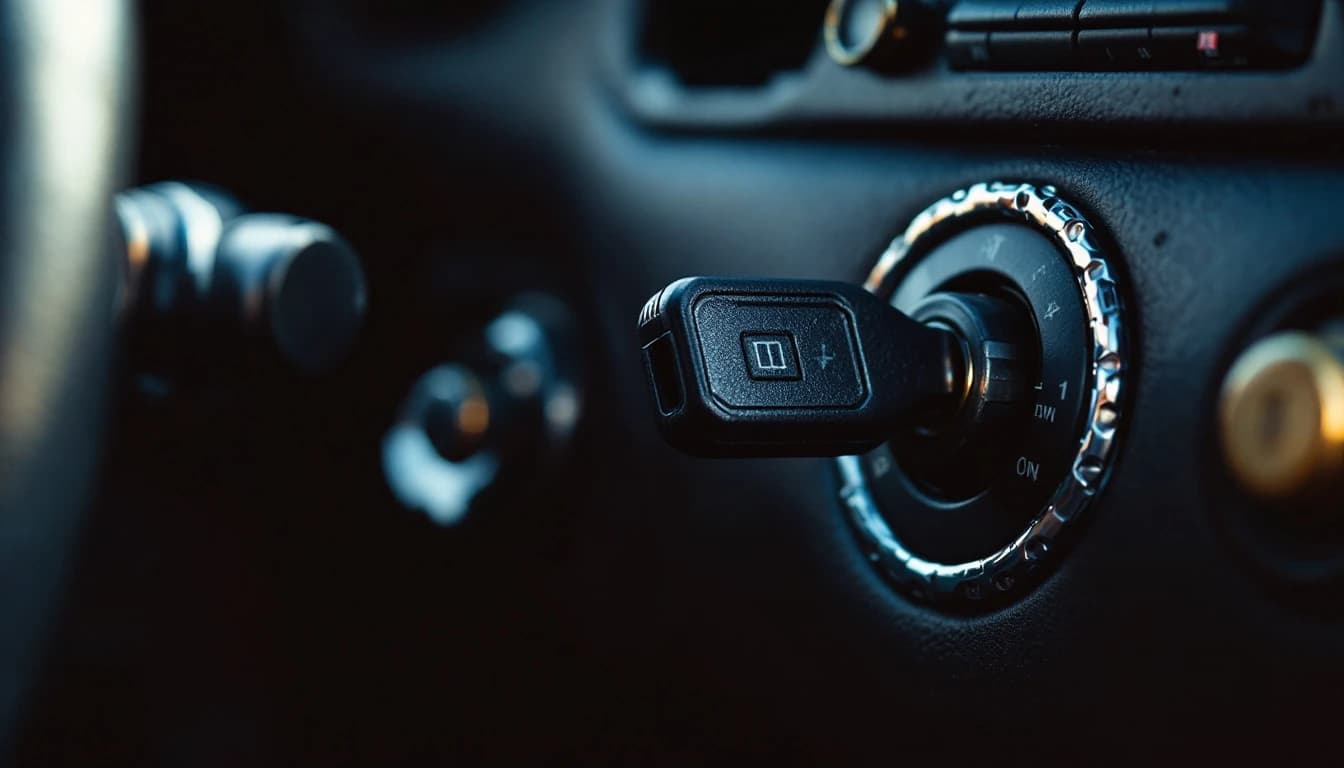
Key Stuck in the Ignition and Will Not Come Out: Frisco, TX Diagnosis Guide
A key that will not come out of the ignition is usually a shifter or interlock problem, not a lock problem - and forcing it turns a free fix into a $550 one. Here is the diagnostic order and what each outcome costs.
Auto Car Keys Replacement in Frisco TX: Mobile Key Cutting & Programming
Get fast mobile auto car keys replacement in Frisco TX. Our expert service ensures quick key cutting and programming. Contact us today for help!
Automotive Key Replacement in Frisco TX: Mobile Key Cutting & Programming
Get fast and reliable automotive key replacement in Frisco TX. Trust Friscocarkeys for mobile key cutting and programming. Call us today for quick service!