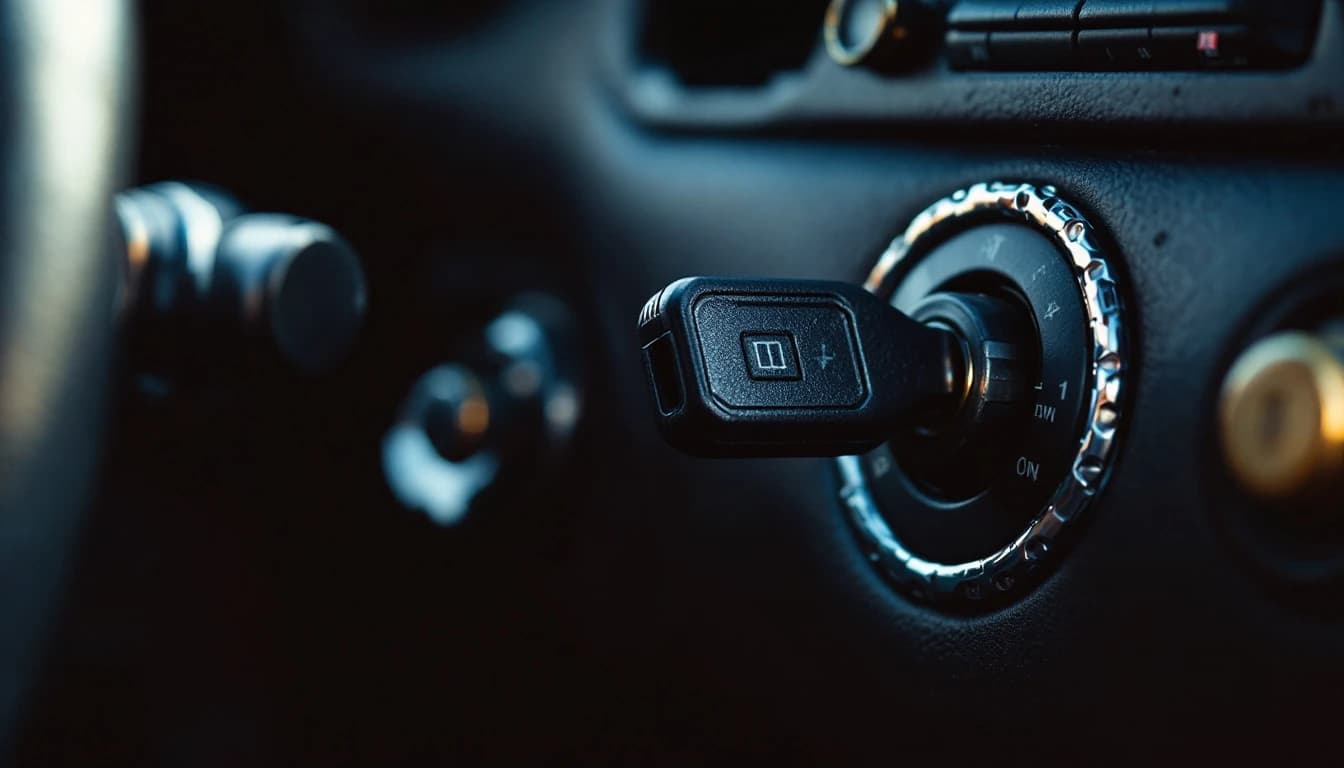
Key Stuck in the Ignition and Will Not Come Out: Frisco, TX Diagnosis Guide
Key trapped in the ignition in Frisco, TX? The five real causes, what to try before forcing it, and honest ignition repair costs. Call (469) 402-9781.
The Short Answer
As of August 2026, ignition repair in Frisco, TX runs $150 to $550, and a key stuck in the ignition is often not an ignition problem at all. In most cases the shifter is not fully seated in Park, or the park-interlock solenoid has not released. Those cost nothing to check and nothing to fix. Only when a worn cylinder, a bent key, or a failed lock mechanism is the genuine cause do you enter the repair range above. Force the key and you will convert a free fix into a paid one.
Frisco Car Key, (469) 402-9781, contact@friscocarkeys.com - fully mobile automotive locksmith, we come to the vehicle.
Why This Happens at All
On a vehicle with a traditional key cylinder, the key is deliberately trapped in the run position until the car agrees to release it. That is a safety feature: it prevents you walking away from a car that is not in Park. The release depends on a small chain of conditions, and if any link in that chain is unhappy, the key stays put.
Understanding the chain is the whole diagnosis:
- The transmission must be fully in Park (on an automatic).
- The park-interlock solenoid must energise and physically release the lock pin.
- The cylinder wafers must return to their rest position so the key can slide out.
- The key itself must be undamaged enough to clear those wafers.
- On some designs, the steering lock must not be under load.
Each of the five items below maps to one link in that chain, ordered most to least common.
The Diagnostic Order
1. The shifter is not truly in Park
This is the number one cause, and it embarrasses people needlessly - it happens to careful drivers constantly. A shifter can look like it is in Park while sitting a millimetre short of the detent, particularly on a slope. Frisco has plenty of sloped driveways and parking decks, and gravity loading the parking pawl makes it worse.
Try this: with your foot on the brake, move the shifter firmly into Neutral and back into Park. Push it decisively - do not be gentle. Then try the key again. If the car is on an incline, set the parking brake first, then shift out of and back into Park; taking load off the pawl often frees everything instantly.
Cost: free. This resolves a large share of these calls.
2. The park-interlock solenoid has not released
If the shifter is genuinely in Park and the key still will not come out, the solenoid that physically releases the key lock may not be energising. Common causes are a blown fuse, a failed brake-light switch (which many designs use as an input), low battery voltage, or a failed solenoid.
Clue worth checking: do your brake lights work? On many vehicles the brake-light switch feeds the interlock circuit, so a dead brake-light switch produces exactly this symptom. If your brake lights are out and your key is trapped, you have almost certainly found the fault, and it is an inexpensive electrical repair - a mechanic's job, not a locksmith's.
Cost: a fuse or brake-light switch is modest and is not our trade. We will tell you so rather than selling you a cylinder.
3. A worn or damaged key
Keys wear. After a decade of daily use the cut edges round off, and a rounded key can enter and turn but then snag on the way out. Bent keys do the same. If you use your key as a package opener or a screwdriver - and many people do - suspect this one.
Test it: if you have a spare, or better still a rarely used original, compare them side by side against a light. Visible rounding on the peaks of the cuts is your answer. A spare that comes out cleanly while the daily key sticks is a definitive result.
Cost: a fresh cut key. Duplication where supported runs $50 to $300; a full replacement with programming runs $85 to $450 for bladed transponder keys.
4. Worn or contaminated ignition cylinder
The wafers inside the cylinder are small spring-loaded parts, and after enough cycles they wear, stick, or gum up. Heavy keychains accelerate this dramatically - a lanyard full of house keys, gym tags and a bottle opener hanging off the ignition applies constant leverage the cylinder was never designed for.
Symptoms that point here: the key has been getting progressively harder to insert or remove for weeks or months; it works better when you wiggle it; you have to jiggle it to start the car; the problem is getting worse rather than appearing suddenly.
Cost: $150 to $550 for ignition repair or cylinder replacement, quoted after diagnosis. This is the classic ignition-repair job.
5. Steering lock under load
If you parked with the wheels turned against a kerb - which happens on every sloped Frisco street - the steering lock can bind. That usually presents as a key that will not turn, but on some vehicles it also interferes with release.
Try this: hold light steady pressure on the steering wheel in one direction and then the other while gently trying the key. Light pressure, not force. If it frees, you have your answer.
Cost: free.
What Not To Do
Do not force it. A key snapped off inside the cylinder is a far worse problem than a stuck key. It requires extraction - see our broken car key extraction guide - and it can damage the cylinder in ways that turn a maybe-repairable unit into a definite replacement.
Do not use pliers. Pliers give you enough leverage to break the key and no useful diagnostic information.
Do not spray household lubricant into the cylinder. Generic oil-based sprays attract dust and gum wafers over time. If lubrication is warranted, it should be an appropriate dry lubricant applied by someone who has already diagnosed the fault.
Do not leave the vehicle unlocked with the key in it. If you cannot free it and must wait, stay with the car or arrange for a technician promptly. A vehicle with a key in the ignition is an obvious target, and the National Highway Traffic Safety Administration's theft-prevention guidance has always led with the simplest advice: do not leave keys in unattended vehicles.
Cost Summary
| Actual cause | Realistic cost | Who fixes it | How common |
|---|---|---|---|
| Shifter not fully in Park | Free | You, in ten seconds | Very common |
| Steering lock under load | Free | You | Common |
| Blown fuse or failed brake-light switch | Modest electrical repair | Mechanic | Common |
| Worn or bent key | $50 - $300 duplication, or $85 - $450 replacement | Automotive locksmith | Common |
| Worn or contaminated ignition cylinder | $150 - $550 | Automotive locksmith | Common |
| Key snapped off during a forcing attempt | $150 - $550 plus a new key | Automotive locksmith | Entirely avoidable |
| Emergency lockout, if the key ends up trapped in a locked car | $75 - $200 | Automotive locksmith | Situational |
Those are the bands we quote from, confirmed against your VIN before work begins. We do not publish invented dealer comparison figures.
How Ignition Repair Actually Works
When diagnosis lands on the cylinder, the job runs roughly like this. We confirm the fault is mechanical rather than electrical, remove the necessary column trim, extract the cylinder, and either service or replace it. On a vehicle with a transponder immobilizer, the replacement must then be matched so that your key still authorises the engine - that is programming work, not just mechanical work, and it is why an automotive locksmith is generally the right call rather than a general handyman.
Time on site is typically 45 to 90 minutes. Because we are mobile, the car does not need to be driveable, which matters here: a vehicle with a trapped key or a failed cylinder often cannot be safely driven to a shop.
Make-specific ignition write-ups worth reading if they match your car: Kia K5 and Stinger ignition repair, Nissan 370Z, Z and Maxima ignition repair, Toyota Camry and Corolla ignition repair, and Lexus RX and ES ignition switch repair.
"The heavy keychain is the thing I wish every driver understood. People hang a pound of metal off the ignition for ten years and then are surprised when the cylinder gives up. Take the car key off the big ring - it is the cheapest preventive maintenance in the vehicle."
- a working automotive locksmith with more than a decade of North Texas field experience, speaking on condition of anonymity
Prevention, Honestly
- Take the car key off the heavy keychain. Single most effective thing on this list.
- Replace a visibly worn key before it fails. A worn key wears the cylinder faster, so the two problems compound each other.
- Get a spare while your current key still works. Cheaper than an emergency, and it gives you the decisive diagnostic test described above. AAA has recommended a backup key as basic roadside preparedness for decades.
- Pay attention to gradual change. Ignition faults nearly always announce themselves weeks in advance through increasing stiffness. Sudden total failure is rare.
Choosing Who Fixes It
For key and cylinder work, an automotive locksmith is the appropriate trade and can come to the vehicle. For interlock electrical faults, a mechanic is the right call. Any competent operator should be willing to tell you which one you have before taking your money.
A few things to expect from a legitimate operator: a firm price rather than a starting price, ownership verification on site (photo ID against registration or title), and testing before payment. The National Automotive Service Task Force's framework for secure access to vehicle security information exists precisely because making keys and servicing immobilizers demands verified ownership. The Associated Locksmiths of America publishes consumer guidance on vetting locksmiths, and the Federal Trade Commission's material on transparent pricing is a useful primer before any emergency call. On the theft-risk side, the Insurance Institute for Highway Safety publishes ongoing research about which vehicles are targeted and why.
Texas locksmith licensing is administered through the Texas Department of Public Safety Private Security Program - not the TDLR, an error that circulates widely in online locksmith content. It takes a moment to confirm and it is worth confirming.
We serve Frisco, Plano, McKinney, Allen, The Colony and Prosper. Details on the service itself are on our ignition repair page, and car key replacement covers the key side.
Frequently Asked Questions
How much does ignition repair cost in Frisco, TX?
As of August 2026, ignition repair and cylinder replacement in Frisco runs $150 to $550, with typical on-site time of 45 to 90 minutes. The spread reflects vehicle complexity, part availability, and whether immobilizer programming is required so your key still authorises the engine afterwards. We diagnose before quoting, because a meaningful share of stuck-key calls turn out to be a shifter or interlock issue that costs nothing to resolve.
Why will my key not come out of the ignition?
Most often the transmission is not fully seated in Park, which keeps the key deliberately locked in place as a safety feature. Shift firmly into Neutral and back into Park with your foot on the brake, and set the parking brake first if you are on a slope. If that does not work, the likely causes in order are a park-interlock electrical fault, a worn or bent key, a worn ignition cylinder, or a steering lock under load.
Can I just force the key out?
No - this is the one action that reliably makes the situation more expensive. A snapped key inside the cylinder requires extraction and can damage the cylinder badly enough to turn a repairable unit into a replacement, moving you from a free fix to the full $150 to $550 repair band plus a new key. Work through the free checks first, and if none of them free the key, call someone rather than reaching for pliers.
My brake lights are out and my key is stuck - are those related?
Very likely yes. Many vehicles use the brake-light switch as an input to the park-interlock circuit that releases the key. When that switch fails, the brake lights stop working and the interlock stops releasing at the same time. It is an inexpensive electrical repair and it is a mechanic's job rather than a locksmith's. If you notice both symptoms together, mention it when you call - it saves diagnostic time.
Is a stuck key the same problem as a key that will not turn?
They are related but distinct. A key that will not turn usually points at a steering lock under load or a seized cylinder. A key that turns fine but will not come out points at the park-interlock chain - shifter position, solenoid, or wafer return. Both can end at the same cylinder repair, but the free checks are different, so it is worth describing the symptom precisely when you call.
Does a heavy keychain really damage the ignition?
Yes, and it is one of the most under-appreciated causes of premature ignition wear. A loaded keyring hanging from the ignition applies continuous downward leverage on a mechanism designed for the weight of a key. Over years it accelerates wafer wear and cylinder slop, which shows up as increasing stiffness and eventually a stuck or hard-to-turn key. Separating the car key onto its own ring is free preventive maintenance.
Can you fix this if the car cannot be driven?
Yes. We are fully mobile, which matters for exactly this situation - a vehicle with a trapped key or a failed ignition cylinder often cannot be safely driven anywhere. We come to your driveway, workplace lot, or wherever the vehicle sits in Frisco and the surrounding area, carry out the diagnosis and the repair on site, and test everything before taking payment.
References
- National Highway Traffic Safety Administration (NHTSA) - vehicle theft prevention and keyless-ignition safety guidance: https://www.nhtsa.gov
- National Automotive Service Task Force (NASTF) - secure vehicle-security-information access and ownership verification: https://www.nastf.org
- Associated Locksmiths of America (ALOA) - consumer guidance on selecting a qualified locksmith: https://www.aloa.org
- Insurance Institute for Highway Safety (IIHS) - vehicle theft research and anti-theft technology: https://www.iihs.org
- Federal Trade Commission (FTC) - guidance on transparent pricing and emergency service quotes: https://www.ftc.gov
- AAA - roadside preparedness and spare-key recommendations: https://www.aaa.com
Key trapped in the ignition somewhere in Frisco? Call Frisco Car Key at (469) 402-9781 or email contact@friscocarkeys.com. If it turns out you need a fresh key rather than a cylinder, our Frisco car key replacement cost guide covers what to expect.
Related Guides

"Key Not Detected" Warning While Driving: What It Means and What to Do
A key-not-detected warning at 60 mph on the Dallas North Tollway is alarming, but the car will not stall. Here is the diagnostic order, the one thing not to do next, and what each cause costs to fix.

Auto Car Keys Replacement in Frisco TX: Mobile Key Cutting & Programming
Get fast mobile auto car keys replacement in Frisco TX. Our expert service ensures quick key cutting and programming. Contact us today for help!
Automotive Key Replacement in Frisco TX: Mobile Key Cutting & Programming
Get fast and reliable automotive key replacement in Frisco TX. Trust Friscocarkeys for mobile key cutting and programming. Call us today for quick service!