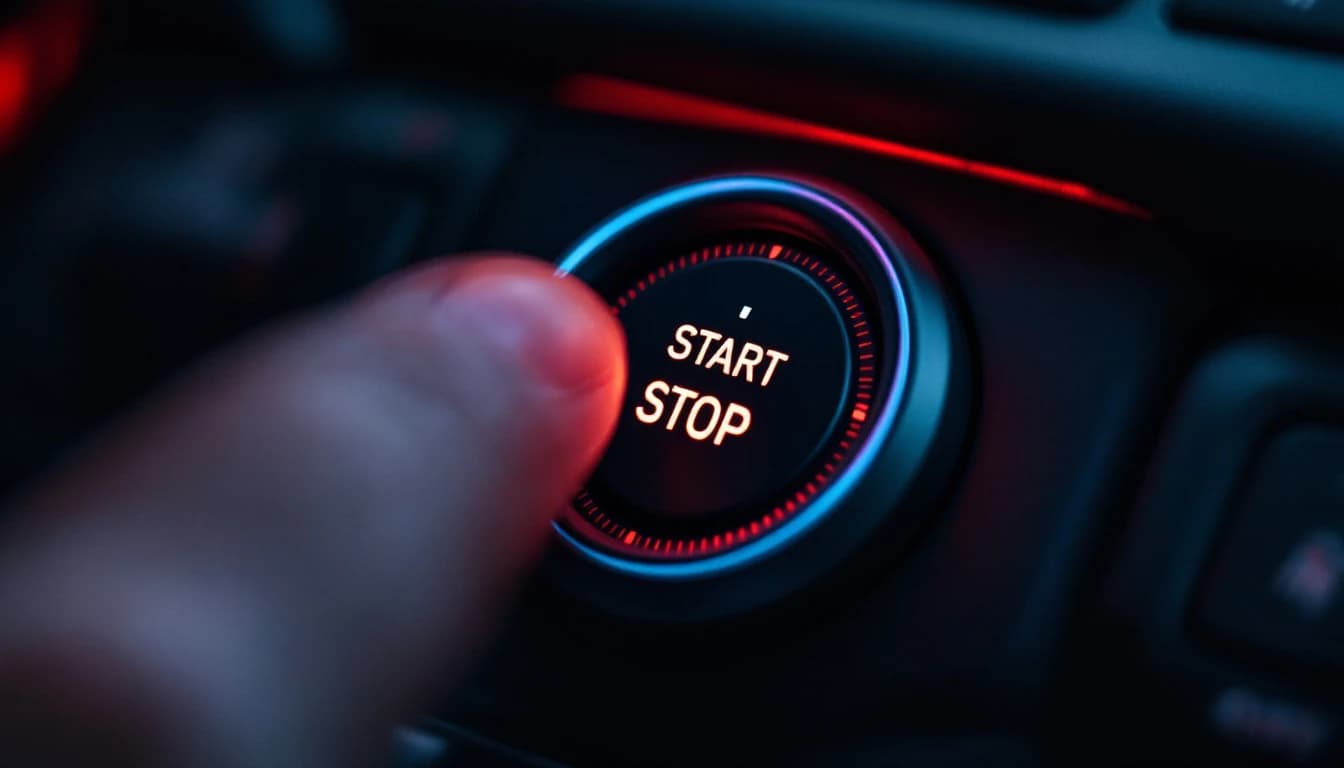
Kia K5 and Stinger Ignition Repair in Frisco, TX: Key, Switch, or Steering Lock?
2026 guide to Kia K5 and Stinger ignition repair in Frisco, TX. Tell a dead fob from a failed start button or steering lock. Call (469) 402-9781.
Kia K5 and Stinger Ignition Repair in Frisco, TX
"It won't start" is the least useful sentence in automotive diagnosis, and on a Kia K5 or a Stinger it can mean at least four completely different things with four completely different price tags. One of them costs about four dollars and you can fix it yourself in the parking lot. One of them is a real component failure that needs a technician. One of them is not an ignition problem at all. And one of them is an engine or fuel problem that a locksmith should politely decline and hand to a repair shop.
Frisco Car Key is a fully mobile automotive locksmith working across Frisco and North Texas. As of August 2026, Kia sedans are one of the more common ignition and start-system calls on our board, and a meaningful share of those calls end with us telling the owner they don't need us. That's the honest version of this trade. Reach us at Frisco Car Key, (469) 402-9781, or email contact@friscocarkeys.com.
This guide walks through what the ignition system actually is on a modern Kia, why push-button trims and turn-key trims fail in entirely different ways, how to distinguish a dead fob battery from a failed brake switch from a start-button failure from a genuine immobilizer fault, and where the line sits between what a mobile locksmith fixes and what belongs on a lift.
Quick Answer
On a push-button Kia K5 or Stinger, a no-crank condition is most often a dead fob coin cell, a failed brake pedal position switch, a failed start button, or an immobilizer authentication failure. On turn-key trims, add a worn ignition lock cylinder or a failed ignition switch to that list. As of August 2026, Kia ignition repair in Frisco generally falls in the $150 to $550 range, with key and programming work in the $120 to $500 range. A mobile locksmith can diagnose and resolve the key, cylinder, switch, and immobilizer side of that list on site; an engine that cranks strongly but never fires is a repair-shop problem, not a locksmith problem.
What the "Ignition" Actually Is on a Modern Kia
The word "ignition" is a holdover. On a car built in 1995 it described one physical assembly: a lock cylinder you inserted a key into, mechanically linked to an electrical switch that fed power to accessories, the fuel system, and the starter. One part, one job, one failure mode.
On a K5 or a Stinger, that single assembly has been decomposed into a chain of independent electronic components that each have to agree before the engine turns over. Understanding the chain is the whole diagnosis, because each link fails with its own distinct symptom.
Push-button trims: the credential chain
On push-to-start Kia sedans, the sequence looks roughly like this:
- The fob announces itself. Low-frequency antennas around the cabin interrogate the smart key. The fob answers with a rolling cryptographic response. This is the immobilizer layer, and it is the reason a modern car is genuinely difficult to drive away without a key. The National Highway Traffic Safety Administration has documented how broadly immobilizer adoption reshaped drive-away theft across the industry.
- The vehicle confirms driver intent. The brake pedal position switch has to report "pedal pressed." No brake signal, no start attempt, no matter how good the key is.
- The start button closes a circuit. It is a switch. Switches wear out. This one gets pressed twice a day for years.
- The steering column unlocks. Push-button Kias use an electronic steering column lock, commonly abbreviated ESCL or ELS depending on the service literature. It is a small motorized actuator that physically retracts a pin out of the steering shaft. If it does not report "unlocked," the vehicle will not proceed to crank, and the dash typically throws a steering-lock warning.
- The smart control unit authorizes the starter. Only after all of the above does the body and smart control logic energize the starter relay.
Five separate things, any one of which can be the entire problem. A customer says "the key doesn't work," but four of those five failure points have nothing to do with the key.
Turn-key trims: the mechanical chain still exists
Not every Kia sedan in North Texas is push-button. Depending on model year, trim, and how the car was originally optioned, some base cars ship with a conventional turn-key ignition. On those, the steering lock is mechanical and integrated with the lock cylinder rather than being a separate motorized actuator, and you inherit two classic failure modes that push-button cars simply do not have:
- A worn lock cylinder. Wafers wear, springs weaken, and after enough cycles the key goes in but the cylinder binds, turns roughly, or refuses to return from the start position. Key wear compounds this: a key that has been carried on a heavy ring for eight years is no longer cut to spec.
- A failed ignition switch. The electrical half behind the cylinder. When this goes, the symptom is usually electrical rather than mechanical: the key turns freely and nothing happens, or accessories come alive but the starter never engages.
A note on the late Optima
The Optima that preceded the K5 in this segment sits in an awkward and very common middle ground, and we get called about it constantly. Depending on the year and trim, an Optima may have a turn-key ignition with a transponder key, a turn-key ignition with a remote-head key, or full push-button smart entry with the same ESCL actuator architecture described above. That means two Optima owners in the same Frisco cul-de-sac can describe identical symptoms and need completely different work.
This is why we ask for the VIN before quoting anything. It is not a stalling tactic. On these platforms the VIN is the only way to know which of three architectures we are being asked to work on, and getting it wrong wastes your afternoon.
Telling the Four Common Failures Apart
Here is the practical diagnostic path we walk owners through on the phone, in the order that eliminates the cheapest possibilities first.
1. Dead fob battery
What it looks like: The car does not respond to the door handle or the lock buttons. When you press the start button, the dash may display a "key not detected" style message. Everything else about the car is normal.
How to confirm it in thirty seconds: Every push-button Kia has a documented backup start procedure that lets a fob with a dead coin cell start the car by holding the fob physically against or extremely close to the start button. The exact method is in your owner's manual and varies by model year. If that works, your immobilizer is perfect, your brake switch is perfect, your start button is perfect, and you need a coin cell from any drugstore.
We tell people to try this before we dispatch. It costs us a call and saves you a service fee, and we would rather be the shop that told you to buy a battery than the one that sold you a key.
2. Brake pedal position switch
What it looks like: The car recognizes the key fine. Press the start button and you get accessory mode or ignition-on, but never a crank. The single most reliable tell: your brake lights don't come on. Have someone stand behind the car while you press the pedal, or back up to a garage door or storefront glass at night and watch the reflection.
This one fools people because the symptom, "I press the button and it won't start," sounds exactly like a key problem. It is not. It is a two-dollar switch behind the brake pedal telling the car that nobody is asking it to start. It is also, notably, not a locksmith repair in most cases, and we will say so.
3. Start button failure
What it looks like: The car sees the key. The brake lights work. You press the button and get nothing at all, or you get intermittent response that improves if you press harder or press it several times. Sometimes the button's own illumination is dim or dead.
This is mechanical wear on a switch that has been actuated thousands of times, often with a thumbnail, often with cold hands, often hard. It is a genuine component failure with a genuine part, and it is squarely in ignition repair territory.
4. Immobilizer or smart-key authentication fault
What it looks like: The dash actively complains. Messages referencing the key, the immobilizer, or the security system. On some cars a small key-shaped or padlock-shaped telltale illuminates or blinks. The car may crank and then immediately stall, which is a very specific and useful symptom: cranking means the starter and battery are fine, and the immediate stall means fuel or spark was cut deliberately by the anti-theft logic.
This is the case where a locksmith is genuinely the right call. It may mean the fob's transponder circuit has failed, that the vehicle's stored key data has been corrupted, or that a control module has been replaced or has lost its pairing. Resolving it means re-establishing an authorized secure session with the immobilizer, which credentialed independent technicians can do through the vetted channel administered by the National Automotive Service Task Force.
The fifth case that is not on the list
If the engine cranks strongly, at normal speed, for several seconds and simply never fires, stop calling locksmiths. That is a fuel, spark, compression, or sensor problem. The anti-theft system has already approved the start; that is what cranking means. We will tell you this on the phone rather than driving out to bill you for the privilege of telling you in person.
Common Kia Problems We See
Across K5, Stinger, and late Optima calls in Frisco and the surrounding suburbs, a handful of patterns repeat:
- Summer fob mortality. North Texas heat is genuinely hard on fob electronics and coin cells. Fobs stored in a car through a Frisco July age fast, and we see a reliable seasonal spike in "worked yesterday, dead today" calls.
- Steering-lock warnings on push-button cars. An ESCL actuator that binds or fails leaves the column locked and the car refusing to crank. Owners frequently describe this as "the wheel is stuck and it won't start," which is actually a very precise description of the fault.
- Stinger owners with exactly one key. The Stinger is a performance sedan that frequently trades on the used market, and single-key cars are common. That is a bad position to be in on any push-button vehicle.
- Worn turn-key cylinders on higher-mileage Optimas. Ten years and a heavy keyring is a lot of cycles.
- Aftermarket remote start installations. These tap into brake, start, and immobilizer circuits. When one goes bad, it produces symptoms that perfectly mimic a factory fault. Always tell your technician if the car has one.
Kia K5, Stinger, and Optima Ignition and Key Costs in Frisco, TX
These are working ranges as of August 2026, not quotes. The final figure depends on model year, trim, which architecture the VIN reveals, and whether you have a working key. We give a firm number over the phone before anyone is dispatched.
| Kia Ignition or Key Service | Typical Range | What It Covers |
|---|---|---|
| Fob battery replacement guidance | No charge on the phone | We tell you to buy a coin cell instead of dispatching |
| Spare smart key added, working key present | $120–$500 | New proximity fob, programming, emergency blade cut |
| Key replacement, all keys lost | $85–$450 | Secure session, new keys, prior keys erased from memory |
| Turn-key ignition lock cylinder service | $150–$550 | Cylinder repair or replacement, keyed to your vehicle |
| Start button or ignition switch replacement | $150–$550 | Electrical component failure behind the button or cylinder |
| Immobilizer or module pairing work | $200–$800 | Control unit programming and key data re-pairing |
| Lockout, keys visible inside the car | $75–$200 | Damage-free entry, no key or programming work |
On pricing conduct: the Federal Trade Commission advises consumers to get clear, itemized pricing before authorizing service and to be wary of advertised prices that escalate once a technician is standing in the driveway. That pattern is a real problem in this trade. Our practice is that you get the number before we drive, and that is the number you pay unless we find something genuinely unexpected and discuss it with you first.
Deeper detail lives on our ignition repair, smart key programming, and ECU and module programming pages.
How the Appointment Actually Runs
- Phone triage. VIN, model year, trim, and a symptom walkthrough. We specifically ask whether the brake lights work, whether the dash shows a key or security message, whether the engine cranks at all, and whether you have a working key. Those four answers narrow the diagnosis dramatically before we leave.
- We come to you. Driveway, office lot, apartment garage, wherever the car sits. There is no shop to visit, because we are a mobile-only operation.
- Ownership verification. Photo ID plus registration, title, or lease and finance paperwork in your name. Any locksmith who skips this step is one you should not let near your car.
- On-site diagnosis. We confirm the phone theory against the actual vehicle before touching a part. The point is to fix the thing that is broken, not the thing that was easiest to guess.
- Repair or programming. Cylinder work, switch replacement, key cutting, or immobilizer programming as the diagnosis dictates.
- Verification. Start and stop the vehicle repeatedly, test every key you own including the ones we did not touch, confirm remote functions, and confirm no new dash warnings.
The Honest Boundary: What We Fix and What We Don't
We are an automotive locksmith, not a general repair shop, and being clear about that line is part of doing this properly.
We handle on site: key cutting and programming, spare keys, all-keys-lost recovery, ignition lock cylinder service on turn-key trims, start-button and ignition-switch replacement, immobilizer and smart-key module programming, and lockouts.
We hand off: engine mechanical and fuel-delivery faults, charging and starting-motor failures, transmission range sensor problems, wiring harness damage, collision-related electrical faults, and anything requiring a lift or extended teardown. A dead 12-volt battery is a jump start or a battery, not a key.
We are candid about: the newest Kia security architectures. Kia, like every manufacturer, continues to tighten its security stack, and there are configurations where the dealer is genuinely the right or only path. We confirm the serviceable route against your VIN before dispatch and tell you plainly if we cannot help. A technician who promises every job over the phone without a VIN is guessing, and you are the one who pays for the guess.
"The best call I take is the one where I ask three questions and tell the owner to press the fob against the start button. They start the car while we're still on the phone. I don't bill anything and they call me for real work two years later." — a Frisco Car Key mobile locksmith technician credentialed for automotive immobilizer work
Related Kia and Hyundai Reading
Kia and Hyundai share substantial security architecture, so the diagnostic logic here transfers across the family. If you are dealing with a newer electric Kia, our guide to the Kia EV9 digital key and spare covers how phone-as-key and physical fobs coexist on that platform. If your household also has a Hyundai sedan, the Hyundai Sonata and Elantra key replacement guide walks the sibling systems.
Texas Licensing and Who to Let Near Your Car
Automotive locksmiths in Texas are regulated under the Texas Department of Public Safety (DPS) Private Security Program. Confirm that whoever you call holds that license, identifies the business by name, verifies your ownership before doing key work, quotes clearly up front, and answers at a consistent phone number.
Professional standards published by the Associated Locksmiths of America treat ownership verification as a floor rather than a courtesy. A technician who will program a key for whoever happens to be standing next to a car is a technician who will do the same next to yours. The anti-theft engineering that the Insurance Institute for Highway Safety credits with measurable theft-rate improvements only works if the humans in the loop take verification seriously.
Serving Frisco and the Surrounding Communities
We are fully mobile across Frisco, Plano, McKinney, Allen, and Prosper. No shop visit, no tow for key and ignition work. Because we are an all-makes locksmith, a single appointment can also close the spare-key gap on the other vehicles in the driveway, which is usually the most efficient hour a household can spend on this problem. AAA has long grouped a backup key with jumper cables and a functional spare tire as basic vehicle preparedness, and that advice has aged extremely well now that a key is a programmed security credential rather than cut brass.
Learn more about our team or contact us to schedule.
Frequently Asked Questions
Why won't my Kia K5 start even though the fob is working?
If the car clearly sees the key (doors respond, dash lights up normally) but the engine never cranks, the fob is probably not your problem. Check whether your brake lights illuminate when you press the pedal; a failed brake pedal position switch is one of the most common causes and produces exactly this symptom. Next most likely is a worn start button or an electronic steering column lock that has not released. All three are diagnosable in a short driveway visit.
What is the ESCL on a Kia Stinger and how do I know it failed?
ESCL stands for electronic steering column lock, a small motorized actuator that physically locks and unlocks the steering shaft on push-button-start vehicles. When it fails, the steering wheel typically stays locked, the dash shows a steering-lock warning, and the car refuses to crank because the control logic never receives an unlocked confirmation. Owners usually describe it as the wheel being stuck and the car not starting, which is an accurate description of the fault.
Can a mobile locksmith replace a Kia ignition switch at my house?
Yes, in most cases. Ignition lock cylinder service on turn-key trims and start-button or ignition-switch replacement on push-button trims are both jobs we perform on site in Frisco driveways and office lots. As of August 2026 that work generally falls in the $150 to $550 range depending on the component and the vehicle configuration. What we cannot do in a driveway is anything requiring a lift, extended teardown, or engine mechanical repair.
How much does Kia ignition repair cost in Frisco, TX?
As of August 2026, ignition repair on Kia sedans typically runs $150 to $550, key replacement and smart key programming run $120 to $500, and module or immobilizer programming runs $200 to $800. Those are ranges rather than quotes. We give you a firm figure over the phone once we have the VIN and a symptom description, before anyone is dispatched, and that is the number you pay unless something genuinely unexpected turns up.
My Kia cranks but immediately shuts off. Is that the key?
Possibly, and that symptom is unusually informative. Cranking proves the battery, starter, and steering lock are all fine. An immediate stall right after cranking is the classic signature of the anti-theft system cutting fuel or spark because the key was not authenticated. That points to a fob transponder failure, corrupted stored key data, or a module that lost its pairing, all of which are locksmith work. If the engine cranks strongly for several seconds without ever firing, that is a fuel or spark problem for a repair shop instead.
Does a late-model Kia Optima use the same ignition system as a K5?
Not necessarily, and this trips up a lot of owners. Depending on year and trim, an Optima may have a turn-key ignition with a transponder key, a turn-key ignition with a remote-head key, or full push-button smart entry with an electronic steering column lock. Two Optimas with identical symptoms can need completely different work. This is exactly why we ask for the VIN before quoting; it is the only reliable way to know which architecture we are being asked to service.
Should I get a spare key for my Stinger before something breaks?
Yes, and it is one of the highest-value maintenance decisions available on a push-button car. Adding a key while a working one exists is a supported, comparatively quick procedure. Recovering from all keys lost requires establishing an authorized secure session with the immobilizer from scratch, which takes longer, costs more, and happens on the car's schedule rather than yours. Stingers frequently change hands on the used market with a single fob, so check today how many working keys you actually have.
Get a Straight Answer on Your Kia
If your K5, Stinger, or Optima won't start, call or text (469) 402-9781 or email contact@friscocarkeys.com with the VIN, model year, and what the dash is telling you. We will triage it on the phone, tell you honestly whether this is a locksmith job at all, and come to you anywhere in Frisco and North Texas if it is.
References
- National Highway Traffic Safety Administration (NHTSA) — immobilizer technology and vehicle theft prevention: https://www.nhtsa.gov
- National Automotive Service Task Force (NASTF) — secure data and vehicle access for independent technicians: https://www.nastf.org
- Associated Locksmiths of America (ALOA) — professional locksmith standards and ethics: https://www.aloa.org
- Insurance Institute for Highway Safety (IIHS) — anti-theft technology and vehicle theft research: https://www.iihs.org
- Federal Trade Commission (FTC) — consumer guidance on clear pricing and avoiding bait-and-switch: https://www.ftc.gov
- AAA — vehicle preparedness and backup key guidance: https://www.aaa.com
Related Guides

Push-Button Start Stuck in Accessory Mode: Causes, Checks and Cost in Frisco, TX
The dash lights up, the radio plays, and the engine never starts. A diagnostic walkthrough of why a push-button car stops at accessory mode, what each cause costs to fix, and who to call.
Nissan 370Z, Z, and Maxima Ignition Repair in Frisco, TX: Steering Lock, Dead Key, or Real Ignition Fault
A Nissan that clicks, flashes a steering lock warning, and refuses to start is usually one of three separate faults. Here is how to tell an electronic steering lock failure from a dead Intelligent Key or a genuinely worn ignition, and what a mobile locksmith can fix on site.
Land Rover LR3, LR4 & Range Rover Sport Ignition Repair in Frisco, TX (2005-2013)
What actually fails in the ignition system of the 2005-2013 Land Rover LR3, LR4, and Range Rover Sport, how to separate a mechanical lock fault from an electrical or immobilizer problem before spending money, and what a mobile locksmith completes on-site in Frisco.