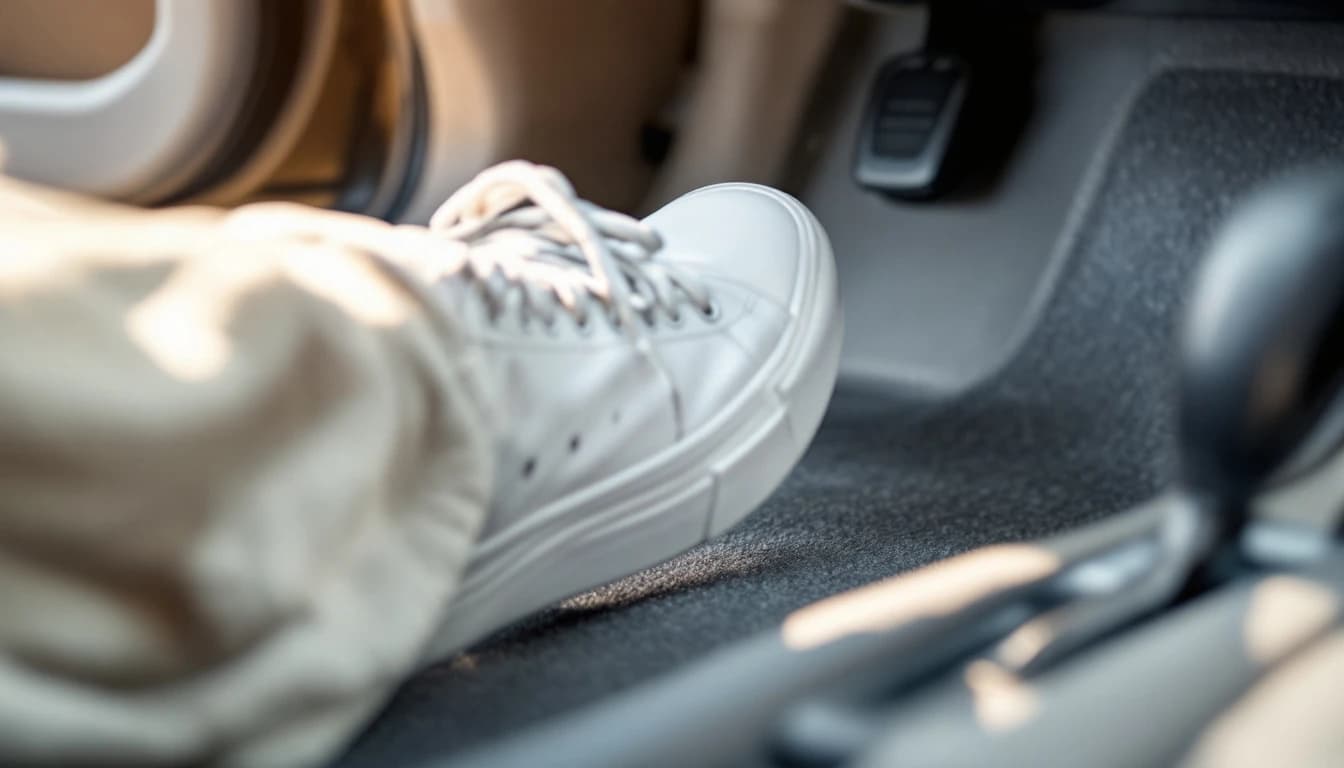
Push-Button Start Stuck in Accessory Mode: Causes, Checks and Cost in Frisco, TX
2026 guide: push-button start stuck in accessory mode and the car won't start. Likely causes, driveway checks, Frisco repair cost, and locksmith or mechanic.
Push-Button Start Stuck in Accessory Mode: The Short Answer
If your push-button car lights up the dash and plays the radio but never starts, the car is not receiving one of the signals it needs to move from accessory to start. As of October 2026 the usual causes, in rough order, are a brake pedal switch that is not reporting, a weak 12-volt battery, a key the car cannot verify, a gear selector that is not registering Park, and a steering lock or start button fault. In Frisco, start-system repair runs $150 to $550 with us; key and module causes are priced separately.
As for the question we hear most, locksmith or mechanic: call a mechanic or roadside service when the cause is the battery, the starter or the brake switch. Call an automotive locksmith when the car is not recognizing its key, when the start button or steering lock is at fault, or when the immobilizer is refusing to authorize a start. The checks below take about ten minutes and will tell you which side you are on.
Frisco Car Key is a fully mobile automotive locksmith. Reach us at Frisco Car Key, (469) 402-9781, contact@friscocarkeys.com.
What "Accessory Mode" Actually Is
A car with a metal key has positions you can feel: off, accessory, on, start. A push-button car has the same four states, but you move through them with a button and the car decides which one you get.
On most push-button vehicles the logic works like this. Press the button without your foot on the brake and the car steps through accessory, then on, then off. Press the button with your foot on the brake, the key inside the car and the selector in Park, and the car skips straight to start.
That means accessory mode is not a fault in itself. It is what the car does when it is asked to power up and is not satisfied that it should crank the engine. Something in the list of conditions is missing. The work is finding out which one.
Hybrids and electric vehicles do not crank an engine, so they show a "ready" indicator instead of starting. The logic is the same, and if yours is a hybrid, our guide to a hybrid that won't enter ready mode covers the differences.
The Five Signals a Push-Button Car Needs
Every manufacturer implements this differently, but nearly all of them require the same five things before the starter is allowed to run.
- Brake applied. The car has to see the brake pedal pressed. On a manual, it is the clutch.
- A valid key inside the cabin. The car pings for the smart key and the key has to answer correctly.
- Park or Neutral. The transmission range has to be confirmed.
- Steering lock released. On cars with an electronic steering column lock, it must unlock and report that it has.
- Enough 12-volt power. The battery has to hold up under the load of the starter.
Lose any one and the car stops short. The dash is on, because that only needs a little power and no permission. The engine is not, because that needs all five.
Likely Causes, Ranked
1. The brake pedal switch
This is the most common cause and the most often missed. A small switch at the top of the brake pedal tells the car the pedal is pressed. It also turns on your brake lights. When it fails or drifts out of adjustment, the car never sees the brake, and every press of the start button is treated as a press without the brake. The result is exactly this symptom: accessory, on, off, round and round, with no crank.
A related cause is a brake pedal that is rock hard. After the engine has been off for a while and the pedal has been pumped, there is no vacuum assist left and the pedal barely moves. If it does not travel far enough to trip the switch, the car does not see it. Press much harder than usual and try again.
2. A weak 12-volt battery
A battery can have enough charge to light the dash and run the radio while having nowhere near enough to turn a starter. In that state the car may try to start, sag, and fall back to accessory, sometimes with a click or a rapid chatter, sometimes with dash lights that dim or flicker at the moment you press the button.
North Texas heat is hard on batteries. A battery that has survived three Frisco summers is living on borrowed time, and the first cool morning of autumn is when many of them finally give up.
3. The key is not being recognized
If the car cannot verify a key in the cabin, it will not start. Most cars say so plainly with a "key not detected" or "no key" message. Some simply sit in accessory. The causes run from a weak coin cell in the fob, to radio interference, to a failed antenna inside the car, to a key that has genuinely lost its programming.
There is a built-in backup for the weak-battery case. Nearly every push-button car can read the key at very close range even when the fob's battery is flat. The usual method is to hold the fob directly against the start button, or place it in a marked slot or pocket, while pressing the button with your foot on the brake. Your owner's manual shows the exact spot. If the car starts that way, you have found the problem, and it is a coin cell. We cover the wider version of this fault in push-to-start won't recognize the key fob.
4. The car does not think it is in Park
The selector can be in Park while the car's computer disagrees. A range sensor out of adjustment, a worn shifter assembly, or on newer cars an electronic shifter that has not completed its move, will each block the start. A quick test is to hold the brake, move the selector to Neutral, and try starting there. If it starts in Neutral and not in Park, you have your answer.
This cause often shows up with a second symptom: the car that will not turn fully off, or that complains "shift to Park" when it is already there. We wrote about that side of it in car won't turn off.
5. The electronic steering lock
Many push-button cars lock the steering column with a small motor. When you press start, the lock has to retract and confirm it. If the motor is failing, or the wheel is turned hard against the lock so it binds, the car waits for a confirmation that never arrives. Some makes show a steering lock warning or a yellow key symbol. Others give no message at all.
Try turning the steering wheel gently left and right while pressing the button. If the lock was merely bound up, that frees it. If the lock motor itself is failing, the symptom will come back and get more frequent.
6. The start button itself
The button is a switch, usually with two separate contacts inside for safety, and the car expects both to agree. After years of use, one contact can wear. The car then sees a press it does not trust and does nothing, or responds only on the third or fourth push. A button that works when pressed hard, or off-center, or only when cold, is telling you it is worn.
7. The immobilizer says no
Sometimes every input is fine and the car still refuses, because the security system has not authorized the engine computer to run. This tends to follow an event: a flat battery, a jump start, a module replaced at a body shop, or a key that was added or removed. The usual sign is a security or key-shaped light that stays on or flashes while the car sits in accessory.
8. The starter circuit
Finally, the plain mechanical causes: a failed starter motor, a starter relay, a blown fuse, or a corroded cable. Here the car has given permission and the starter simply does not respond. You may hear a single solid click from under the hood. These are jobs for a mechanic.
Ten Minutes of Driveway Checks
Work through these in order. None of them needs tools.
1. Have someone watch the brake lights. Press the pedal. If the brake lights do not come on, the brake switch or its circuit is the prime suspect. This single check resolves a surprising share of these calls.
2. Press the brake hard. Much harder than normal, with your whole leg, and press the button once and hold it for a second.
3. Watch the dash at the moment you press. If the lights dim sharply or everything flickers, suspect the 12-volt battery. If nothing changes at all, the car is not even trying, which points back to the brake, key, Park or steering lock signals.
4. Read the message. "Key not detected," "press brake to start," "shift to Park," a steering symbol, a security light. The car is often telling you exactly which of the five signals is missing.
5. Hold the fob against the start button and try again with your foot on the brake.
6. Try the second key. If the spare starts the car, the problem is the first key.
7. Try Neutral. Brake on, selector to Neutral, press start.
8. Rock the steering wheel gently while pressing the button.
9. Check the battery age. Most have a date sticker. Past three or four years in this climate, it is a suspect regardless.
10. Stop pressing the button. If the car is stuck cycling, repeated attempts drain what is left of the battery and add a second problem to the first.
One safety note. If the car will not turn off and is sitting in accessory or on, do not just walk away. It will flatten the 12-volt battery. Most cars will power down with a long press of the button or by cycling it without the brake; the manual has the procedure.
What Each Cause Costs to Fix
These are our service bands as of October 2026. They are ranges, and the firm number comes after diagnosis. Where a cause belongs to a mechanic rather than a locksmith, we say so instead of printing a price that is not ours to quote.
| Cause | Who fixes it | Our price band | Notes |
|---|---|---|---|
| Fob coin cell flat | You | A few dollars for the cell | Use the fob-to-button backup to get home |
| Key lost its programming or failed | Locksmith | $120 - $500 | Smart key replaced or re-enrolled |
| Worn start button or its wiring | Locksmith | $150 - $550 | Ignition repair band |
| Electronic steering lock fault | Locksmith | $150 - $550 | Diagnosis first; some makes need module work |
| Immobilizer or smart key module not authorizing | Locksmith | $200 - $800 | Module programming band, after diagnosis |
| Brake pedal switch | Mechanic | Ask your shop | Usually a small, quick repair |
| 12-volt battery | Roadside or parts store | Ask your provider | Often replaced on the spot |
| Park or range sensor, shifter assembly | Mechanic | Ask your shop | Transmission-side repair |
| Starter motor, relay or cable | Mechanic | Ask your shop | Under-hood repair |
Look at how that table divides. The two cheapest and most common causes, the brake switch and the battery, are not locksmith jobs. We tell callers that. A company that sells you a new smart key for a car with a dead brake switch has taken your money and left you exactly where you were.
Locksmith or Mechanic: How to Decide
This is one of the most common questions owners ask, and the checks above answer it.
Call roadside assistance or a mechanic first if:
- the brake lights do not work,
- the dash dims or flickers when you press start, or you hear clicking,
- the car starts in Neutral but not in Park,
- there is a single heavy click from under the hood and nothing else.
Call an automotive locksmith first if:
- the dash says the key is not detected and the fob-to-button backup does not work,
- the spare key works and the main key does not, or neither key works,
- there is a steering lock warning, or the wheel will not unlock,
- the start button only responds sometimes,
- a security or key light is on or flashing while the car sits in accessory,
- the problem began right after a battery change, a jump start, or key work.
If you honestly cannot tell, call and describe the checks you did. A good shop of either kind will tell you when the job belongs to the other. AAA's roadside guidance makes the same distinction: battery and starter faults are the bulk of no-start calls, and key and immobilizer faults are a separate category that needs different equipment.
"Nine times out of ten the car is telling you which signal it is missing. The owners who end up overpaying are the ones who were sold a part before anyone read the dash or looked at the brake lights." - a Frisco Car Key technician who handles our start-system diagnostics
Why the Start Button and Steering Lock Are Locksmith Work
It surprises people that an electrical fault in the dash is a locksmith job. The reason is that on a push-button car, the start button, the steering lock, the smart key receiver and the immobilizer are one security system. Replacing parts of it is not just a matter of bolting in a new component. On many makes a new steering lock or smart key module has to be introduced to the car and matched to its keys, or the car will reject it.
That is the equipment an automotive locksmith carries and a general repair shop often does not. It is also why this work sits in our ignition repair and ECU and module programming services rather than under keys.
Different makes fail in different ways. Some older Nissan and Infiniti models are known for steering lock faults. Chrysler-family vehicles use an ignition node that combines several of these functions; our guide to Dodge Ram and Charger SKIM and WIN module programming covers that design, and the Jeep Wagoneer and Grand Wagoneer module programming guide covers the newer architecture. Kia owners with sport sedans will find model-specific detail in Kia K5 and Stinger ignition repair.
When It Follows a Battery Change or Jump Start
A pattern worth its own section: the car was fine, the 12-volt battery was replaced or the car was jump-started, and now it will only go to accessory.
Three things can happen during a battery event. The car can lose learned settings that it needs to relearn, which usually sorts itself out or needs a simple procedure. A voltage spike from a poor jump can damage a module. Or the smart key system can come back without its stored keys. The first is an inconvenience. The second and third are real faults.
If both of your keys stopped being recognized at the same moment the battery was changed, the keys are not the problem. Our guide to both key fobs stopping at the same time explains how to separate a receiver fault from a module that has lost its keys. The National Highway Traffic Safety Administration's recall database is also worth a look at this point; search your VIN at nhtsa.gov/recalls, because some start-system faults are covered by a recall and fixed free.
What We Do On Site
When the checks point to the key, the start button, the steering lock or the immobilizer, a visit goes like this.
We confirm the symptom and read the car's fault codes, including the body and security modules that a basic code reader does not reach. We check that the car can see each key and how strongly. We watch the live data for the five start conditions while you press the button, which shows directly which signal is missing. Only then do we quote the repair.
If the diagnosis lands on something that is not our work, such as a starter or a range sensor, we tell you what we found so your mechanic does not have to start from nothing. If a start-system job requires security information from the manufacturer, we obtain it through the National Automotive Service Task Force's vetted-professional framework, and we verify ownership first. The Insurance Institute for Highway Safety's theft research is the reason that verification exists: the same procedures that let us repair a start system could let a thief drive away.
We work across Frisco, Plano, McKinney, Allen, The Colony and Prosper.
Getting a Straight Quote
The Federal Trade Commission's advice on repair pricing applies here: ask for the diagnosis and the total before work begins. The Associated Locksmiths of America adds a locksmith-specific point, which is to be wary of any company that will not give a price range on the phone. For this symptom, a straight quote names the diagnostic step, says what is being replaced and why, and says what happens if the first diagnosis turns out to be wrong. Texas locksmiths are licensed through the Department of Public Safety's Private Security Program, and it is reasonable to ask about that too.
Frequently Asked Questions
Why does my push-button start only go to accessory mode?
Because the car is not seeing one of the conditions it needs to start: the brake pressed, a valid key inside, the selector in Park, the steering lock released, and enough battery power. Pressing the button without all of them steps the car through accessory and on instead of starting it. The most common culprits are the brake pedal switch and a weak 12-volt battery.
Should I call a locksmith or a mechanic for a push-button start problem?
Call a mechanic or roadside service if the brake lights do not work, the dash dims or clicks when you press start, or the car starts in Neutral but not Park. Call an automotive locksmith if the key is not detected, the start button is intermittent, there is a steering lock warning, or a security light is flashing.
How much does it cost to fix a push-button start in Frisco?
As of October 2026, start button and steering lock repair runs $150 to $550 with us. A smart key that has to be replaced or re-enrolled is $120 to $500, and immobilizer or smart key module work is $200 to $800. Battery, brake switch and starter repairs are quoted by your mechanic or roadside provider.
Can a bad brake light switch stop a car from starting?
Yes. On a push-button car the same switch that runs the brake lights tells the car the pedal is pressed. If it fails, the car never sees the brake and will only cycle through accessory and on. Check whether your brake lights come on when you press the pedal.
How do I start my car if the key fob battery is dead?
Hold the fob directly against the start button, or place it in the marked backup slot if your car has one, and press the button with your foot on the brake. Most cars can read the key at that range without the fob's battery. Your owner's manual shows the exact location.
Will leaving the car in accessory mode drain the battery?
Yes. Accessory and on both draw from the 12-volt battery with no engine running to recharge it. If the car is stuck there, power it down with a long press of the button, and avoid repeated start attempts that drain what is left.
The problem started right after a battery replacement. Is that a coincidence?
Usually not. A battery change or a jump start can leave the car needing to relearn settings, and in worse cases can leave the smart key system without its stored keys. If both keys stopped working at the same moment, the fault is in the car, not the keys.
References
- National Highway Traffic Safety Administration (NHTSA) - recall lookup by VIN and keyless ignition safety guidance: https://www.nhtsa.gov/recalls
- AAA - roadside assistance data and battery and no-start guidance: https://www.aaa.com
- National Automotive Service Task Force (NASTF) - secure vehicle security data access for vetted professionals: https://www.nastf.org
- Associated Locksmiths of America (ALOA) - consumer guidance on choosing a locksmith: https://www.aloa.org
- Federal Trade Commission (FTC) - consumer guidance on auto repair estimates and pricing: https://www.ftc.gov
- Insurance Institute for Highway Safety (IIHS) - vehicle theft and immobilizer research: https://www.iihs.org
- Texas Department of Public Safety, Private Security Program - locksmith licensing in Texas: https://www.dps.texas.gov
Stuck in accessory mode in Frisco? Call Frisco Car Key at (469) 402-9781 or email contact@friscocarkeys.com and tell us what the dash says and whether the brake lights work. If it is not a locksmith job, we will say so on the phone. If it is, see our ignition repair and smart key programming services.
Related Guides
Kia K5 and Stinger Ignition Repair in Frisco, TX: Key, Switch, or Steering Lock?
A Kia K5 or Stinger that will not crank is usually one of four separate faults, and only some of them are key problems. Here is how a mobile locksmith tells them apart in a Frisco driveway.
Nissan 370Z, Z, and Maxima Ignition Repair in Frisco, TX: Steering Lock, Dead Key, or Real Ignition Fault
A Nissan that clicks, flashes a steering lock warning, and refuses to start is usually one of three separate faults. Here is how to tell an electronic steering lock failure from a dead Intelligent Key or a genuinely worn ignition, and what a mobile locksmith can fix on site.
Land Rover LR3, LR4 & Range Rover Sport Ignition Repair in Frisco, TX (2005-2013)
What actually fails in the ignition system of the 2005-2013 Land Rover LR3, LR4, and Range Rover Sport, how to separate a mechanical lock fault from an electrical or immobilizer problem before spending money, and what a mobile locksmith completes on-site in Frisco.