Lexus RX & ES Ignition Switch Repair in Frisco, TX: Key Won't Turn
2026 Lexus RX & ES ignition switch repair in Frisco, TX. Key won't turn, worn cylinder, push-start faults — honest costs, mobile service. Call (469) 402-9781
Lexus RX & ES Ignition Switch Repair in Frisco, TX
The Lexus RX and ES are two of the most common vehicles in Frisco driveways, and they're also two of the most common cars we get called about when a key stops turning. Lexus builds a genuinely durable ignition system — that's part of why these cars routinely cross 150,000 miles without drama — but "durable" is not "immortal." After a decade and tens of thousands of key cycles, the mechanical ignition lock in an older RX or ES wears down, and the newest push-to-start models fail in a completely different way that has nothing to do with mechanical wear at all.
As of July 2026, Frisco Car Key handles Lexus ignition work as a fully mobile service. We come to your driveway, your office lot, or wherever the car is stuck, and we diagnose before we quote. Reach us at Frisco Car Key, (469) 402-9781, contact@friscocarkeys.com.
This guide covers what actually goes wrong on the RX and ES, how to tell a worn key from a failing ignition switch (they feel almost identical to the driver but cost very different amounts to fix), and what the honest repair ranges look like.
Two Very Different Lexus Ignition Problems
Before anything else, figure out which car you have. The repair paths barely overlap.
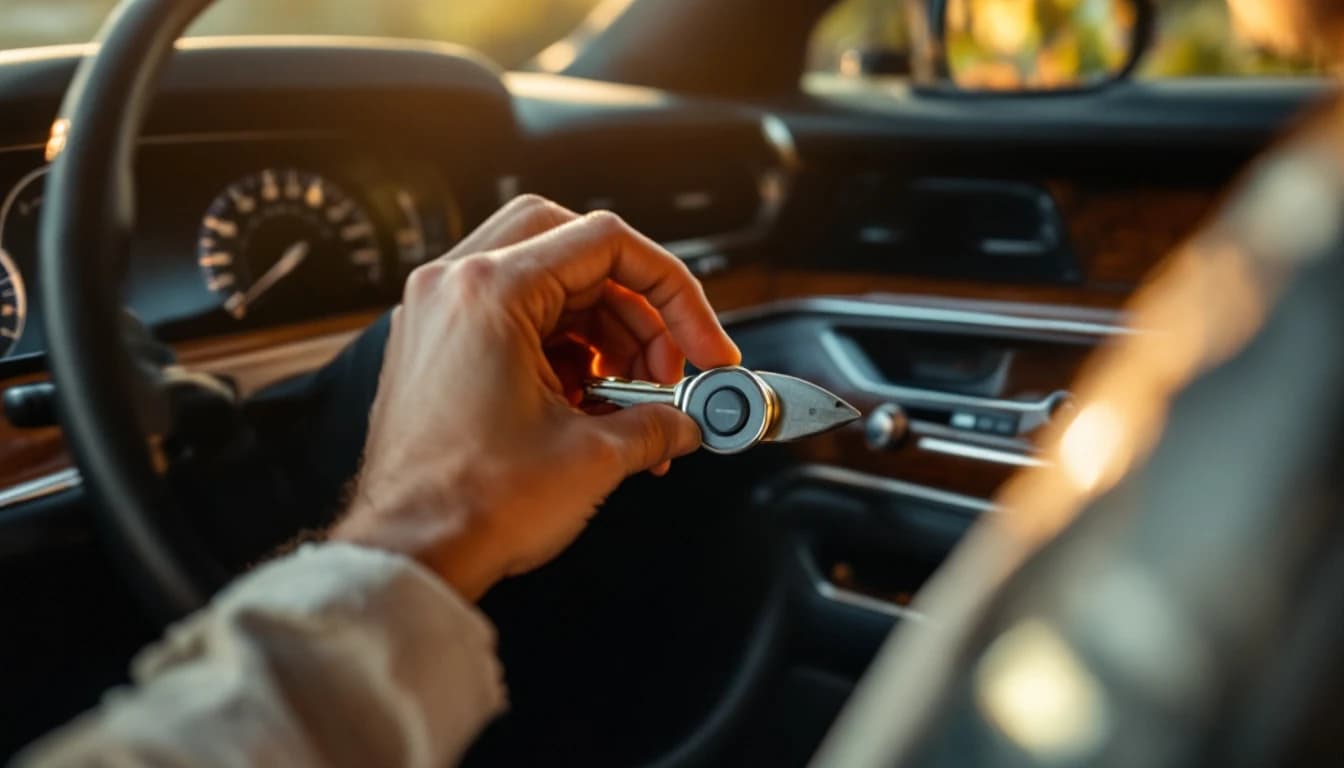
Bladed-key models (turn-the-key ignitions). Older RX generations and ES sedans through the early 2010s use a physical key inserted into a lock cylinder in the steering column. This is a mechanical assembly with wafers, springs, and a cam that drives an electrical switch behind it. It wears.
Push-to-start models (Smart Access). Newer RX and ES models start with a button. There is no lock cylinder to wear out. When one of these cars won't start, the failure is almost always electronic — the fob, the antenna ring, the steering lock actuator (ELV), or the brake-pedal/immobilizer handshake. Our post on push-to-start systems that won't recognize the key fob walks through that diagnostic path in detail.
A surprising number of Frisco owners call us describing "a bad ignition" on a push-start RX. There is no ignition cylinder in that car to be bad. Knowing which family you're in saves you from paying for a part your vehicle doesn't have.
Why the Bladed-Key Lexus Ignition Wears Out
The mechanical lock cylinder in an RX or ES is a precision assembly. Each time you insert the key, the blade pushes a row of spring-loaded wafers to exact heights. When they all line up, the plug rotates. That's the whole trick.
Wear happens on both halves of that interface:
The key wears first. This is the part owners consistently get wrong. A brass or nickel-silver key blade abrades a little every single insertion. After 80,000–150,000 cycles, the cuts are measurably shallower than factory spec. The wafers no longer reach their exact line-up height, and the key starts requiring a jiggle, a wiggle, or a specific angle to turn.
Then the cylinder wears. The wafers and the plug bore wear in response. Once the cylinder itself is out of tolerance, even a perfectly cut fresh key won't fix the symptom.
Then the electrical switch behind it fails. The cylinder's cam drives a separate electrical switch that actually powers accessory, run, and start. That switch has contacts, and contacts pit and carbon up over time. A car that cranks intermittently, or loses dash power when you bump the key, is usually pointing here.
The National Highway Traffic Safety Administration has publicly documented ignition-switch defects across the industry as a safety-relevant category, and the general lesson holds for wear-based failures too: an ignition that behaves unpredictably is not a cosmetic annoyance. A switch that can slip out of RUN while driving is a genuine hazard.
"On an older RX or ES, I always cut a fresh key to factory code first and try that before I quote a cylinder. Probably a third of the 'my ignition is dying' calls I run on those cars are actually a worn key, and the customer walks away paying for a key instead of a column job. Quoting the expensive repair before testing the cheap cause is how people get overcharged." — a Frisco Car Key mobile locksmith technician credentialed for automotive immobilizer work
The Diagnostic Sequence We Actually Run
Here is the order of operations for a bladed-key RX or ES that won't turn.
1. Test the spare key. If you have a second key that has lived in a drawer, try it. A drawer key has almost no wear. If the drawer key turns smoothly and the daily key doesn't, you have a worn key, not a worn ignition. This single test resolves a meaningful share of calls.
2. Check the steering lock. If the wheel is under tension against the steering lock — very common when the car was parked on a slope or with the wheels turned — the key physically cannot rotate. Rock the wheel firmly left and right while applying light, steady turning pressure to the key. Do not force it. This costs nothing and fixes a real percentage of "stuck ignition" calls.
3. Confirm the shifter is fully in Park. On automatic Lexus models, a shifter that hasn't seated in Park will lock the ignition. Push it firmly into Park and retry.
4. Cut a fresh key to code. If the spare test was inconclusive, we cut a new key to the vehicle's original factory code rather than duplicating your already-worn key. Duplicating a worn key copies the wear. Cutting to code produces a blade at original spec, and we program the transponder so it starts the car. This is where our key duplication service and code cutting overlap.
5. Diagnose the cylinder and the switch separately. If a to-code key still binds, the cylinder is worn and needs replacement or rebuild. If the key turns freely but the car doesn't respond electrically — no crank, intermittent dash, accessory drops out — the electrical switch behind the cylinder is the culprit. These are different parts at different prices, which is why guessing is expensive.
Push-to-Start RX and ES: A Different Failure Set
If your Lexus starts with a button, run a different checklist.
Dead fob battery. The single most common cause. Every push-start Lexus has a backup: hold the fob against the START button (the exact contact point is in your owner's manual) and press. The system reads the fob through short-range induction with no battery power at all. If the car starts this way, you need a coin cell, not an ignition.
Steering lock actuator (ELV). Push-start Lexus models use an electronic steering lock. When that actuator sticks or its motor fails, the car refuses to enter the start sequence and often throws a steering-lock warning. This presents to the driver as "the ignition is dead," but it's a distinct module.
Antenna ring or interior antenna fault. The car has to detect the fob inside the cabin. If the relevant antenna has failed, the fob works at the door but not for starting.
Immobilizer or smart-key ECU fault. Less common, but real — and this is where our ECU and module programming service applies, since a replaced smart-key module has to be married to the vehicle.
Brake switch. No brake signal, no start. A failed brake-light switch stops the sequence cold and often shows up alongside brake lights that stay on or stay off.
Texas summers add their own contribution here. Cabin temperatures in a closed car parked at Stonebriar in August routinely exceed anything a coin cell was designed for, and heat-related fob failures spike locally every year — we covered that pattern in our post on Texas heat and key fob failures.
Lexus RX & ES Ignition Repair Cost in Frisco, TX
Ignition repair at Frisco Car Key runs $150–$550 depending on which component actually failed and how much column disassembly the specific model requires. Key work runs on separate bands: key duplication $50–$300, smart key programming $120–$500, full key replacement $85–$450. Module-level work falls in the $200–$800 ECU and module programming band.
| Symptom on your RX or ES | Most likely cause | Typical service | Cost band |
|---|---|---|---|
| Key turns hard, needs jiggling; drawer spare works fine | Worn key blade | Cut a fresh key to factory code + program transponder | $50–$300 |
| Key won't turn at all, wheel is under tension | Steering lock binding | Diagnostic + release technique, often no parts | Diagnostic only |
| Key binds even with a fresh to-code key | Worn lock cylinder | Cylinder replacement or rebuild, rekey to your key | $150–$550 |
| Key turns but no crank; dash flickers when key is bumped | Failed electrical ignition switch | Switch replacement behind the cylinder | $150–$550 |
| Push-start car dead; fob against START button works | Dead fob coin cell | Battery replacement, verify fob health | $50–$300 |
| Push-start car dead; steering-lock warning on dash | Steering lock actuator (ELV) | Diagnosis, actuator service or module work | $200–$800 |
| Smart key module replaced or unrecognized | Immobilizer/smart-key ECU pairing | Module programming to VIN | $200–$800 |
Every figure above is a range, not a quote. The exact number depends on your model year, trim, and which parts the teardown reveals. We confirm the VIN and give you a firm price before any work begins — never a number that grows once the column is open.
Should It Be a Locksmith or a Dealer?
For bladed-key RX and ES models, a credentialed automotive locksmith is usually the faster and less expensive path. We cut keys to code, replace ignition cylinders, and — importantly — can typically rekey the new cylinder to your existing key, so you don't end up carrying one key for the doors and a different one for the ignition. Dealers frequently supply a cylinder keyed differently, which leaves you with a two-key problem you didn't have before.
For newer push-start models with a genuinely failed smart-key ECU, the answer depends on the model year. Some are independently serviceable; some route through manufacturer-controlled resources. The National Automotive Service Task Force maintains the legitimate channel through which vetted independent locksmiths obtain vehicle security information, and where Lexus supports that path, an independent can complete the work. Where it doesn't, we tell you the dealer is the right call before we dispatch — not after you've paid for a trip.
Professional standards matter here more than most owners realize. The Associated Locksmiths of America publishes ethical and technical standards for the trade, and in Texas, locksmiths are regulated through the Texas Department of Public Safety Private Security Program — not the TDLR, despite what a lot of web copy claims. If someone quoting your Lexus ignition can't tell you which agency regulates them, that's worth noting.
Avoiding the Bait-and-Switch
Ignition repair is one of the categories where the Federal Trade Commission has consistently warned consumers about deceptive service pricing — the advertised low number that becomes a much larger bill once the technician is on site and the car is disassembled. The pattern is predictable and easy to defend against.
Ask three questions before anyone touches the column:
- Is the quoted price for diagnosis, the cylinder, the switch, or all three? These are different parts.
- Will the new cylinder be keyed to my existing key, or will I get a second key? This determines whether you leave with one key or two.
- What happens to the price if the teardown finds something different? A straight answer is "we call you before we proceed." A bad answer is silence.
We give those answers up front, in writing, before dispatch.
The Insurance and Theft Angle
There's a reason Lexus builds the immobilizer into the ignition system rather than bolting on security as an afterthought. The Insurance Institute for Highway Safety has published extensively on how theft rates track with immobilizer adoption, and the RX in particular is a high-value target across DFW. A properly functioning ignition and immobilizer is part of your car's theft defense, not just a convenience.
That has a practical consequence for repair. When we replace a cylinder or a switch, the immobilizer relationship has to remain intact — the car must still verify the transponder in your key before it will run. A shop that bypasses the immobilizer to "make it start" has converted your Lexus into a much easier vehicle to steal. We don't do that, and you shouldn't accept it.
The American Automobile Association publishes ownership-cost research showing how unplanned repairs and roadside events compound; an ignition that's already jiggling is a roadside event waiting for the least convenient moment. Fixing it on your schedule in your driveway costs less than fixing it after a tow.
What a Mobile Lexus Ignition Visit Looks Like
We arrive with key-cutting equipment, programming tools, and the diagnostic gear to separate cylinder faults from switch faults from module faults. A typical visit runs:
- Triage (10–15 minutes). Confirm year, model, VIN, and which failure family you're in. Test the spare key. Check the steering lock and Park interlock.
- Cheap-cause testing first. Cut and program a to-code key if the evidence points at key wear. Many visits end here.
- Teardown if needed. Column access on an RX or ES varies by generation; we quote the labor honestly for your specific car.
- Repair and verification. New cylinder rekeyed to your key where possible, or switch replacement. Then we cycle the system repeatedly — accessory, run, start, and immobilizer verification — before we leave.
We serve Frisco plus Plano, McKinney, Allen, The Colony, and Prosper. If you're weighing a full key replacement alongside the ignition work, our car key replacement service and ignition repair service pages cover the specifics, and our guide to Lexus smart key replacement covers the key side in depth. Owners who like the comfort-access convenience features on these cars may also find our overview of smart comfort access keys on luxury vehicles useful.
Frequently Asked Questions
My Lexus key turns but the car won't crank. Is that the ignition?
Probably the electrical switch behind the cylinder, yes — but not always. If the key rotates freely through accessory and run and the dash lights up normally, the mechanical cylinder is fine and the fault is electrical. That could be the ignition switch contacts, the starter relay, the neutral safety switch, or the battery. We test the ignition switch specifically before quoting it, because replacing a switch that wasn't the problem is a waste of your money.
Can you rekey the new ignition cylinder to my current key?
On most bladed-key RX and ES models, yes — and we prefer to. It means you keep carrying one key that works the doors, the trunk, and the ignition. Dealer replacement cylinders often arrive keyed differently, leaving you with two keys for one car. If your specific model doesn't allow a rekey, we tell you before we order the part.
My push-to-start Lexus won't start. Do I need an ignition repair?
Almost certainly not, because there's no lock cylinder in that car to repair. Start with the fob battery: hold the fob against the START button and press. If it starts, replace the coin cell. If it doesn't, the likely candidates are the steering lock actuator, an interior antenna, the brake switch, or the smart-key module. Those are diagnosed electronically, not by tearing into a column.
How long does a Lexus ignition repair take in the driveway?
A to-code key cut and program is often done within about an hour of arrival. A cylinder replacement takes longer because of column disassembly, and the exact time varies by generation — expect a longer window on an RX than on an ES. Electrical switch replacement sits in between. We give you a realistic time estimate for your specific model when we confirm the VIN, not a generic promise.
Is it cheaper to go to the Lexus dealer for an ignition?
Usually not, and there's a second reason beyond price: mobility. The dealer route typically requires a tow, since a car with a failed ignition can't be driven in. We come to the vehicle. That said, if your specific model year requires manufacturer-controlled resources for a smart-key module, we say so honestly and point you to the dealer rather than charging you for a trip that can't finish the job.
My key started working again on its own. Should I still fix it?
Yes. An intermittent ignition is a failing ignition, and the failure mode that matters is losing RUN power while driving. NHTSA has treated ignition-switch reliability as a genuine safety category for exactly that reason. An ignition that works "most of the time" is telling you it has a limited number of cycles left, and it will pick its own moment.
Do I need proof of ownership for ignition work?
Yes, and you should expect any legitimate locksmith to ask. We verify that the person requesting service is entitled to it — typically the registration or title plus a matching photo ID. It's a basic anti-theft practice, and a company that doesn't ask is one you should think twice about letting near your immobilizer.
References
- National Highway Traffic Safety Administration (NHTSA) — vehicle safety, ignition-switch defect history, and anti-theft immobilizer requirements
- Insurance Institute for Highway Safety (IIHS) — vehicle theft loss data and immobilizer effectiveness research
- National Automotive Service Task Force (NASTF) — the legitimate channel for independent access to vehicle security information
- Associated Locksmiths of America (ALOA) — professional and ethical standards for the locksmith trade
- Federal Trade Commission (FTC) — consumer guidance on deceptive service pricing and bait-and-switch practices
- American Automobile Association (AAA) — vehicle ownership cost and roadside incident research
Frisco Car Key — mobile automotive locksmith serving Frisco and North Texas. Call (469) 402-9781 or email contact@friscocarkeys.com. See our ignition repair service or get in touch.
Related Guides
Push-Start Ignition Knob Won't Turn? Causes and Fixes for Twist-Knob Keyless Cars in Frisco, TX
Some keyless cars start with a knob you twist instead of a button. When that knob will not turn, the cause is usually the steering lock, a weak fob, low battery voltage or the knob's own lock. Here is how to tell which, and what the fix costs.

Push-Button Start Stuck in Accessory Mode: Causes, Checks and Cost in Frisco, TX
The dash lights up, the radio plays, and the engine never starts. A diagnostic walkthrough of why a push-button car stops at accessory mode, what each cause costs to fix, and who to call.
Kia K5 and Stinger Ignition Repair in Frisco, TX: Key, Switch, or Steering Lock?
A Kia K5 or Stinger that will not crank is usually one of four separate faults, and only some of them are key problems. Here is how a mobile locksmith tells them apart in a Frisco driveway.