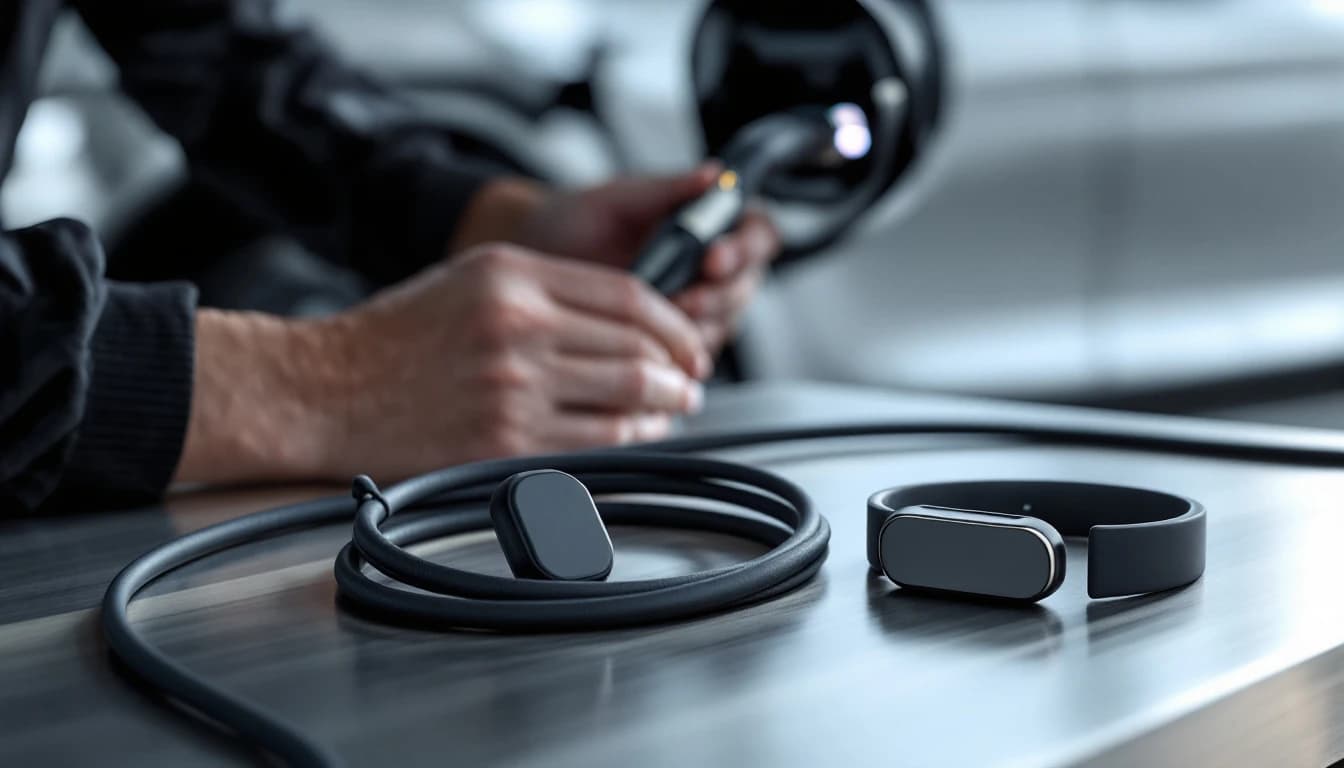
Rivian, Lucid and Polestar Key Replacement Cost in Frisco, TX (2026)
2026 Rivian, Lucid and Polestar key replacement cost in Frisco, TX - honest ranges, why low-volume EVs are harder, free VIN check. Call (469) 402-9781.
Rivian, Lucid and Polestar Key Costs in Frisco, TX: The Short Answer
As of September 2026, a replacement key fob for a Rivian, Lucid or Polestar in Frisco generally runs $120 to $500 programmed, and simpler credential work lands lower in the $85 to $450 replacement band. Module-level work, when it is genuinely needed, falls in the $200 to $800 range. These are low-volume platforms, so we confirm the serviceable path against your VIN before dispatch - and that check is free.
That is the number. The honest part of this guide is the rest: why these three brands are harder than a Toyota, and which parts of the job we will not promise until we have seen your VIN.
Frisco Car Key is a fully mobile automotive locksmith. We come to the vehicle. Reach us at Frisco Car Key, (469) 402-9781, contact@friscocarkeys.com.
What "Near Me" Means When the Locksmith Is Mobile
If you searched for electric car key replacement near you, the useful answer is not an address. We do not have one. There is no storefront, no waiting room, and nothing for you to drive to - which matters more on an EV key job than on almost any other automotive service, because a vehicle that cannot be authorized to drive also cannot be driven anywhere.
What "near me" actually means here is we come to the vehicle, anywhere in Frisco and across the surrounding North Texas communities. Your driveway, an office lot, a garage at a shopping center, the shoulder of a service road. That is the whole model.
Four questions worth asking any locksmith before you book an EV key job:
- Will you confirm my VIN before dispatching? A yes means they are checking whether the job is actually serviceable. A no means they are hoping.
- Is the VIN check free? It should be. Ours is.
- What happens if the platform turns out to be manufacturer-restricted? The right answer is "we tell you on the phone and you pay nothing," not "we come look and see."
- Is the phone quote the arrival price? If those two numbers differ, that is not a discount you found, it is a negotiation you are going to lose in your own driveway.
The Federal Trade Commission publishes consumer guidance on clear up-front pricing precisely because roadside and emergency services are where bait numbers thrive. Ask the four questions.
The 2026 Cost Table
Working ranges, not quotes. The final figure depends on the variables further down and is confirmed against your VIN before anyone is dispatched.
| Service | Price range | Typical on-site time | Notes for these three brands |
|---|---|---|---|
| Spare key fob, working credential present | $120 - $500 | 30 - 60 min | Cheapest path by a wide margin on all three |
| Replacement fob after one key lost | $120 - $500 | 45 - 90 min | New fob plus erasing the missing credential |
| All keys lost, full recovery | $85 - $450 | 45 - 120 min | Longest job; some platforms route to the manufacturer |
| Phone-as-key set up or re-paired | $85 - $450 | 20 - 45 min | App and account work; no hardware to source |
| Rivian wearable band pairing | $120 - $500 | 20 - 45 min | Accessory credential, paired not cut |
| Lockout, credential shut inside | $75 - $200 | 20 - 45 min | Entry only, no programming |
| Immobilizer or body-module programming | $200 - $800 | 1 - 3 hours | Genuine module faults only, never routine key work |
One caveat stated plainly: these bands describe our work. We do not publish invented figures for what a Rivian service center, a Lucid studio or a Polestar dealer charges. Manufacturer channels are commonly quoted higher for equivalent work, and on an all-keys-lost job the gap widens further because a vehicle with no working credential cannot drive itself to a service appointment - a tow is a real cost line most comparison articles quietly omit.
Why These Three Are Harder Than a Toyota
This is the section that actually explains the price, and it comes down to three structural facts about low-volume, software-defined vehicles.
1. Low volume means thin aftermarket coverage
Key hardware and immobilizer tooling follow production numbers. A Camry has sold in numbers that justify a deep aftermarket: multiple blank suppliers, mature programming coverage, competing tools. Rivian, Lucid and Polestar have not, and that has direct consequences.
Fewer sources for the physical fob. Thinner and later immobilizer support in independent tooling. And on the newest configurations, sometimes no independent coverage at all yet. None of that is a criticism of the vehicles - it is arithmetic. It does mean a Frisco owner calling about an R1S should expect a VIN check rather than an instant yes.
2. Over-the-air software changes the procedure between model years
This is the part that genuinely separates these brands from legacy makes, and it is easy to underestimate.
All three ship vehicles that receive over-the-air updates, and those updates can change how credentials are enrolled, how walk-up unlock behaves, and what the vehicle expects during a pairing session. Two physically identical vehicles of the same model year can be on different software and behave differently on the same procedure.
The practical effect: experience with one car of a model is weaker evidence than it would be on a legacy platform. A technician who paired an R1T last spring does not automatically know how yours behaves today. Anyone telling you otherwise on the phone, sight unseen, is guessing. We have seen the same dynamic bite owners across the EV market - our guide to an EV key that stopped working after a software update covers what that looks like from the driver's seat.
3. Several of these platforms genuinely route through the manufacturer
The honest one. Independent access to vehicle security information is not automatic; it is a channel that has to exist. The National Automotive Service Task Force administers the vetted framework through which credentialed locksmiths obtain manufacturer security data and vehicle access, make by make - and coverage is exactly that, make by make. A newer manufacturer may join later, partially, or with specific procedures carved out.
So for some configurations on these three brands, the answer to "can you make me a key" is no, and here is who can. We would rather say that on the phone for free than drive out, fail, and leave you with a bill and no key. That is the single most important promise in this article.
What Actually Moves the Price
Five variables account for nearly the whole spread.
1. Whether you still hold a working credential. The biggest lever on any car ever built, and it is amplified here. With a working fob, phone or band present, the vehicle already trusts something and registering an additional credential is a supported, scheduled, comparatively quick procedure. With nothing working, the technician has to establish an authorized session from scratch - longer, more verification, and on these platforms more likely to hit a manufacturer-only wall.
2. Which brand and configuration. Rivian, Lucid and Polestar are three different engineering organizations with three different credential systems. Even within a brand, an early build and a current one can differ.
3. Software state. Covered above. It is a real cost input, not a footnote.
4. Hardware sourcing. A low-volume fob costs more to source than a high-volume one, and lead time is occasionally a factor rather than a same-day item. We tell you if that applies before you are counting on a Saturday appointment.
5. Scheduled versus emergency. A planned spare-key appointment costs less than an after-hours call with a stranded driver. That is true of every mobile trade and we would rather state it than bury it.
Rivian: R1T and R1S
Rivian gives owners the widest credential spread of the three, which is genuinely useful and also the easiest to over-trust.
The key fob. A conventional-feeling proximity remote with buttons and a coin cell. This is the credential that behaves most like a normal car key and the one most owners think of as "the key."
Phone as key. The Rivian app over Bluetooth, tied to the owner's Rivian account. Walk up, the vehicle wakes, no fob needed.
The wearable band. Rivian's distinctive accessory: a waterproof band you can wear while the fob stays behind. It exists for a specific and sensible reason - you are at a trailhead, a lake, a job site, and carrying a fob in a pocket is impractical or risky.
The trap. A household that has drifted onto phone-as-key plus the band, with the actual fob living in a drawer somewhere, has more credentials than most cars offer and less redundancy than it feels like. The band and the phone are both accessory layers riding on the same account relationship. The fob is the one that behaves independently.
From a recent Frisco job (September 2026): an R1T owner called from an office lot off the Tollway. His phone had updated overnight, background Bluetooth permission had reset, and walk-up unlock had stopped. He was wearing the band, which got him into the vehicle - so this was never actually an emergency. The whole call became a five-minute permissions fix and a conversation about where his physical fob was. He did not know. That is the pattern on this platform: the redundancy is real, the awareness of it is not.
What it costs. Spare or replacement fob $120 to $500 in our car key replacement band. Band pairing $120 to $500. Phone-as-key work $85 to $450 and often something you can resolve yourself in ten minutes, which we will tell you.
Lucid: Air and Gravity
Lucid is the lowest-volume of the three in the North Texas market, and that shapes everything about the job.
The key fob. A proximity smart key with the expected functions. Sourcing it is the constraint rather than the programming concept.
The Lucid app. Phone-based access and vehicle control tied to the owner's account, with the same dependency chain every phone credential carries.
Why Lucid is the most VIN-dependent of the three. Fewer cars on the road means thinner independent tooling coverage and a higher likelihood that a specific configuration routes through Lucid. We are direct about this on the phone. If the answer for your Air or Gravity is that the work belongs with the manufacturer, you will hear that in the first conversation, not in your driveway.
What it costs. $120 to $500 for fob work where the platform is independently serviceable, with the VIN check deciding whether that sentence applies to your vehicle.
The advice that matters most on a Lucid: make the spare while you still have a working key. On a platform this thin on aftermarket support, the difference between "add a credential" and "recover from nothing" is not just price - it is the difference between a job that is probably serviceable independently and one that may not be.
Polestar: 2, 3 and 4
Polestar is the most interesting of the three technically, because it sits on Volvo-derived engineering and because Polestar 4 points somewhere the rest of the industry is heading.
Volvo-derived platform. Polestar's architecture shares lineage with Volvo, which in practice means the immobilizer and body-electronics concepts are more familiar to an independent technician than a from-scratch design would be. That is a genuine advantage over Lucid on the tooling question, though it is not a blanket guarantee and it varies by model and model year.
Polestar Digital Key. Phone-based access over the Polestar app. Same four-part dependency chain as every phone credential: charge, Bluetooth, the app signed in to the correct account, and operating-system permissions still granted.
Polestar 4 and the "no key at all" direction. Polestar has pushed hardest toward phone-and-card-first access, with the physical fob as an option rather than the assumed default. The design intent is that your phone is the key. The design consequence is that a household which never orders the physical credential has a single point of failure it did not choose deliberately - it just never chose otherwise.
What it costs. Fob work $120 to $500; digital key set-up $85 to $450. The Volvo lineage often helps on serviceability, and the VIN check confirms it rather than assuming it.
The Phone Dependency, Stated Bluntly
All three brands lean on a phone credential, and this is the failure mode that actually strands people. It deserves its own section because it is not a hardware problem and no amount of money fixes it in the moment.
A phone credential needs four things simultaneously:
- Charge. A fob coin cell lasts a year or more. A phone lasts a day. The credential you use most is the one most likely to have no power.
- Bluetooth enabled and not throttled. Battery-saver modes reduce background Bluetooth, and the vehicle stops seeing you until you open the app.
- An app signed in to the correct account. A shared household login, a vehicle bought privately with the account never transferred, or a simple sign-out all produce a phone that looks right and authorizes nothing.
- Operating-system permissions still granted. Background Bluetooth and precise location get reset by OS updates more often than owners realize, and the symptom is silent.
Break any one of the four and the phone stops being a key. On a vehicle where the phone is the primary credential, that is a lockout in every practical sense even though nothing is broken.
There is a second, EV-specific version of this worth knowing. Electric vehicles carry a low-voltage 12-volt battery separate from the traction pack, and it powers the door locks, body control, and the radios that let the vehicle hear a credential at all. A traction pack at eighty percent and a flat 12-volt battery is an entirely possible combination, and when it happens no wireless credential of any kind works - not the phone, not the fob, not the band. Whether your vehicle has a mechanical backup and where it hides is a five-minute owner's-manual question that is far better answered this week than in a parking garage. Our guide to a hybrid or EV that will not enter ready mode walks through how to tell a key fault from a vehicle fault.
If you want the same dependency chain explained on higher-volume EVs, our Kia EV9 digital key spare guide, the IONIQ 5 key replacement walkthrough and the Kia Niro and Kona Electric spare key piece all cover it on platforms with deeper aftermarket support.
Spare Now Versus Recovery Later
On these three brands specifically, the spare-key argument is stronger than it is anywhere else in the market, and it is worth being precise about why.
With a working credential, the vehicle already trusts something. Adding another is a supported procedure, a short appointment, and an event you schedule. It is also far more likely to be independently serviceable, because add-a-key coverage generally arrives in independent tooling before all-keys-lost coverage does.
With nothing working, the technician must establish an authorized secure session from scratch on a low-volume platform with software that may have shifted since the last one we saw. More time, higher cost, and a materially higher chance the honest answer is that the work belongs with the manufacturer.
That second point is the one to sit with. On a Camry, "all keys lost" is expensive and inconvenient. On a low-volume EV, it can be the difference between a serviceable job and an unserviceable one. The spare is not just cheaper insurance here - it is the thing that keeps you inside the category of problems an independent locksmith can solve at your house.
AAA has treated a backup key as basic preparedness for decades, alongside jumper cables and a usable spare tire. On a vehicle where the primary credential is an app, that advice is more relevant than it has ever been, not less.
And there is a reason recovery is involved in the first place. Electronic immobilization is the technology the National Highway Traffic Safety Administration credits with a long decline in drive-away theft, and the Insurance Institute for Highway Safety has documented real theft-rate differences tied to anti-theft systems. A vehicle that is genuinely hard for a thief to take cannot also be trivially easy for a stranger to re-key. Those are the same lock from two sides.
How the Appointment Runs
Phone triage. VIN, model, year, and - the question that decides the price - whether you currently hold a working credential of any kind.
The VIN check, free. We confirm whether the job is independently serviceable before anyone is dispatched. If it is not, you hear that immediately and pay nothing.
A firm number. Not a range at that point. A number, with an arrival window.
We come to the vehicle. Fully mobile, no shop visit, no tow.
Ownership verification on site. Photo ID matched to registration, title, or lease and finance paperwork in your name. The Associated Locksmiths of America treats this as a baseline professional obligation, and any technician willing to skip it for you would skip it for someone standing beside your vehicle.
Programming, then verification of every credential. New fob and the original: lock, unlock, proximity at each door, frunk and trunk where equipped, and drive authorization. Re-testing the credential you already had is the step most commonly skipped and the one that most often matters.
Texas Licensing
Locksmith work in Texas is regulated through the Texas Department of Public Safety Private Security Program. Confirm that whoever you call holds that license, identifies the business by name, verifies ownership before doing credential work, quotes clearly up front, and answers a consistent phone number. You are handing someone the ability to add a trusted credential to a vehicle worth more than most people's first house.
Serving Frisco and North Texas
We are fully mobile across Frisco and the surrounding communities. If the Rivian shares a driveway with a conventional vehicle, we are an all-makes locksmith and can close the redundancy gap for the whole household in one appointment. For the broader picture across every make, our car key replacement cost in Frisco guide covers the wider market.
Frequently Asked Questions
How much does a Rivian, Lucid or Polestar key cost in Frisco?
As of September 2026, a programmed key fob generally runs $120 to $500, and simpler credential work such as phone-as-key set-up falls in the $85 to $450 band. Module-level work, when genuinely needed, is $200 to $800. Those are ranges rather than quotes. Because these are low-volume platforms, we confirm the serviceable path against your VIN before dispatch, and that check costs nothing.
Can an independent locksmith even work on these brands?
Often yes, and sometimes honestly no. Independent access to vehicle security information is a channel that has to exist for each manufacturer, and newer makes join later and sometimes partially. Add-a-key work where you still hold a working credential is the most likely to be serviceable independently; all-keys-lost recovery is the least. The VIN answers it definitively, which is why we ask before quoting rather than after.
Why is an EV key more expensive than my old gas car's key?
Three things stack. The hardware is lower volume, so sourcing costs more and the aftermarket is thinner. The software is updated over the air, which means the pairing procedure can shift between vehicles that look identical. And independent tooling coverage arrives later on newer platforms. It is not a luxury surcharge; it is genuinely more work against less mature support.
My phone stopped unlocking the car. Do I need a new key?
Usually not. Phone credentials depend on charge, Bluetooth, an app signed in to the correct account, and operating-system permissions still being granted - and OS updates silently reset those permissions more often than owners expect. Tell us the exact symptoms and we will often narrow it down on the phone for free. We would much rather talk you through a permissions fix than sell you a fob you do not need.
What if the 12-volt battery is dead on my EV?
Then no wireless credential works, regardless of brand, because the door locks and the radios that hear your key have no power - even with a nearly full traction pack. This is the most common way a modern EV strands an owner who did nothing wrong. Find out this week whether your vehicle has a mechanical backup and where it is hidden, because that is a manual question and the answer is much less useful in a parking garage.
Should I get a spare before I need one?
On these three brands more than almost anywhere else, yes. Adding a credential while the vehicle already trusts one is a scheduled, cheaper procedure and far more likely to be independently serviceable. Recovering from nothing on a low-volume platform is longer, costs more, and carries a real chance the work has to route through the manufacturer. The spare keeps your problem inside the category we can solve in your driveway.
Do you come to me, or do I bring the vehicle somewhere?
We come to you. Frisco Car Key is fully mobile with no storefront, which matters more on an EV key job than on most services: a vehicle that cannot be authorized to drive cannot be driven to a service appointment either. We work wherever the vehicle is parked across Frisco and the surrounding North Texas communities, and the phone quote is the arrival price.
References
- National Highway Traffic Safety Administration (NHTSA) - immobilizer technology and vehicle theft prevention: https://www.nhtsa.gov
- National Automotive Service Task Force (NASTF) - secure vehicle security information and independent technician vehicle access: https://www.nastf.org
- Associated Locksmiths of America (ALOA) - professional standards and ownership verification: https://www.aloa.org
- Insurance Institute for Highway Safety (IIHS) - anti-theft technology and vehicle theft research: https://www.iihs.org
- Federal Trade Commission (FTC) - consumer guidance on clear up-front pricing: https://www.ftc.gov
- AAA - roadside preparedness and backup key recommendations: https://www.aaa.com
Need a key for a Rivian, Lucid or Polestar in Frisco or across North Texas? Call Frisco Car Key at (469) 402-9781 or email contact@friscocarkeys.com with your VIN, model and year, and tell us whether you still hold a working credential. We confirm the path for free, quote a firm number before the truck moves, and come to the vehicle.
Related Guides
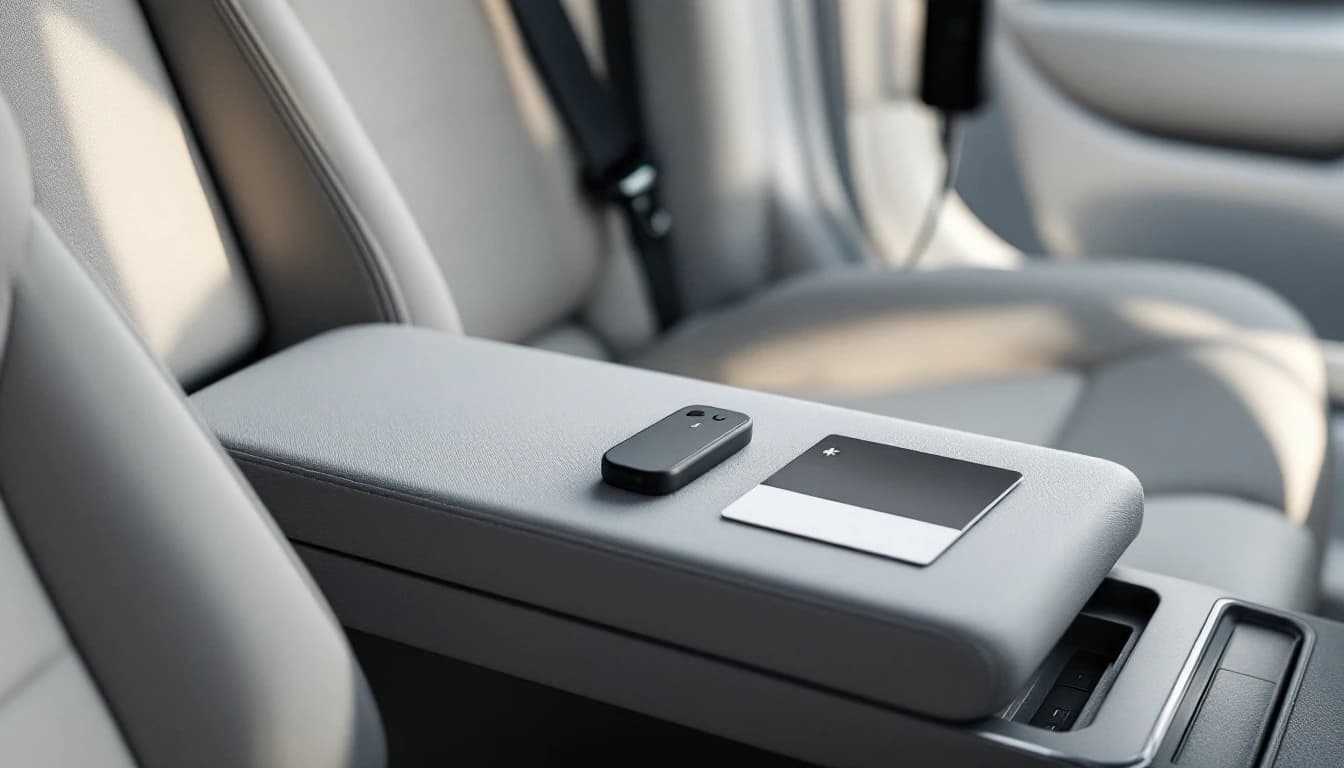
Hyundai and Kia EV Key Replacement Cost in Frisco, TX (2026)
What a key really costs on a Hyundai IONIQ or Kia EV in Frisco in 2026 - priced by the job, not the badge - with the 12-volt and charging-unit faults that get mistaken for a dead key.
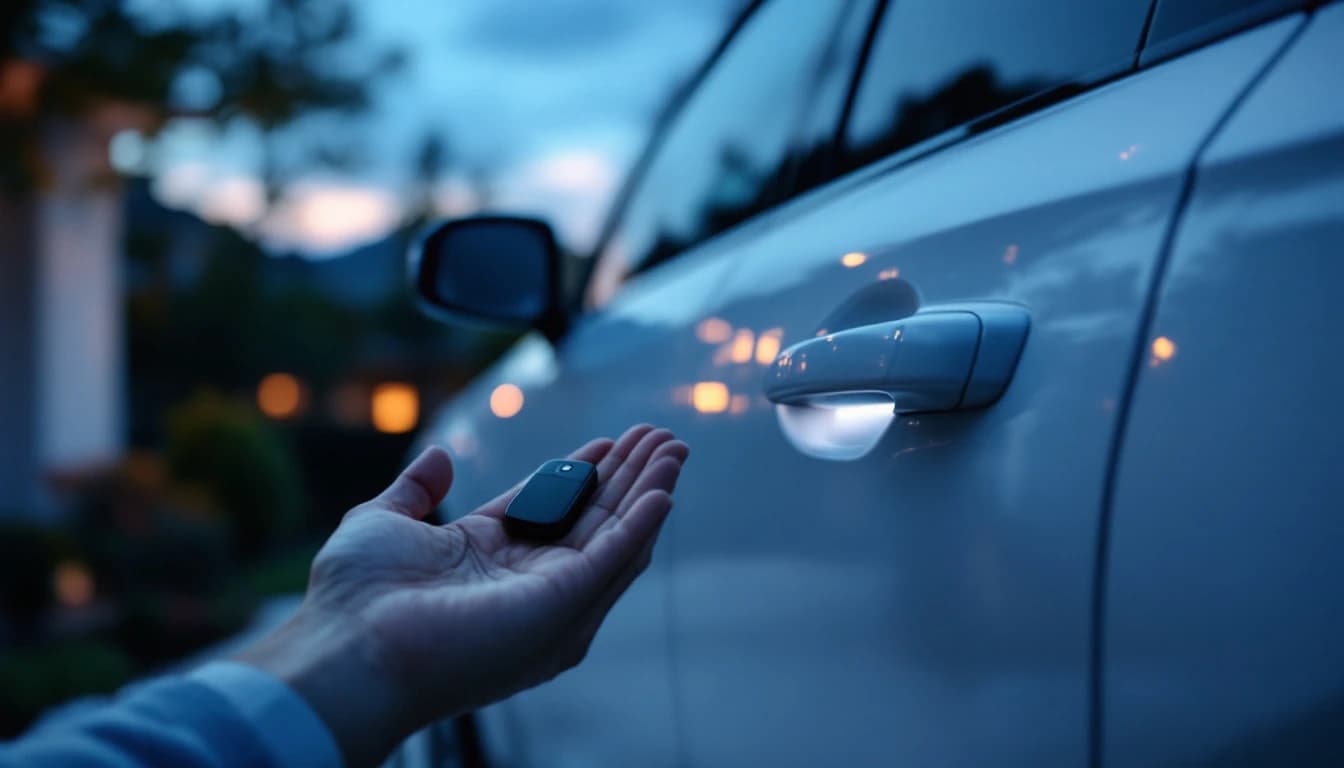
Digital Car Key Cost in Frisco, TX (2026): Phone Keys, Card Keys and the Backup Fob
Phone-as-key is mostly free to set up and surprisingly expensive to lose. A Frisco price guide to digital car keys in 2026 - which parts cost money, which never should, and why the backup fob is the line item that matters.
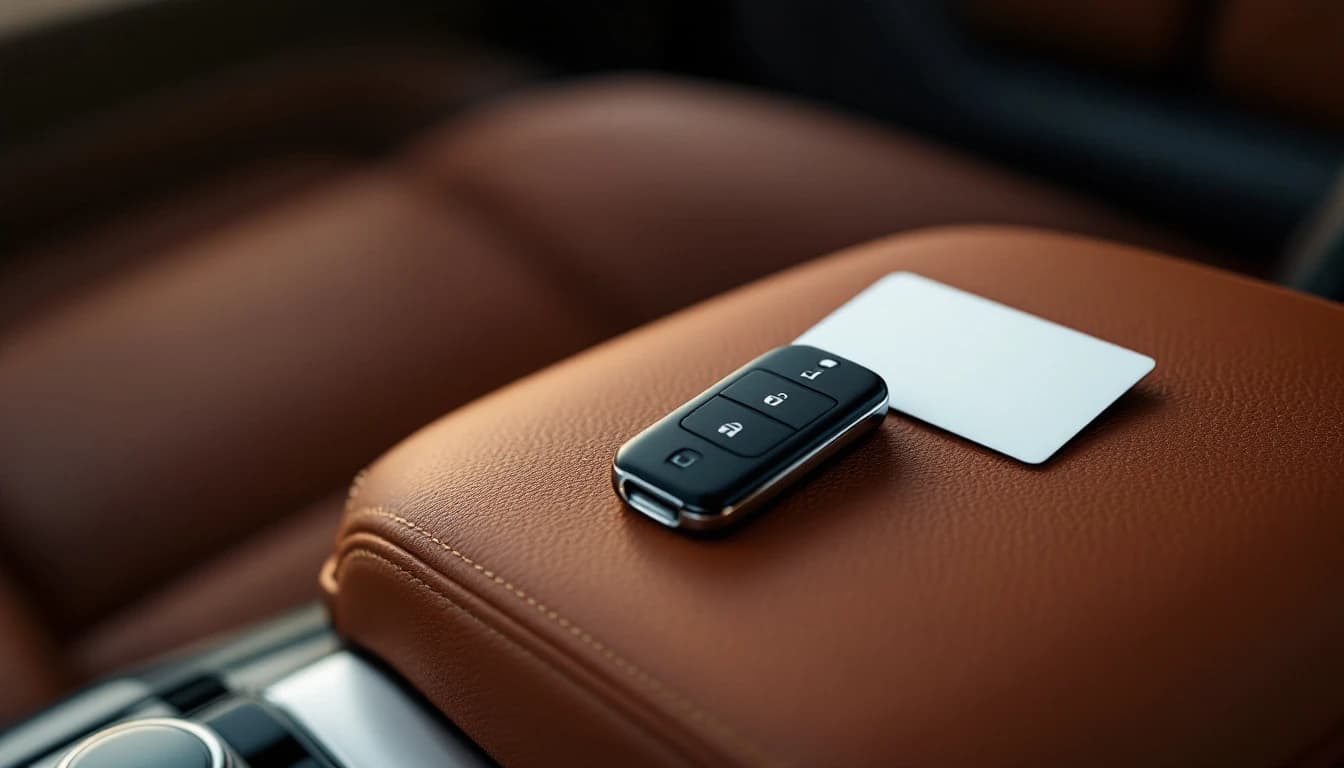
Genesis Key Replacement Cost in Frisco, TX (2026)
What a Genesis key actually costs in Frisco in 2026 - GV70, GV80, G80, G90 and GV60 - priced by the job you actually need, from a simple spare to an all-keys-lost visit, with the variables that move the number.