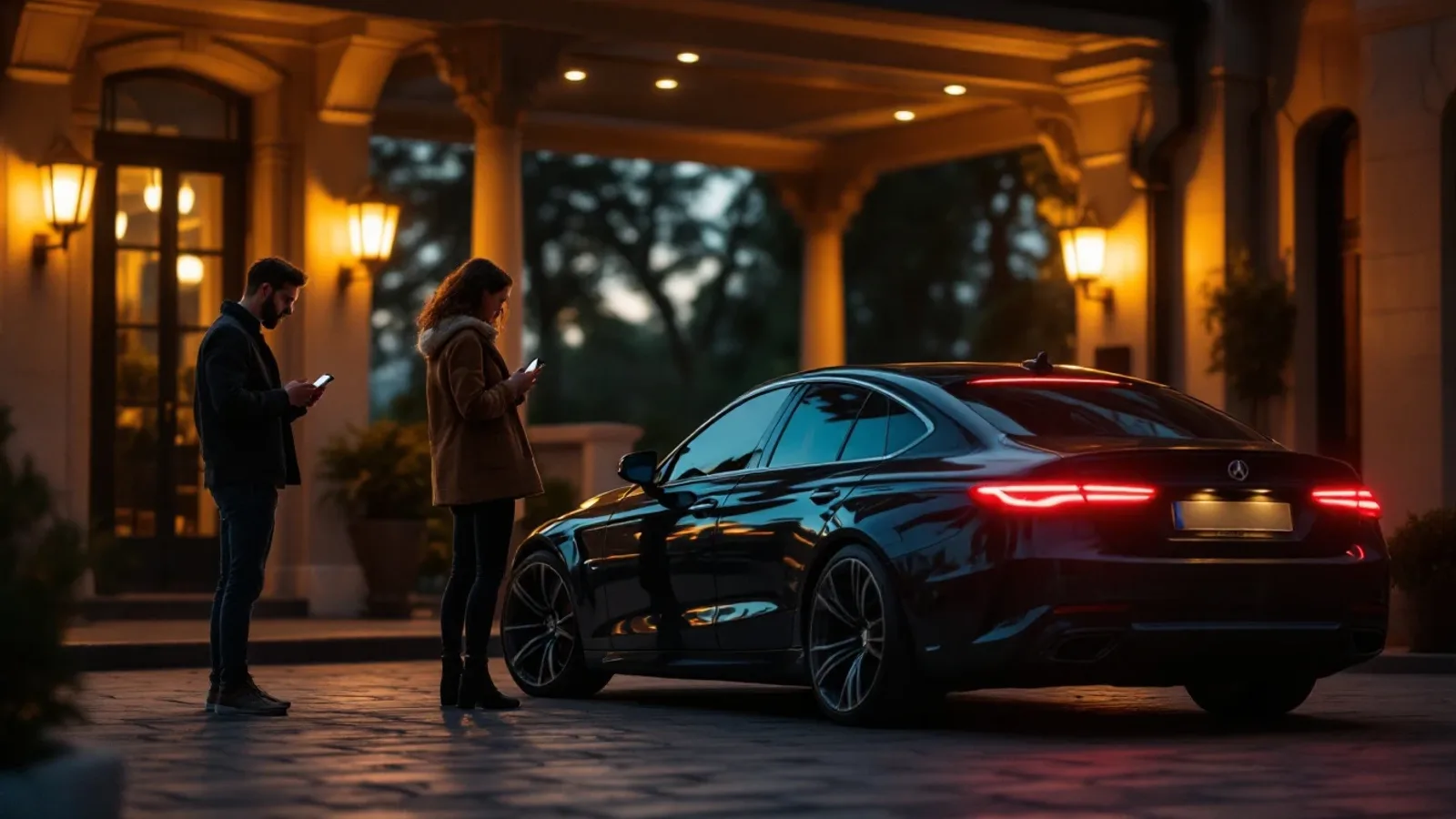
Sharing a Digital Car Key with Family & Valet in Frisco, TX
As of 2026, share your digital car key safely in Frisco, TX: driver profiles, restricted valet keys, revoking access, and when a physical valet key wins.
Handing Over the Keys Without Handing Over the Car: Digital Key Sharing in Frisco
The most modern convenience in a luxury car is also the one owners think about least until something goes wrong: sharing a digital key. You can text your teenager access to the SUV, let a houseguest borrow the sedan for the weekend, or hand a valet at a Frisco restaurant a credential — all without a single piece of metal changing hands. It is genuinely useful. It is also, done carelessly, a way to give someone far more control over your vehicle than you intended, and to forget who still has access months later.
As of July 2026, nearly every luxury brand and EV maker offers some flavor of digital key sharing: send a phone key to a family member, create a restricted "guest" or "valet" profile, and revoke any of it remotely. But the features are inconsistent between brands, the security defaults are not always what you would choose, and the single most common mistake — never revoking access you no longer want to grant — is entirely on the owner. This guide covers how to share safely, how to lock down valet and guest access, when to revoke, and when an old-fashioned physical valet key is actually the smarter tool.
Frisco Car Key is a mobile automotive locksmith, and while the digital-key account features live inside your car's app and screen, we help owners across Collin and Denton County think through the physical-and-practical side: spare credentials, valet keys, and what to do when a shared-key situation goes sideways. For advice on your specific vehicle, call or text (469) 402-9781 or email contact@friscocarkeys.com.
What "sharing a digital key" really means
There are three broadly different things people call "sharing the key," and confusing them is where trouble starts:
- Full digital key / phone key sharing — you grant another person a phone key that does essentially everything your own does: unlock, start, and drive, often with no restrictions. This is the equivalent of handing over a full set of keys.
- Restricted guest or valet access — a limited credential that may cap speed, limit acceleration, restrict how far the car can be driven, block access to the trunk or glovebox, or mute certain features. Not every brand offers this, and the restrictions vary widely.
- Driver profiles — personalization tied to a key (seat position, mirrors, climate, favorite settings). Profiles are about comfort, not security, though some systems bundle them with access levels.
Knowing which one you are actually granting is the whole game. Texting someone a "key" that turns out to be a full, unrestricted phone key is very different from setting up a capped valet credential.
The safe-sharing playbook
Here is the practical approach we walk Frisco owners through, brand-agnostic because the exact menus differ.
Share the minimum access that does the job
If your college-age driver only needs the car for local errands, do not hand them an unrestricted full key if your brand offers a limited one. If a valet needs to park it 200 feet away, they do not need trunk access or the ability to drive it to Oklahoma. Match the credential to the actual task. The most secure share is the least-powerful one that still works.
Use named, individual credentials — never a shared login
Where the system allows, give each person their own named credential rather than sharing your account password or a single generic key. Named credentials mean you can see exactly who has access and revoke one person without disrupting everyone else. Sharing your actual account login is the digital equivalent of copying your house key for the entire neighborhood — and it often violates the brand's terms besides.
Set an expiration where you can
Some systems let you grant time-limited access — a weekend, a week, a set date. Use it for guests. A key that expires on its own is a key you cannot forget to revoke.
Keep a written list of who has access
This sounds almost too simple, but the number-one digital-key security failure is not hacking — it is forgetting. Owners grant access to an ex-partner, a former roommate, a house sitter, a contractor, and simply never remove it. Keep a short note of every active share and review it a few times a year. When a relationship or arrangement ends, revoke immediately.
Understand what happens when you sell or trade the car
Digital-key shares can persist across an ownership change if not cleared. If you are buying a used luxury car or EV, purging prior digital access is essential — a topic we cover in depth in removing a previous owner's key access from a used EV. If you are selling, clear every share and reset before the car leaves your hands.
Valet access: where digital and physical strategies collide
Valet parking at a Frisco steakhouse, a country club, or a Legacy West venue is the everyday case where key sharing gets real. You have two tools, and the right choice depends on your car.
| Approach | Best for | Watch-outs |
|---|---|---|
| Digital valet credential | Cars with a true restricted valet mode (speed/range/trunk limits) | Not all brands offer real restrictions; some "valet keys" only lock the glovebox |
| Physical valet key | Any car that ships one; simplest and most predictable | You must actually carry it and hand it over instead of the main fob |
| Physical valet key + valet mode | Maximum control on capable cars | Slightly more setup; worth it for high-value vehicles |
| Handing over your full fob/phone key | Never ideal | Gives complete access including trunk, home-link, personal data |
The honest truth is that a physical valet key is often the smartest, most predictable tool — it cannot be forgotten in an app, it hands over exactly the limited access the automaker built into it, and there is nothing to revoke afterward because you simply take it back. Many luxury cars ship one and owners never even unwrap it. We explain the mechanical side of this thoroughly in valet key vs. master key on luxury cars. If you have lost your valet key or want a spare limited-access key cut and programmed, that is exactly the kind of smart key programming and key duplication work a mobile locksmith handles.
A crucial caution for valet specifically: a valet key or valet mode should not expose your trunk, glovebox, or personal data. Store your garage-door opener, home address in the nav "home" shortcut, registration, and anything sensitive out of reach before handing over any credential. A true valet setup limits access; your own habits close the rest of the gap.
"The customers who never have a valet problem are the ones who keep the little valet key in their wallet and hand that over — not their eighty-thousand-dollar phone key with their garage door and home address in it. Low-tech, but it's the move I'd make on my own car." — an automotive locksmith, name withheld by request
Revoking access: the step everyone skips
Granting access is easy and satisfying. Revoking it is the discipline that actually keeps you secure, and it is where almost everyone falls short. Revoke a shared digital key the moment any of these happen:
- A relationship or living arrangement ends. Ex-partners and former roommates should never retain silent access to your car.
- A guest's borrowing period is over. Do not leave a weekend guest's key active for six months.
- You lose your phone, or a person you shared with loses theirs. A lost phone with an active car key is a real exposure — treat it like a lost physical key.
- You sell, trade, or return a leased car. Clear every share before it leaves your possession.
- You simply can't remember why someone has access. If you review your list and cannot justify a share, remove it. Access should be intentional, not accumulated.
The Federal Trade Commission's consumer security guidance — review who has access to your accounts and devices, remove what you no longer need, and act fast when something is lost — maps directly onto digital car keys (ftc.gov). A car key is now an account credential, and it deserves the same hygiene as your email password.
The physical backup still matters
Digital keys are convenient, but they depend on phones, batteries, apps, and cell or Bluetooth connectivity — all of which can fail at the worst moment. Every owner who leans on digital sharing should still keep at least one reliable physical credential and know that a family member or trusted person can reach a backup in an emergency.
- Keep a physical spare — a fob, card, or emergency blade — somewhere secure and known to your household. A dead phone should never strand your family.
- Don't let "everyone uses the app" become "nobody has a real key." We have met multi-driver families who share one phone key and own zero physical spares. That is one dead phone away from a lockout.
- A spare is cheap insurance. Cutting and programming a spare smart key is routine work; we cover the case for it in the spare smart key for a luxury SUV. If you are ever fully locked out, a non-destructive car lockout gets you back in, but a spare prevents the emergency in the first place.
Doing it securely — the standards behind the scenes
The reason digital keys can be shared safely at all is the underlying security architecture: modern automotive credentials use authenticated, encrypted communication, the same lineage of anti-theft immobilizer technology documented by the National Highway Traffic Safety Administration and studied by the Insurance Institute for Highway Safety (nhtsa.gov; iihs.org). Secure handling of key and credential data across the locksmith and service trade follows frameworks from the National Automotive Service Task Force (nastf.org), and professional, ethical practice — including verifying ownership before any key work — reflects the standards of the Associated Locksmiths of America (aloa.org). For roadside and lockout expectations generally, AAA's consumer resources are a useful reference (aaa.com).
When we help with the physical side of a shared-key situation — cutting a valet key, programming a spare, or verifying access after a purchase — we verify you are the owner or an authorized driver first, with government-issued photo ID and proof of ownership. That is not bureaucracy; it is the same protection you would want stopping someone else from making a copy of your car's key.
Serving Frisco and the surrounding area
Frisco Car Key is a fully mobile automotive locksmith serving Frisco, Plano, McKinney, Allen, Prosper, and The Colony. Whether you want a proper physical valet key cut, a spare programmed so your family always has a backup, or advice on the safest way to share access to your vehicle, we come to you. Learn more on our about page or reach us through the contact page.
Frequently Asked Questions
Is it safe to share my phone car key with family?
It can be, if you share the right level of access. Where your brand offers it, give each family member their own named credential rather than your account login, use restricted or guest access if the person only needs limited use, and keep a written list of who has access so you can revoke it later. The biggest risk is not hacking — it is forgetting to remove access you no longer intend to grant.
What is a valet key, and is it better than a digital valet mode?
A valet key is a physical key with built-in limited access — it typically drives the car but may lock the trunk and glovebox. It is often the smartest valet tool because it hands over exactly the limited access the automaker designed, cannot be forgotten in an app, and needs no revoking afterward. A true digital valet mode with speed and range limits is great if your car has one, but many "valet" features only lock the glovebox, so know what yours actually restricts.
How do I revoke a shared digital car key?
Revoke through the same app or in-car menu you used to grant it, removing that person's named credential. Do it the moment a borrowing period ends, a relationship or living arrangement changes, a phone is lost, or you sell the car. If you review your access list and cannot justify why someone still has a key, remove it. Access should be intentional, not something that quietly accumulates.
Can a valet or guest key access my trunk and personal data?
It depends on the credential. A properly restricted valet key or valet mode is designed to block the trunk and glovebox, but not every "valet" feature does. Regardless, protect yourself by removing sensitive items before handing anything over: store your garage-door opener elsewhere, clear or hide your "home" nav shortcut, and keep registration and personal documents out of the glovebox.
What happens to shared keys when I sell or trade my car?
They can persist if you do not clear them. Before selling, trading, or returning a leased vehicle, remove every digital-key share and reset the system so no prior access remains. If you are buying a used luxury car or EV, purging the previous owner's digital access is a critical security step — do not assume the seller did it.
Should I still keep a physical key if I share digital keys?
Absolutely. Digital keys depend on phones, batteries, apps, and connectivity, all of which can fail. Keep at least one reliable physical credential — a fob, card, or emergency blade — in a secure, known place so a dead phone never strands your household. Families who share a single phone key with no physical spare are one dead battery away from a lockout.
Can a locksmith make a valet key or spare for my luxury car?
Yes. Cutting and programming a physical valet key or a spare smart key is routine mobile locksmith work on many luxury and EV models, done at your location. We verify ownership first, then handle the cutting and, where the platform supports independent programming, the pairing. Some high-end all-keys-lost situations are dealer-restricted, and we tell you honestly if your specific model falls into that category before quoting.
References
- National Highway Traffic Safety Administration — vehicle anti-theft and immobilizer technology: https://www.nhtsa.gov
- Insurance Institute for Highway Safety (IIHS) — anti-theft and immobilizer research: https://www.iihs.org
- National Automotive Service Task Force (NASTF) — Secure Data Release System and key/security frameworks: https://www.nastf.org
- Associated Locksmiths of America (ALOA) — professional and ethical standards for automotive locksmiths: https://www.aloa.org
- Federal Trade Commission (FTC) — consumer guidance on account access, credential security, and scams: https://www.ftc.gov
- AAA — roadside assistance and vehicle lockout consumer resources: https://www.aaa.com
Frisco Car Key is a mobile automotive locksmith serving Frisco, TX and surrounding Collin and Denton County communities. Call or text (469) 402-9781 or email contact@friscocarkeys.com. Digital-key account features live in your vehicle's app and screen and are governed by your manufacturer. This article is informational.
Related Guides

Hybrid Won't Enter READY Mode in Frisco, TX: Key or Battery?
Your hybrid presses to start but never shows READY. Is it the key, the fob battery, or the 12-volt? A Frisco locksmith's decision tree for Toyota, Lexus and luxury PHEVs.
Apple Car Key in Apple Wallet, Frisco TX: Which Cars, How to Add It, and Why Keep a Physical Key
What Apple Car Key in Apple Wallet does in Frisco, which cars support it, how to add, share, and remove keys, and why a physical fob still belongs in your pocket.
BMW Digital Key Plus on iPhone in Frisco, TX: How It Works & What a Locksmith Helps With
How BMW Digital Key Plus works on iPhone and Apple Watch, and the honest line between what runs through your BMW account and what a mobile locksmith in Frisco actually helps with.