Used EV: Remove the Previous Owner's Key Access in Frisco, TX
As of 2026, buying a used EV in Frisco, TX? Purge the previous owner's phone key, paired accounts, and infotainment data, and get a verified spare key.
The First Thing to Do With a Used EV in Frisco: Take Back the Keys You Can't See
Congratulations — you bought a used EV or a late-model luxury car in the Frisco area. You have the fob in your hand, maybe two, and the car drives beautifully. But here is the uncomfortable question almost no buyer asks at the private-sale driveway or the dealer lot: who else can still get into this car?
A conventional used car came with a simple worry — did the seller keep a copy of the metal key? On a modern EV or connected luxury car, the worry is bigger and quieter. The previous owner may still have a paired phone key on their smartphone, an active manufacturer account tied to the VIN, saved home and work addresses in the nav, a stored garage-door code, and even the ability to see the car's location or send it remote commands from an app. None of that is visible when you turn the fob. And unless you deliberately purge it, some of it can persist for a long time.
As of July 2026, this is one of the most important and most overlooked steps in buying a used connected car. This guide is the purge checklist we walk Frisco buyers through: reset the digital keys and paired accounts, factory-reset the infotainment and personal data, confirm the physical keys you actually received, and get a verified spare so you are never one lost fob from a dealer-tow situation. Frisco Car Key is a mobile automotive locksmith, and while the account resets happen through the car and its app, we handle the physical-key side and help you verify you truly have exclusive access. For your specific vehicle, call or text (469) 402-9781 or email contact@friscocarkeys.com.
Why this matters more on an EV than a gas car
Two things make connected EVs and luxury cars different from a 2008 sedan:
- The credential is an account, not just an object. A phone key lives in an app tied to an account, so "having the keys" no longer means you have all the keys. The seller's phone can remain an authorized key until the account link is broken.
- The car is a connected data device. It stores locations, contacts, garage codes, streaming logins, and paired phones. Buying it used is like buying a used laptop that was never wiped — except this laptop weighs three tons and parks in your garage.
Neither of these is cause for panic. Both are completely fixable in an afternoon if you know the steps.
The purge checklist, in the right order
Do these in sequence. Skipping the account step and going straight to "the fob works, I'm fine" is the mistake.
1. Confirm you are the registered account owner
For any EV or luxury car with a companion app, the first move is to make sure the vehicle is transferred to your own manufacturer account and removed from the seller's. This usually means the seller must release the car from their account, and you add it to yours by VIN, sometimes with a confirmation step performed in the car. Until this transfer is complete, the seller's account — and their phone key — may retain access. If you bought from a dealer, confirm they completed (or help you complete) this transfer; do not assume it was done.
This is the single most important step, and it is entirely account-level — it happens through the manufacturer, not a locksmith. Any shop that claims it can "erase the previous owner's app access" for you is overstating what an aftermarket tool can do; that authority lives with the automaker and your account.
2. Remove all paired phone keys and devices
Inside the car's key-management screen, review the list of authorized phone keys and paired Bluetooth devices. Remove every entry that is not yours. If the system shows enrolled keys you cannot identify, that is exactly the previous owner's (or their family's) access still present. Delete them. Then re-enroll only your own phone as a fresh phone key.
3. Factory-reset the infotainment and clear personal data
Perform a factory reset of the infotainment/head unit. This clears saved navigation destinations (including the seller's home and work), paired phones and contacts, streaming and app logins, stored Wi-Fi networks, and driver profiles. Before you reset, jot down anything you want to reconfigure afterward. The goal is a clean slate: nothing about the previous owner should remain in the car's memory.
4. Purge the garage-door / HomeLink codes
Connected cars often store garage-door and gate codes (HomeLink or similar). The previous owner may have programmed their own home. Clear all stored openers and reprogram only yours. This is easy to forget and genuinely important — a stored code plus a car that still reports its location is a real security gap.
5. Change any transferable service logins and check remote access
If the car has connected services (remote start, location tracking, remote unlock) tied to an account, confirm those are now under your credentials with a password only you know. Verify that no other phone can send the car remote commands. The Federal Trade Commission's guidance on used connected devices applies directly: reset to factory, change passwords, and remove prior users before you trust the device (ftc.gov).
6. Verify and, if needed, add a physical key
Now the part that is squarely a locksmith's world. Count and test the physical keys you actually received:
- Confirm each fob or card actually works — unlocks, locks, and starts/authorizes driving.
- Check that each fob's emergency mechanical blade is present (many EV and luxury fobs hide one for dead-battery access).
- Decide whether you have enough keys. Buying a used luxury car with a single key is a well-known risk — if that one fails or is lost, you can face an expensive dealer-only ordeal. We cover this exact scenario in buying a used exotic with only one key.
If you are short a key, or want a verified spare, that is routine work for a mobile locksmith on many platforms via car key replacement and smart key programming. Where the model is fully paired to the manufacturer's ecosystem — as with Tesla, covered honestly in Tesla key cards and phone keys — some credential enrollment runs through the car and account rather than an aftermarket tool, and we tell you that plainly.
What a locksmith can and cannot do in this process
Let us be precise, because the line matters.
| Task | Who handles it | Notes |
|---|---|---|
| Transfer the car to your manufacturer account | You + manufacturer | Account-level; not a locksmith function |
| Remove the seller's paired phone keys | You, in the car's key menu | Requires authenticated in-car access |
| Factory-reset infotainment / clear data | You, in the car | Do before configuring your own settings |
| Clear stored garage/gate codes | You, in the car | Easy to forget; do it |
| Verify the physical keys work | Locksmith or you | We test and confirm on-site |
| Cut/program a verified spare physical key | Mobile locksmith | Supported on many models; some dealer-only |
| True all-keys-lost on dealer-locked platforms | Manufacturer/dealer | We tell you honestly if yours qualifies |
The pattern: account and data purge = you and the manufacturer; physical keys and spares = the locksmith. A trustworthy provider is upfront about that division instead of pretending to control the account side.
"The used-car buyers who call me already have the fob working — that's not the risk. The risk is the seller's phone that's still a key, and a nav that still says 'home.' I can cut them a proper spare and make sure the physical side is solid, but I always tell them the account reset is on them and the manufacturer. Anyone claiming otherwise is selling something." — an automotive locksmith, name withheld by request
Why the physical spare is non-negotiable on a used EV
Buyers underestimate this constantly. On many EVs and luxury cars, generating a brand-new key when all keys are lost is dramatically more expensive and slower than adding a spare while you still have a working key — sometimes it is a dealer-only, car-towed, multi-day affair. The moment to protect yourself is now, while a working key exists, not after you have lost the only one.
- Adding a spare to an existing working key is routine on many platforms and far cheaper than an all-keys-lost recovery.
- A used car sold "with one key" should trigger an immediate spare. Treat the single-key purchase as a countdown.
- The spare belongs somewhere safe and separate — not on the same ring as your daily fob, where a single loss takes both. We make the full case in the spare smart key for a luxury SUV.
If you are ever caught out entirely — locked out of a used EV you just bought, before you have a spare — a non-destructive car lockout can get you back in, but a verified spare is the fix that prevents the crisis.
The security backdrop — why any of this works
The reason a used connected car can be made genuinely secure is the same authenticated, encrypted credential architecture that underpins modern anti-theft systems — immobilizer technology documented by the National Highway Traffic Safety Administration and studied for its theft-reduction impact by the Insurance Institute for Highway Safety (nhtsa.gov; iihs.org). Secure handling of key and credential data across the service and locksmith trade follows frameworks from the National Automotive Service Task Force (nastf.org), and professional, ethical practice — including strict ownership verification before any key work — reflects the standards of the Associated Locksmiths of America (aloa.org). For general roadside and lockout expectations, AAA's consumer resources are a solid reference (aaa.com).
Ownership verification cuts both ways here, and it is a feature, not a hurdle. When we cut a spare for your newly purchased used EV, we verify you are the owner with government-issued photo ID and proof of ownership — the same discipline that stops a previous owner, or anyone else, from quietly having a key made for a car that is now yours.
A realistic timeline for a Frisco buyer
Here is how this actually goes for a used-EV buyer in Collin or Denton County:
- Day of purchase: confirm the account transfer with the seller or dealer before you drive off, if at all possible.
- First evening at home: remove paired phone keys and devices, factory-reset the infotainment, clear garage codes, and set up your own phone key and services.
- First week: verify every physical key works and has its emergency blade; if you are short a key or bought it "with one key," schedule a verified spare.
- Ongoing: keep the spare stored separately and know your model's emergency access before you ever need it.
None of it is expensive or hard. It is just a checklist most buyers never receive.
Serving Frisco and the surrounding area
Frisco Car Key is a fully mobile automotive locksmith serving Frisco, Plano, McKinney, Allen, Prosper, and The Colony. Just bought a used EV or luxury car and want to be certain you have exclusive, secure access — with a verified spare in hand? We come to you, test your physical keys, cut and program spares where the platform supports it, and give you an honest read on anything that is manufacturer-locked. Learn more on our about page or reach us through the contact page.
Frequently Asked Questions
Can the previous owner still get into my used EV?
Potentially, yes — until you break the digital links. If the car was not transferred out of their manufacturer account, their phone may remain an authorized key, and paired devices, saved locations, and garage codes can linger. The physical fob working in your hand does not mean you have exclusive access. Complete the account transfer, remove all paired phone keys, and factory-reset the car to be sure.
What is the single most important step after buying a used connected car?
Transferring the vehicle to your own manufacturer account and removing it from the seller's. That account link is what keeps the seller's phone key authorized. It is an account-level action handled through the manufacturer, not something a locksmith can do — so confirm the dealer completed it, or complete it yourself with the seller, before you rely on the car being fully yours.
Does a factory reset remove the previous owner's access?
A factory reset of the infotainment clears saved navigation, paired phones, contacts, app logins, and profiles stored in the car — an important part of the purge. But it does not, by itself, always break the manufacturer-account link that authorizes a remote phone key. Do both: the account transfer/removal and the factory reset, plus clearing paired keys in the key-management screen and wiping stored garage codes.
Can a locksmith erase the previous owner's app or account access?
No, and be skeptical of anyone who claims they can. Manufacturer-account and phone-key access live in the automaker's ecosystem and are controlled through your account, not an aftermarket tool. A locksmith's role is the physical side — verifying your fobs work, cutting and programming a spare where the platform allows, and advising you honestly on what is manufacturer-locked.
Why do I need a spare key right after buying a used EV?
Because adding a spare while you have a working key is far cheaper and faster than an all-keys-lost recovery, which on many EVs and luxury cars can be a dealer-only, car-towed ordeal. If you bought the car with only one key, you are one loss away from that expensive scenario. Getting a verified spare now, while a working key exists, is cheap insurance.
What should I check about the physical keys I received?
Confirm each fob or card actually unlocks, locks, and starts or authorizes driving — not just that it looks right. Check that each fob still contains its emergency mechanical blade, which many EV and luxury fobs hide for dead-battery access. Count how many working keys you truly have, and if it is only one, treat getting a spare as a priority rather than an afterthought.
I bought from a dealer — didn't they handle all this?
Do not assume so. Dealers vary widely in how thoroughly they reset connected cars. Some complete the account transfer and wipe the infotainment; others hand you the fob and nothing else. Verify the account was transferred out of the previous owner's name, check the key list and saved data yourself, and run the full purge regardless. It costs you an evening and removes all doubt.
References
- National Highway Traffic Safety Administration — vehicle anti-theft and immobilizer technology: https://www.nhtsa.gov
- Insurance Institute for Highway Safety (IIHS) — anti-theft and immobilizer research: https://www.iihs.org
- National Automotive Service Task Force (NASTF) — Secure Data Release System and key/security frameworks: https://www.nastf.org
- Associated Locksmiths of America (ALOA) — professional and ethical standards for automotive locksmiths: https://www.aloa.org
- Federal Trade Commission (FTC) — consumer guidance on used connected devices, resets, and account security: https://www.ftc.gov
- AAA — roadside assistance and vehicle lockout consumer resources: https://www.aaa.com
Frisco Car Key is a mobile automotive locksmith serving Frisco, TX and surrounding Collin and Denton County communities. Call or text (469) 402-9781 or email contact@friscocarkeys.com. Manufacturer-account transfers and digital-key resets are handled through your vehicle's app and the automaker. This article is informational.
Related Guides
BMW i4, i5, i7 & iX Key Replacement in Frisco, TX: Comfort Access & Digital Key
How BMW i-series EV owners in Frisco replace or add a key — Comfort Access fobs, Digital Key on your phone, all-keys-lost realities, and honest pricing.
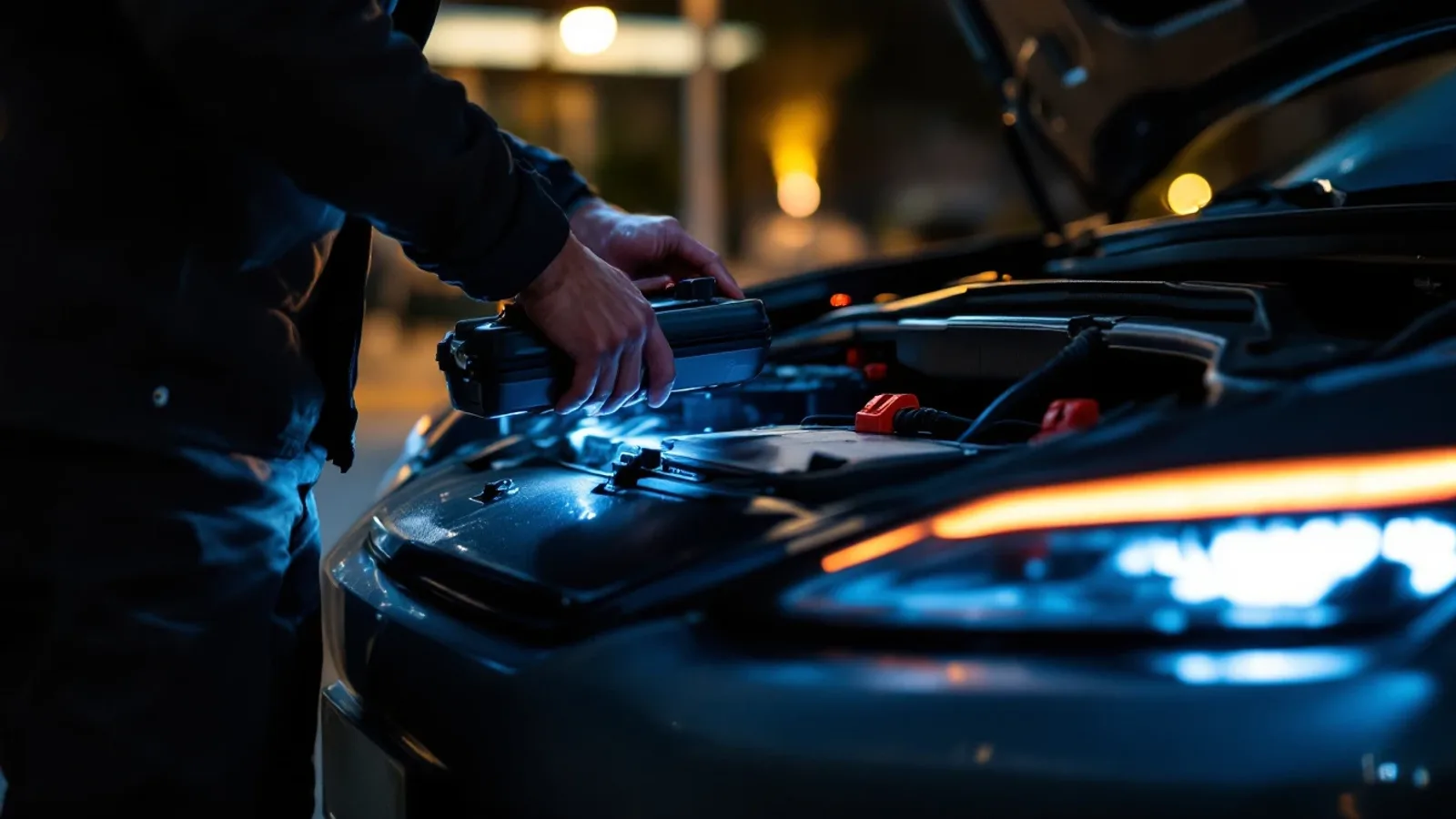
EV 12-Volt Battery Dead, Phone Key Won't Connect in Frisco, TX
When a luxury EV looks bricked in Frisco — frunk sealed, phone key dead, doors ignoring you — it is usually the 12-volt auxiliary battery, not the key. Here is how to tell.
Mercedes EQS & EQE Key Replacement in Frisco, TX: Keyless-Go, Spare & AKL
Mercedes-Benz EQ owners in Frisco: how to replace or add an EQS/EQE smart key, how Keyless-Go works, what all-keys-lost really involves, and honest pricing.