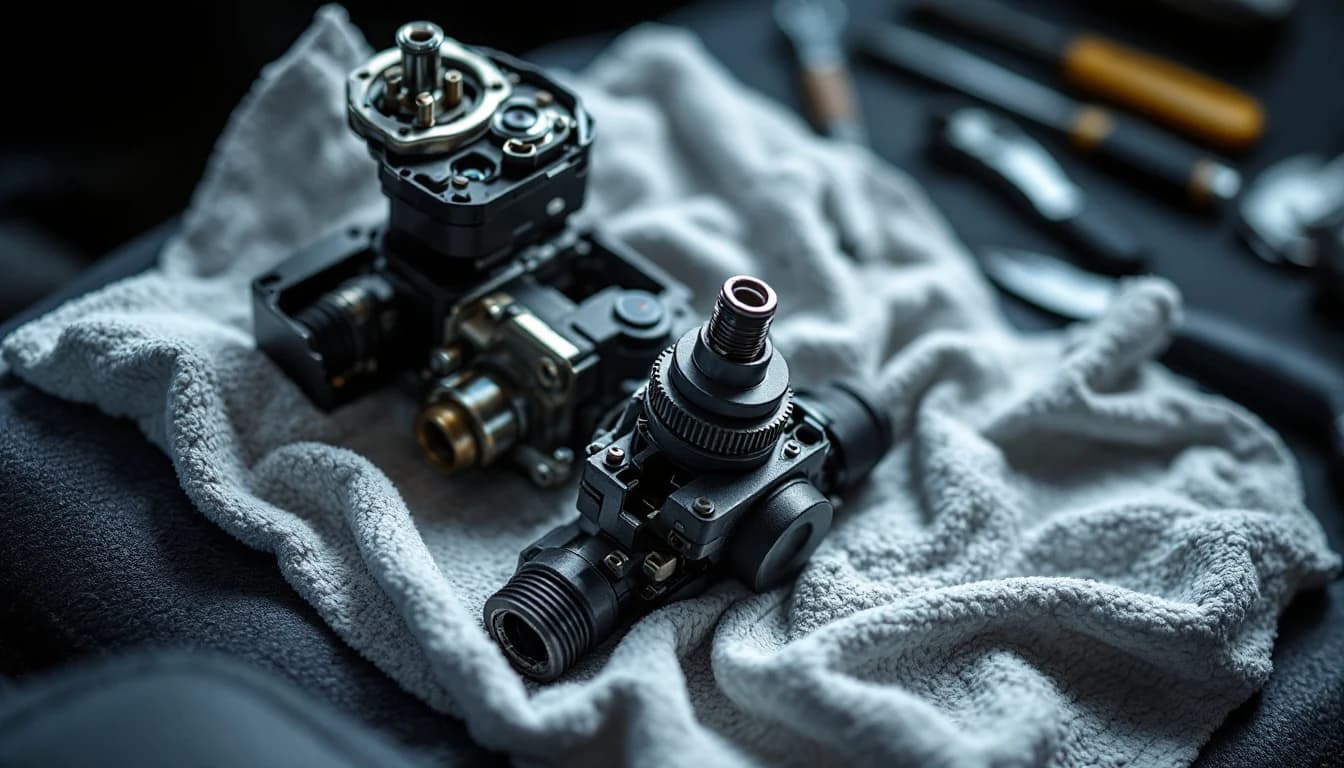
Chevrolet Impala & Malibu Ignition Switch Repair in Frisco, TX
2026 Chevrolet Impala & Malibu ignition switch repair in Frisco, TX. Key won't turn, worn cylinder, stuck key, mobile fix. Call (469) 402-9781.
Chevrolet Impala & Malibu Ignition Switch Repair in Frisco, TX
An ignition problem announces itself in a very specific way. One morning the key goes in like always and simply won't turn. Or it turns, but only after you jiggle the steering wheel and swear at it. Or worst of all, it turns fine and then won't come back out, leaving you standing in a Frisco parking lot with the car locked to a key you can't remove.
None of that is a key problem, even though it feels like one. It's a lock problem, and the fix is different.
Frisco Car Key is a fully mobile automotive locksmith. We come to the vehicle — which matters enormously for ignition work, because a car with a failed ignition usually can't be driven anywhere. As of July 2026 we handle Chevrolet ignition repair on the 2013–2026 Malibu and the 2014–2020 Impala: worn cylinders, keys that won't turn, keys stuck in the lock, and broken blades snapped off inside. Reach us at Frisco Car Key, (469) 402-9781, contact@friscocarkeys.com.
The Symptoms, Decoded
Ignition faults follow a fairly predictable progression, and where you are on that progression tells us a lot before we ever see the car.
Stage one: it works, but only sometimes. The key needs a wiggle. It turns more easily if you also move the steering wheel. It works on the first try in the morning and gives you trouble in the afternoon. Most owners live with this stage for months, which is understandable and also the cheapest time to fix it.
Stage two: it needs a specific technique. You've developed a ritual — push in slightly, lift, jiggle left, then turn. If you're teaching that ritual to your spouse, the lock is telling you something.
Stage three: it won't turn at all. The key inserts fully and simply won't rotate, or rotates a few degrees and stops.
Stage four: the key is stuck. It turned, but now it won't return to the position that lets it come out. Sometimes the car is still running. Sometimes it's off and the key is trapped.
Stage five: the blade snapped. A worn key in a worn cylinder eventually breaks, usually at the shoulder, leaving a fragment inside the lock. This is a separate job on top of the ignition repair — see our guide to broken car key extraction for why prying at it makes things worse.
If you're at stage one or two right now, the useful thing to know is that this doesn't get better on its own. Lock wear is cumulative and one-directional.
Worn Cylinder or Worn Key? The Diagnosis That Decides Everything
This is the most important distinction in the whole article, and it's the one that separates a modest bill from an unnecessary one.
An ignition cylinder is a set of spring-loaded wafers inside a rotating plug. Your key's cuts push each wafer to a precise height; when every wafer aligns, the plug can rotate. Over tens of thousands of cycles, two things wear simultaneously: the key's cuts get shallower and rounder, and the cylinder's wafers and springs get sloppy.
If the key is the problem, a freshly cut key — cut to the vehicle's original code rather than copied from your worn key — will operate the lock cleanly. That's the good outcome. It's inexpensive, and it's a legitimate fix rather than a band-aid.
If the cylinder is the problem, a new key will feel better for a week and then the symptoms come back, because the wafers and springs are worn past the point where any key can align them reliably. That needs cylinder repair or replacement.
A quick at-home test: if you have a spare key that's rarely been used, try it. A rarely-used spare is closer to the original cut. If the spare works noticeably better, your daily key is worn and a fresh cut may solve the whole problem. If the spare is just as bad, the cylinder is the culprit.
We run this diagnosis on every ignition call before quoting, because selling a cylinder replacement to someone who needed a $60 key is the kind of thing that gives this trade a bad name. The Federal Trade Commission advises consumers to insist on a clear explanation of the problem and itemized pricing before authorizing work — good advice generally, and especially here, where the two possible causes have very different price tags.
If the answer turns out to be a fresh key, that's key duplication or car key replacement work, not ignition work.
Why Impalas and Malibus Land in This Category
Two things put these particular vehicles in front of us regularly.
They're high-mileage, long-lived cars. The Malibu spans 2013 through the end of its run, and the Impala's final generation ran 2014–2020. Both were fleet and rental staples as well as family sedans, which means a large population of them are now well past the cycle count where an ignition cylinder starts protesting. An ignition that's been operated fifteen or twenty thousand times is a different mechanism than a new one.
Keyring weight. This is the single most underrated cause of ignition wear on any vehicle with a traditional cylinder. A heavy keyring hanging off the ignition applies constant downward leverage on the plug every time you drive over a Frisco speed hump. Multiply by years. The wear it causes is real, measurable, and completely preventable.
There's a third factor worth stating carefully: General Motors has issued safety recalls affecting ignition systems on various models over the years. Whether any specific recall applies to your VIN is something you should verify directly rather than take from a blog post. The National Highway Traffic Safety Administration maintains a free VIN-based recall lookup, and checking it takes about a minute. If an open recall covers your vehicle, that work is performed by a franchised dealer at no cost to you — and we'll tell you to go do that rather than charge you for something you're entitled to have done free.
Trim Matters: Cylinder vs. Push-Button
Not every Malibu in this range has a key you turn. Across the 2013–2026 span, Chevrolet moved progressively toward push-button start on higher trims and later model years, while many configurations retained a conventional ignition cylinder. The 2014–2020 Impala similarly shipped both arrangements depending on trim.
This matters because it changes the entire conversation:
- If you turn a key in a cylinder, everything in this guide applies. Wafer wear, stuck keys, broken blades, and cylinder replacement are all on the table.
- If you press a button, there is no cylinder to wear out. A "won't start" symptom on a push-button car is a key-recognition, immobilizer, or vehicle-electrical issue — a completely different diagnostic path, closer to what we cover in our Corvette C8 key fob replacement guide for GM's push-button architecture.
When you call, telling us which one you have gets you an accurate answer in the first minute instead of the fifth.
Chevrolet Impala & Malibu Ignition Repair Cost in Frisco, TX
These are our service bands. They're ranges, not quotes — the firm number comes after we diagnose whether the fault is the key, the cylinder, or something further upstream.
| Impala / Malibu Ignition Scenario | Typical Range | What Drives the Number |
|---|---|---|
| Fresh key cut to code (key was the problem) | $50–$300 | Cheapest outcome; no ignition work needed |
| Key extraction, blade snapped in cylinder | $150–$550 | Extraction difficulty and cylinder condition |
| Ignition cylinder repair or rebuild | $150–$550 | Parts condition and how far the wear has gone |
| Ignition cylinder replacement + key match | $150–$550 | New cylinder keyed to work with your existing key where possible |
| Replacement key + programming after ignition work | $85–$450 | Transponder programming when a new key is required |
| Lockout only (keys locked inside) | $75–$200 | Damage-free entry, unrelated to ignition |
| Electrical / module fault behind the ignition | $200–$800 | Only when the problem is upstream of the lock |
Why the ignition bands overlap. An ignition job on a well-maintained Malibu that's simply worn is at the low end. The same job on a car where a previous attempt damaged the housing, or where a snapped blade has been driven deeper by someone with pliers, sits at the high end. The condition we find when we arrive genuinely moves the number, which is why we quote a range on the phone and confirm it on site before starting.
The relevant service page is ignition repair. If the diagnosis points upstream to a control module rather than the lock, that's ECU and module programming.
What Mobile Ignition Repair Actually Looks Like
A lot of people assume an ignition problem means a tow. Usually it doesn't.
Phone triage. We ask which symptom stage you're at, whether you have a spare key, whether the key is currently stuck, and whether the car has a cylinder or a button. We also get the VIN, model year, and location.
On-site diagnosis. We test your key against the lock and, where possible, against the vehicle's original code. This is where the worn-key-versus-worn-cylinder question gets settled definitively rather than guessed at.
Extraction if needed. If a blade fragment is inside the cylinder, it comes out with proper extraction tools. Not pliers, not adhesive, not a screwdriver. The wrong tool converts a modest extraction into a full cylinder replacement.
Repair or replacement. Depending on wear, we rebuild the cylinder or replace it. Where the vehicle allows, we key a replacement cylinder to work with your existing keys so you don't end up carrying two different keys for one car.
Programming where required. If the job requires a new key, we handle the transponder programming so the immobilizer accepts it. On these vehicles the immobilizer is a real security layer — the Insurance Institute for Highway Safety publishes theft-loss research showing how meaningfully those systems changed loss patterns across the sedan segment, and a mechanically perfect key that the immobilizer rejects will still leave you sitting still.
Verification. Every position — off, accessory, on, start — tested repeatedly, plus key removal, before we leave.
The whole thing typically happens in your driveway or wherever the car is parked. No tow, no drop-off, no rental.
"Nine out of ten ignition calls on these cars come down to the same story: a heavy keyring and a hundred thousand cycles. The part people get wrong is waiting until the key won't turn at all. At the jiggling stage it's usually a cheap fix. At the snapped-blade stage it's a much bigger day." — a Frisco Car Key mobile locksmith technician credentialed for automotive immobilizer work
What Not to Do When the Key Won't Turn
Several instincts here make the problem substantially worse and more expensive.
Don't force it. A key that won't turn is telling you the wafers aren't aligned. Applying more torque doesn't align them — it bends or snaps the blade, converting a cylinder job into a cylinder job plus an extraction.
Don't use lubricating spray oil. General-purpose penetrating and lubricating oils attract dust and grit, which then forms a paste inside the lock. It feels better for two days and worse forever after. If you must lubricate, a dry graphite or a purpose-made lock lubricant is the correct product.
Don't hammer, pry, or use pliers on a stuck key. You will damage the plug face, the housing, or both.
Don't ignore the steering lock. On cars with a locking steering column, pressure on the wheel binds the ignition. Rock the steering wheel gently side to side while applying light, steady key pressure. This alone resolves a meaningful share of "won't turn" calls at no cost, and it's worth trying before you call anyone.
Don't leave a running car with a stuck key unattended. If the key won't come out and the engine is running, that's a call to make now, not tomorrow.
The Keyring Problem, Stated Plainly
If your Chevrolet has a traditional ignition cylinder and your car key shares a ring with house keys, a gym fob, a bottle opener, and a decorative charm, that weight is slowly destroying the lock. Every bump transmits leverage into the plug.
The fix costs nothing: put the car key on its own small ring or a quick-release, and carry everything else separately. On a vehicle already showing stage-one symptoms, this alone can noticeably slow the progression. It's the single most effective preventive step available to Impala and Malibu owners, and almost nobody does it.
Licensing, Verification, and Doing This Correctly in Texas
In Texas, locksmith and access-control companies operate under the Texas Department of Public Safety (DPS) Private Security Program. A legitimate mobile locksmith identifies the business clearly, is reachable at a real phone number and email, and verifies vehicle ownership before performing work that grants access to a vehicle.
Ignition work is access work. We verify ownership on every ignition and key job — photo ID plus registration, title, or a lease/finance agreement in your name. It takes a couple of minutes, and it's the same procedure that stops someone else from having your Malibu's ignition rebuilt to their key while you're at work.
The Associated Locksmiths of America (ALOA) sets the trade's professional and ethical standards, including that verification expectation. And when a job requires access to manufacturer-controlled security information — which it can, on the programming side of an ignition repair — the National Automotive Service Task Force (NASTF) administers the vetted channel through which qualified independent locksmiths obtain it. That framework is why an independent shop can legitimately do this work at all, rather than every ignition job routing to a dealership.
AAA has published guidance on roadside assistance and the real costs of vehicle ownership for decades, and the recurring theme applies neatly here: the preventable failures are the expensive ones. An ignition addressed at the jiggling stage is cheap. An ignition addressed after a blade snaps at 10 p.m. is not.
What to Have Ready for Your Ignition Appointment
- Valid government photo ID — driver's license, state ID, or passport.
- Proof of ownership — registration, title, or lease/finance agreement in your name.
- The 17-character VIN — through the windshield at the driver's-side base, on the door-jamb sticker, and on your registration.
- Every key you have — including old spares that live in a drawer. A rarely-used spare is diagnostic gold.
- The symptom, described honestly — "needs a jiggle" versus "won't turn at all" versus "key is stuck right now" are three different appointments.
- Cylinder or push-button — tell us which, so we bring the right approach.
- The vehicle's location — we come to it.
Serving Frisco and North Texas
We're fully mobile across Frisco, Plano, McKinney, Allen, The Colony, and Prosper. If you're locked out rather than dealing with an ignition fault, that's car lockout service. Learn more about our team or contact us.
Frequently Asked Questions
My Chevy Malibu key won't turn in the ignition — what's wrong?
Most often it's one of three things: the steering lock is binding, your key is worn, or the ignition cylinder's wafers are worn. Try rocking the steering wheel gently side to side while applying light, steady turning pressure — that resolves a surprising number of cases for free. If it persists, we diagnose on-site whether a fresh key cut to the vehicle's code fixes it or whether the cylinder itself needs repair, because those are very different bills.
How much does ignition switch repair cost for an Impala or Malibu in Frisco?
As of July 2026, ignition cylinder repair or replacement runs roughly $150–$550 depending on wear and condition, and extracting a snapped key blade falls in the same band. If the diagnosis shows your key is worn rather than the cylinder, a fresh key cut to code is $50–$300 — much cheaper. A replacement key needing transponder programming afterward runs $85–$450. We diagnose before quoting a final number.
Is it my key or my ignition cylinder?
Here's the free test: try a spare key that rarely gets used. A rarely-used spare is closer to the original factory cut. If it operates the lock noticeably better than your daily key, your daily key is worn and a fresh cut may solve everything. If the spare feels just as bad, the cylinder's wafers and springs are worn and no key will reliably align them.
My key is stuck in the ignition and won't come out — what do I do?
Don't force it, don't use pliers, and don't try to pry the trim. Make sure the vehicle is fully in the park position and the steering wheel isn't under tension, then apply gentle side-to-side wheel movement. If it still won't release, call us — a stuck key usually indicates cylinder wear that has reached the point where the plug won't return to the removal position, and forcing it typically snaps the blade and turns a moderate job into a large one.
Can you fix an ignition without towing my car anywhere?
Yes, in the great majority of cases. We're fully mobile and ignition work is performed at the vehicle, which is exactly the point — a car with a failed ignition usually can't be driven to a shop. We come to your driveway, your workplace lot, or wherever the vehicle sits in Frisco and the surrounding North Texas cities.
Does a new ignition cylinder mean I need new keys too?
Not always. Where the vehicle allows it, we key the replacement cylinder so your existing keys continue to work, which saves you from carrying two different keys for one car. When that isn't possible on a specific vehicle, a new key is cut and, if the vehicle uses a transponder, programmed so the immobilizer accepts it. We tell you which applies before we start.
Should I check for a recall before paying for ignition work?
Absolutely, and it takes about a minute. Run your VIN through the National Highway Traffic Safety Administration's free recall lookup. If an open safety recall covers your vehicle's ignition system, that repair is performed by a franchised dealer at no cost to you — and we'd rather tell you to go claim it than charge you for work you're entitled to have done free.
Ready to Fix Your Chevrolet Ignition in Frisco?
Whether your Malibu needs a jiggle to start, your Impala's key is stuck right now, or a blade has snapped off inside the cylinder, call or text (469) 402-9781 or email contact@friscocarkeys.com with your VIN, model year, and a description of the symptom. You'll get a real range on the phone, an honest key-versus-cylinder diagnosis on site, and fully mobile service across Frisco and North Texas.
References
- National Highway Traffic Safety Administration (NHTSA) — VIN-based safety recall lookup and vehicle safety research: https://www.nhtsa.gov
- National Automotive Service Task Force (NASTF) — secure data and vehicle access for independent technicians: https://www.nastf.org
- Associated Locksmiths of America (ALOA) — professional locksmith standards and ethics: https://www.aloa.org
- Insurance Institute for Highway Safety (IIHS) — vehicle theft loss research: https://www.iihs.org
- Federal Trade Commission (FTC) — consumer guidance on clear, itemized service pricing: https://www.ftc.gov
- AAA — roadside assistance and vehicle ownership cost guidance: https://www.aaa.com
Related Guides
Push-Start Ignition Knob Won't Turn? Causes and Fixes for Twist-Knob Keyless Cars in Frisco, TX
Some keyless cars start with a knob you twist instead of a button. When that knob will not turn, the cause is usually the steering lock, a weak fob, low battery voltage or the knob's own lock. Here is how to tell which, and what the fix costs.
Push-Button Start Stuck in Accessory Mode: Causes, Checks and Cost in Frisco, TX
The dash lights up, the radio plays, and the engine never starts. A diagnostic walkthrough of why a push-button car stops at accessory mode, what each cause costs to fix, and who to call.
Kia K5 and Stinger Ignition Repair in Frisco, TX: Key, Switch, or Steering Lock?
A Kia K5 or Stinger that will not crank is usually one of four separate faults, and only some of them are key problems. Here is how a mobile locksmith tells them apart in a Frisco driveway.