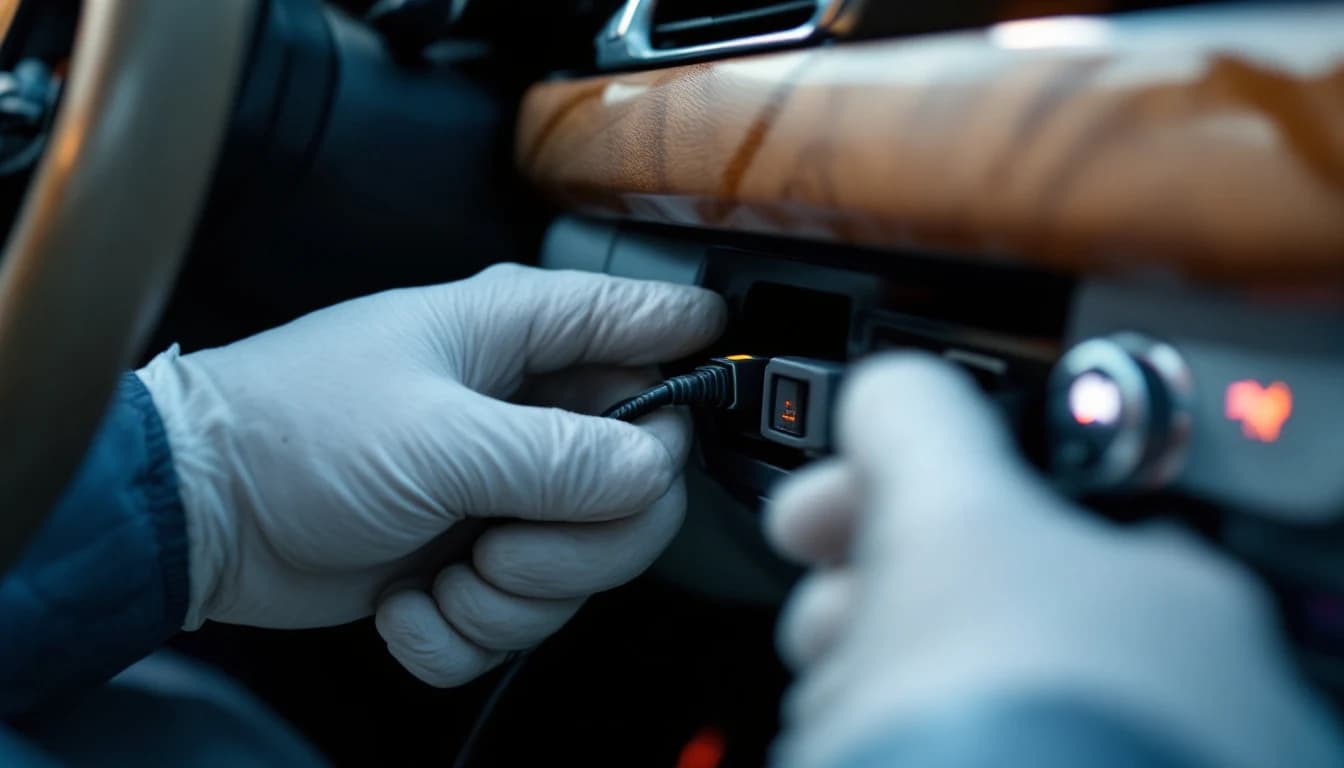
Genesis GV80 & G90 Module Programming in Frisco, TX: Immobilizer, SMK & BCM
2026 Genesis GV80 & G90 module programming in Frisco, TX. Immobilizer, SMK and BCM work explained, honest cost ranges. Call (469) 402-9781.
Genesis GV80 & G90 Module Programming in Frisco, TX
Most key problems are key problems. Some are not. When a Genesis GV80 or G90 refuses to recognize a fob that is demonstrably fine, throws intermittent no-start conditions, or loses door and access functions after an electrical event, the fault has usually moved upstream — into the immobilizer, the smart key unit, or the body control module. Replacing keys at that point solves nothing and costs money.
Frisco Car Key is a fully mobile automotive locksmith serving Frisco and North Texas. As of July 2026, module-level work on the 2019–2026 Genesis GV80 and G90 is a service we perform, with one firm rule: we diagnose before we quote, and we tell you honestly when a specific case belongs at a Genesis dealer instead. This guide explains what these modules do, how to tell a module fault from a key fault, what the work involves, and what it costs. Reach us at Frisco Car Key, (469) 402-9781, contact@friscocarkeys.com.
The Three Modules That Matter for Access and Start
Genesis vehicles distribute access, security, and start functions across several networked control units. Three of them dominate locksmith-adjacent work.
The immobilizer
The immobilizer is the anti-theft authority. It holds the cryptographic credentials the vehicle will accept and decides whether the engine is permitted to run. If it does not receive a valid response from an authorized key, the vehicle will not drive away — regardless of what the doors, dash, or infotainment are doing. This is the layer the National Highway Traffic Safety Administration (NHTSA) credits with a dramatic industry-wide reduction in drive-away theft, and Genesis implements it seriously as befits the segment.
When an immobilizer is replaced or has lost its stored key data, it must be adapted to the specific vehicle and re-taught which keys it trusts. That's programming work, not key cutting.
The smart key unit (SMK)
The SMK is the brain of the proximity system. It drives the low-frequency antennas that detect the fob at the door handles and inside the cabin, arbitrates which key is present, and coordinates with the start system. A failing SMK produces exactly the symptoms that make owners assume their fob died: intermittent detection, "key not detected" messages, handle-touch entry that works sometimes, a start button that responds inconsistently.
An SMK that has been replaced needs to be configured to the vehicle and paired with the key credentials. Otherwise you have a healthy new module that trusts nothing.
The body control module (BCM)
The BCM supervises the body electrical domain — doors, locks, lighting, windows, alarm behavior, and a great deal of the convenience logic. On a GV80 or G90 it also participates in access functions. BCM faults look like "the car is possessed": locks cycling, interior lighting behaving strangely, alarm triggering without cause, remote functions half-working.
A replaced BCM requires configuration to the vehicle's specific options and, depending on the case, re-establishment of its relationship with the security domain.
Key Fault or Module Fault? How to Tell
This distinction is the whole point of the article, because getting it wrong is expensive.
Points toward a key/fob problem:
- One fob misbehaves and a second fob works perfectly. That's about as conclusive as diagnostics get.
- Symptoms started gradually — reduced button range first, then unreliability, then nothing. That's a classic coin-cell decline curve.
- The documented backup start method works. Every push-to-start Genesis has a procedure to start with a dead fob battery by holding the fob at close range to the start button. If that works, the immobilizer and the transponder are both healthy.
- The fob took physical damage — a drop onto concrete, a washing machine cycle, a pool.
Points toward a module problem:
- Both fobs fail identically. Two independent keys rarely die the same way at the same time.
- Symptoms appeared after an electrical event — a dead 12-volt battery, a jump start, a battery replacement, an aftermarket electronics install, or water intrusion.
- Access functions are inconsistent in patterns that have nothing to do with the key: doors locking themselves, alarm faults, lighting oddities.
- A module was recently replaced by someone else and never configured.
- Diagnostic scanning shows immobilizer, SMK, or BCM communication faults or stored codes.
Points toward something else entirely:
- A weak or failing 12-volt vehicle battery causes symptoms that convincingly mimic both key and module faults. Voltage is the first thing to check on any modern luxury vehicle behaving oddly. It is astonishing how many "module failures" are a battery at the end of its life.
- A physical ignition or start-button mechanism fault is a mechanical problem covered by ignition repair, not programming.
We work through this ladder before quoting anything. Charging a customer for module programming when the answer was a $200 battery is not a business we're interested in running. Our companion guide on what to do when a push-to-start won't recognize the key fob walks through the same triage in more detail for any make.
"The diagnostic discipline on these cars matters more than the tooling. Two fobs failing the same way is a module conversation. One fob failing is a fob conversation. And a 12-volt battery at the end of its life will imitate either one convincingly. I check voltage before I check anything else, every single time." — a Frisco Car Key mobile locksmith technician credentialed for automotive immobilizer work
Genesis GV80 and G90 Module Programming Cost in Frisco, TX
Module work is priced by complexity, not by a flat menu item. The ranges below are our honest working bands. Your firm number comes after we confirm the VIN, read the vehicle's stored fault data, and establish which module is actually implicated.
| Genesis Service Scenario | Typical Range | What's Involved |
|---|---|---|
| Diagnostic scan and fault isolation | Quoted at booking | Determines whether it's key, module, or battery |
| Immobilizer adaptation / re-teach | $200–$800 | Adapting the security module and re-teaching keys |
| Smart key unit (SMK) configuration | $200–$800 | Pairing the proximity system to vehicle and keys |
| Body control module (BCM) configuration | $200–$800 | Configuring body/access functions to the vehicle |
| Smart key programming (module healthy) | $120–$500 | Standard proximity key work, no module fault |
| Key replacement after module repair | $85–$450 | New keys taught to the repaired security domain |
| Ignition mechanism repair | $150–$550 | When the physical start hardware is at fault |
| Genesis lockout (damage-free entry) | $75–$200 | Access only, no programming |
Why there are no per-model precise figures here. Genesis module work varies enormously between a straightforward SMK configuration and a case that requires manufacturer-controlled resources. Quoting a precise number sight-unseen would be a guess dressed up as a price. The Federal Trade Commission advises consumers to insist on clear, itemized pricing before authorizing work and to be wary of quotes that escalate after a technician arrives — a standard we apply to ourselves. Call with the VIN and symptoms and you'll get a real range and, after diagnosis, a real number.
Our ECU and module programming page covers the full scope of this service, and smart key programming covers the cases where the modules are healthy and it really is just a key.
What Independents Can Do — and Where the Dealer Is the Right Answer
Honesty here is more useful than salesmanship.
Genesis is Hyundai Motor Group's luxury division, and its security architecture is correspondingly robust. Independent access to manufacturer security information exists through a legitimate, vetted framework: the National Automotive Service Task Force (NASTF) administers the channel through which credentialed locksmiths obtain security data and vehicle access where the make and model support it. That framework is precisely why a properly credentialed mobile technician can perform real immobilizer and key work on these vehicles rather than everything defaulting to the dealership.
But the framework has boundaries, and they move with model year. On the newest Genesis vehicles, certain module operations — particularly those involving replacing a security-domain module outright, or cases where a module is cryptographically bound to the VIN — may require manufacturer-controlled resources that route through the dealer. When your specific case falls on that side of the line, we say so before dispatching, not after.
The practical rule we work by:
- Configuration and adaptation of modules the vehicle already accepts — commonly serviceable by a credentialed independent.
- Re-teaching keys to a repaired or restored security domain — commonly serviceable.
- Replacement of a security module on the newest platforms — verify first; frequently dealer-routed.
- Anything where a half-completed procedure could leave the vehicle undriveable — verified thoroughly before we start, or referred.
A partially completed immobilizer procedure on a luxury vehicle is worse than not starting. That's the reason for the caution, and it's why "quote after VIN confirmation" appears in our diagnostic line rather than a made-up number.
The GV80 and G90 Specifically
Genesis GV80
The GV80 is the brand's volume vehicle in North Texas and the one we see most. It's a technology-dense luxury SUV: proximity access, extensive comfort electronics, driver profiles, and a networked module architecture where a single failing unit produces symptoms across several apparently unrelated systems. Most GV80 calls that start as "my key doesn't work" resolve into one of three things — fob battery, 12-volt battery, or smart key unit — and telling them apart is a twenty-minute diagnostic rather than a guess.
Genesis G90
The G90 is the flagship sedan, and flagship means more electronic content: more comfort systems, more access features, more modules on the network. That density cuts both ways. Symptoms can be dramatic and confusing, but the underlying diagnostic logic is the same — isolate whether the fault is the credential, the module that reads the credential, or the power supply feeding both.
Model-year considerations
- 2019–2022. Established platforms with well-understood service paths. Broadly serviceable for configuration and key-domain work.
- 2023–2025. Updated electronics with the general architecture carried forward; confirmed against the VIN.
- 2026. The newest Genesis security stack. We verify serviceability first and refer honestly where manufacturer-controlled resources are genuinely required.
Why Owners End Up Here
The most common paths to a Genesis module conversation, in rough order of frequency:
- A dead or replaced 12-volt battery. Modern luxury vehicles are voltage-sensitive. A deep discharge or a rough jump start can corrupt module states or, in worse cases, damage electronics. This is the number one precursor, and it's why AAA roadside guidance emphasizes proper jump-start technique and battery maintenance on electronics-dense modern vehicles rather than treating a jump as a harmless quick fix.
- Aftermarket electronics. Remote starters, alarms, dashcams, and audio installs that tap the wrong circuits can create persistent faults. If your symptoms began within days of an install, mention that on the phone — it reframes the whole diagnosis.
- Water intrusion. A clogged sunroof drain or a windshield seal leak can put moisture where a module lives. Symptoms are often intermittent and worsen after rain.
- A used or salvage module fitted by someone else. A module pulled from another vehicle will not simply work; it carries the wrong configuration and, potentially, the wrong security binding. This is a common source of "I already had it replaced and it's still broken."
- Genuine component failure. Electronics do fail. It's less common than the four causes above, but it happens.
Verification, Licensing, and Doing This Correctly
Automotive locksmiths in Texas operate under the Texas Department of Public Safety (DPS) Private Security Program, which is the license to verify before letting anyone work on your vehicle's security systems. On a vehicle in this price bracket, the professional baseline should be non-negotiable: business identified by name, insurance carried, vehicle ownership verified before any security-domain work, and a clear quote provided before the work is authorized.
Ownership verification is especially important with module and immobilizer work, because that work touches the vehicle's anti-theft authority directly. Professional standards published by the Associated Locksmiths of America (ALOA) treat this as a floor obligation of the trade. The electronic security is genuinely effective — the Insurance Institute for Highway Safety (IIHS) has documented the measurable theft-rate differences anti-theft technology produces — but that protection depends on technicians refusing to perform security work for people who cannot demonstrate they own the vehicle.
What to Have Ready
- Valid government photo ID.
- Proof of ownership — registration, title, or lease/finance agreement in your name.
- The 17-character VIN — windshield base at the driver's side, door-jamb sticker, or your registration.
- A precise symptom history — when it started, what changed just before, whether it's intermittent or constant, and whether it correlates with weather, temperature, or a recent service.
- How many fobs you have and whether each one behaves the same way. This single data point often determines the diagnosis.
- Any recent electrical work — battery replacement, jump start, aftermarket install, collision repair, or a module fitted by another shop.
That last item is the one owners most often forget to mention and the one that most often explains everything.
Serving Frisco and North Texas
We're fully mobile throughout Frisco, Plano, McKinney, Allen, The Colony, and Prosper. Diagnosis and, where the case is serviceable, the programming itself happen at your location. If a Genesis genuinely needs the dealer, you'll know before we dispatch — and we're still an all-makes locksmith for everything else in your driveway. Learn more about our team or contact us to schedule.
Owners increasingly ask about phone-based digital keys as a backup for exactly these situations, which we address in our guide comparing digital keys and physical fob backups. The short version: a digital key is a convenience layer, not a substitute for a working physical credential — and it depends on the same modules discussed here.
Frequently Asked Questions
How do I know whether my Genesis needs module programming or just a new key?
The most reliable indicator is behavior across multiple fobs. If one fob fails and a second works perfectly, it's a key problem. If both fobs fail identically, the fault is almost certainly upstream in the smart key unit, immobilizer, or body control module. Also check whether symptoms began after an electrical event like a dead battery or jump start — that history points strongly toward a module issue. We run a diagnostic scan before quoting so you're not paying for the wrong repair.
What does Genesis module programming cost in Frisco?
As of July 2026, immobilizer, smart key unit, and body control module work falls in the $200–$800 range depending on which module is involved and how much configuration and key re-teaching is required. If the modules turn out to be healthy and it's a straightforward key issue, smart key programming runs $120–$500 instead. We diagnose first and give you a firm number before authorizing anything, because quoting module work sight-unseen would be a guess.
Can a mobile locksmith do this, or does it have to be the Genesis dealer?
A credentialed mobile locksmith can perform many module configuration, immobilizer adaptation, and key re-teach operations on the GV80 and G90 through the legitimate independent security-information channel. Some cases — particularly replacing a security-domain module on the newest model years — can require manufacturer-controlled resources that route through the dealer. We verify your specific VIN and situation before dispatch and tell you honestly which side of that line you're on.
My GV80 started acting up right after a jump start. Is that related?
Very likely, yes. Modern luxury vehicles are sensitive to voltage events. A deep discharge or an improper jump can leave modules in a corrupted state or, less commonly, damage electronics outright. The first step is confirming the 12-volt battery itself is genuinely healthy, because a failing battery will keep producing the same symptoms no matter what else gets programmed. Mention the jump start when you call — it changes the diagnostic order.
Both of my Genesis fobs stopped working at once. What does that mean?
Two independent keys almost never fail simultaneously by coincidence. That pattern points at the vehicle rather than the keys — most often the smart key unit that reads them, the immobilizer, or the power supply feeding both. Before assuming the worst, verify the 12-volt battery, since low system voltage produces exactly this symptom. Then a diagnostic scan isolates which module is implicated.
Do you handle module work at my home or office?
Yes. Diagnosis and, where the case is serviceable, the programming itself are performed at your location anywhere in Frisco and the surrounding communities. There's no shop to drive to. If the diagnosis reveals a case that genuinely requires dealer resources, we tell you before dispatching so you aren't paying for a trip that couldn't have finished the job.
Someone already replaced a module and the car still doesn't work. Can you fix it?
Often, yes — and this is one of the more common calls we get. A module fitted without proper configuration will not simply work; it needs to be adapted to your specific vehicle's options and, if it sits in the security domain, brought into a correct relationship with the immobilizer and key credentials. Bring documentation of what was replaced and by whom. If the module was sourced used from another vehicle, tell us, because that changes what's possible.
Ready to Diagnose Your Genesis Correctly?
Guessing is what makes module problems expensive. Frisco Car Key diagnoses before quoting, performs the work on site where it's serviceable, and refers you honestly to the dealer when that's genuinely the right call. Call or text (469) 402-9781 or email contact@friscocarkeys.com with your VIN, model year, symptom history, and whether one or both fobs are affected — and we'll tell you what you're actually dealing with.
References
- National Highway Traffic Safety Administration (NHTSA) — immobilizer technology and vehicle theft prevention: https://www.nhtsa.gov
- National Automotive Service Task Force (NASTF) — secure data and vehicle access for independent technicians: https://www.nastf.org
- Associated Locksmiths of America (ALOA) — professional locksmith standards and ethics: https://www.aloa.org
- Insurance Institute for Highway Safety (IIHS) — anti-theft technology effectiveness research: https://www.iihs.org
- Federal Trade Commission (FTC) — consumer guidance on itemized pricing and service authorization: https://www.ftc.gov
- AAA — vehicle electrical system and roadside preparedness guidance: https://www.aaa.com
Related Guides
SMARTRA Immobilizer Programming Frisco | Expert Service
A deep technical look at the SMARTRA immobilizer control module used across Hyundai and Kia — how it pairs to the engine controller, why the security code matters, and what module-level work really involves in Frisco.
Jeep Wagoneer and Grand Wagoneer Module Programming in Frisco, TX: RF Hub, BCM, and the Secure Gateway
On a Wagoneer the key is the smallest part of the problem. The RF Hub, the body control module, the cluster, and the secure gateway all have to agree, and a used module bought online usually will not.
Subaru Solterra and Crosstrek Immobilizer Module Programming in Frisco, TX: One Badge, Two Security Families
The Solterra is an EV co-developed with Toyota and carries Toyota's security architecture. The Crosstrek is Subaru's own. Same badge, two immobilizer families, and two different answers when a module has to be programmed.