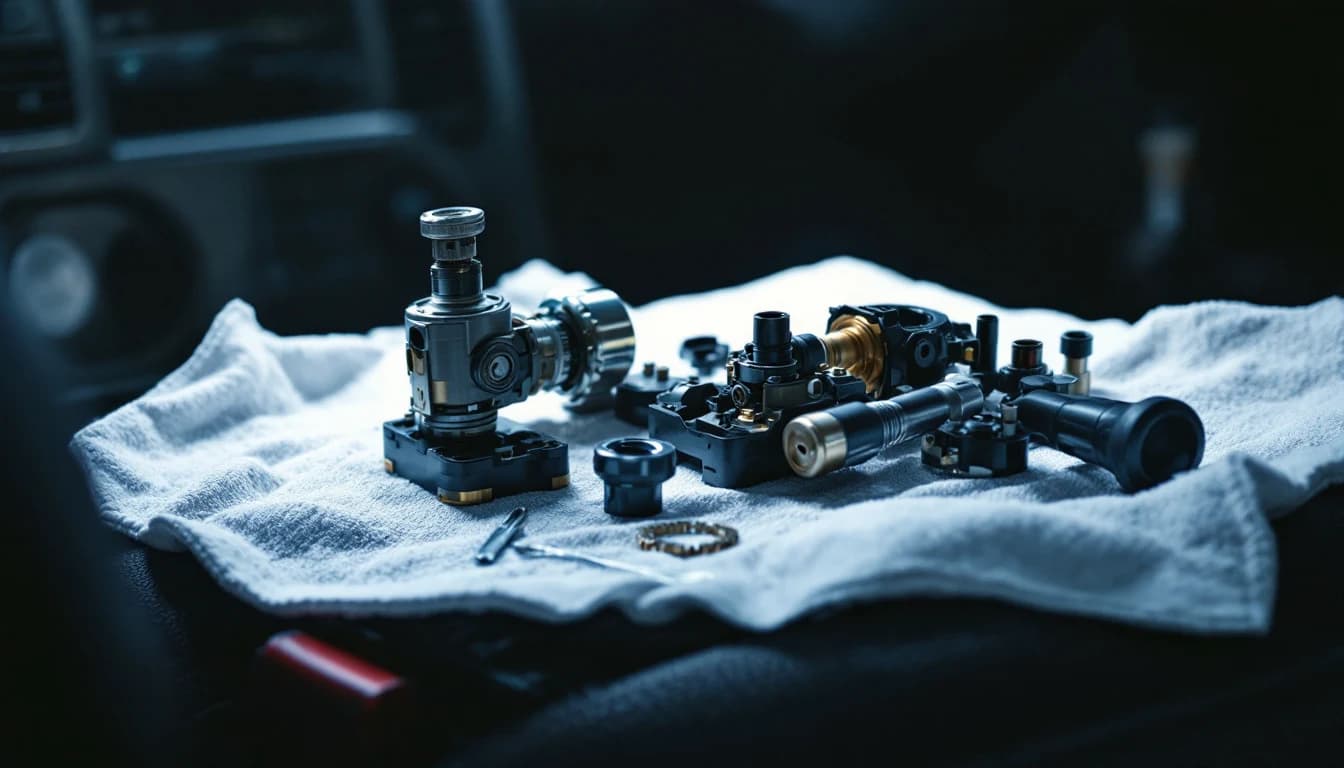
Jeep Grand Cherokee & Dodge Durango Ignition Repair in Frisco, TX
2026 Jeep Grand Cherokee & Dodge Durango ignition repair in Frisco, TX. Key won't turn, WIN module wear, honest ranges. Call (469) 402-9781.
Jeep Grand Cherokee and Dodge Durango Ignition Repair in Frisco, TX
There is a specific moment every Grand Cherokee and Durango owner dreads. You slide the key into the ignition, give it the turn you have given it ten thousand times, and nothing happens. The key does not rotate. Or it rotates halfway and stalls. Or it turns, the dash lights up, and the engine refuses to crank while a small vehicle-security icon blinks at you from the cluster. Three completely different faults, three completely different repairs, and one very stuck SUV in a Frisco driveway.
Frisco Car Key is a fully mobile automotive locksmith. We come to the vehicle, because a Jeep whose key will not turn is a Jeep that is not going anywhere on its own. As of August 2026, Grand Cherokee and Durango ignition complaints are among the most common non-lockout calls we take in Collin and Denton counties, and the reason is structural: these two SUVs share a platform lineage, share an ignition architecture, and share the same handful of wear patterns. Call or text (469) 402-9781 and we will start with diagnosis rather than a parts guess.
Quick Answer
If your Jeep Grand Cherokee or Dodge Durango key will not turn, the cause is almost always one of five things: a worn key, a worn or contaminated ignition lock cylinder, a steering column lock binding under wheel pressure, a shifter or brake interlock that has not released the ignition, or a failed Wireless Ignition Node on 2011-and-newer models. A spare key that works normally points at key wear. Both keys failing the same way points at the cylinder or node. A key that turns but produces no crank and a flashing security light is an immobilizer or electrical fault, not a mechanical one. Diagnosis costs far less than replacing the wrong part, and mobile ignition work in Frisco generally runs $150 to $550 depending on which of those five it turns out to be.
Frisco Pricing for Jeep and Dodge Ignition Work
These are honest ranges, current as of August 2026, not quotes. Your firm number comes after we see the vehicle, confirm the VIN, and identify which failure mode you actually have.
| Jeep / Dodge Ignition Scenario | Typical Range | Notes |
|---|---|---|
| On-site ignition diagnosis | Included in service call | Identifies key vs cylinder vs node vs interlock |
| Ignition lock cylinder repair or replacement | $150-$550 | Older SKIM-era columns with a true cylinder |
| Wireless Ignition Node related work | $150-$550 | 2011+ WK2 / WD; confirmed after inspection |
| New key cut and programmed to the vehicle | $85-$450 | Transponder or fob-ignition key, model dependent |
| Spare key duplication with a working original | $50-$300 | The cheapest insurance you will ever buy |
| Immobilizer / module programming | $200-$800 | When the fault is electronic, not mechanical |
| Lockout, key locked inside | $75-$200 | Damage-free entry, no ignition work involved |
Publishing a single flat "Jeep ignition repair price" would be misleading, because a sticky cylinder on a 2006 Grand Cherokee and a Wireless Ignition Node concern on a 2016 Durango are not the same job or the same parts cost. The Federal Trade Commission tells consumers to insist on itemized pricing before authorizing automotive work, and that is exactly how we operate: diagnose, explain, quote, then repair.
How the Ignition Actually Works on These Two SUVs
The Grand Cherokee and Durango have shared engineering DNA for two decades, and the ignition story splits into three clear eras. Knowing which era your truck belongs to explains most of what happens next.
The SKIM Era: Conventional Lock Cylinder Plus Transponder
On the earlier Grand Cherokee generations and their Durango contemporaries, the ignition is a genuine mechanical lock cylinder. Cut wafers inside the cylinder read the cuts on your key blade. Turn far enough and the cylinder rotates a mechanical actuator that runs the electrical ignition switch behind it. Separately, a Sentry Key Immobilizer Module reads a transponder chip embedded in the key head through an antenna ring around the lock. The mechanical half decides whether the key turns; the electronic half decides whether the engine is allowed to run.
That split matters enormously for diagnosis. A worn cylinder stops the key from turning. A transponder or module fault lets the key turn perfectly while the engine cranks and immediately stalls, or refuses to start at all with the security telltale flashing. Two totally different symptom sets, and confusing them is how owners end up buying parts they did not need.
The SKREEM Transition
Between those eras, Chrysler consolidated the immobilizer and the remote keyless entry receiver into one module often referred to as SKREEM. Functionally, for the driver, nothing changed: turn the key, the module checks the chip, the engine starts. For a locksmith it changed where the security data lives and how keys get added. The mechanical lock cylinder was still a lock cylinder, and it still wore out the same way.
The Wireless Ignition Node Era: 2011 and Newer
This is the big one, and it is where most Frisco calls land. Beginning with the WK2 Grand Cherokee and the WD Durango, the ignition became a Wireless Ignition Node, usually shortened to WIN. On key-start trims you insert a fob-style key into a slot in the node and rotate it. On push-button trims, there is no slot to turn at all.
The critical thing owners need to understand is that a WIN is not simply a lock cylinder with a new name. It integrates the ignition switching function, the antenna that talks to the key, and immobilizer duties into a single electronic assembly on the steering column. When a WIN develops a fault, the symptoms can look mechanical, look electrical, or look like both at once. Common complaints include the key refusing to rotate out of the run position, the key becoming physically stuck in the node, intermittent no-crank episodes, and messages about the key not being detected.
Because a WIN is an electronic module tied to the vehicle, replacing one is not a bolt-in operation. A replacement node has to be configured to the vehicle before it will accept your keys, and the vehicle's stored security data governs the whole process. That is a substantially different conversation from swapping a purely mechanical cylinder, and any honest shop should tell you so before it touches the column.
The Modern Push-Button Platforms
The newest Grand Cherokee generation and the current Durango trims move fully to push-button start with proximity keys, no rotating ignition at all. On these vehicles, "my ignition will not turn" is not a possible complaint. Instead you get "the truck will not detect my key" or "it will not come out of Park." Those are diagnostic paths through the body electronics and the key itself, not through a lock cylinder. On the newest platforms with a secure gateway sitting between the diagnostic port and the vehicle network, a technician confirms your exact setup after VIN before promising a same-visit result.
Common Jeep and Dodge Ignition Problems We See
Real calls from real Frisco driveways, in rough order of frequency.
The key will not turn at all, and the steering wheel has tension on it. This is the single most common cause and the least expensive. When you park on a crowned street or with the wheels turned against a curb, spring tension loads the steering column lock pin. That pin binds the cylinder. Rocking the wheel gently left and right while applying light, steady turning pressure to the key frequently frees it. If that works every time, nothing is broken. If it used to work and now does not, the lock mechanism has probably started to wear.
The key turns partway, then stops. Classic wafer wear. Every insertion drags brass and steel against brass and steel, and after a decade of daily cycles the wafers no longer sit in their intended positions. Sometimes an aggressively worn key makes it worse; sometimes a heavy keychain has been levering on the cylinder for years. The American Automobile Association has long advised drivers to keep ignition keys on a light ring for exactly this reason, and on Chrysler-family columns that advice is more than theoretical.
The key is physically stuck in the ignition. On older columns this often traces to the shifter interlock, which is supposed to prevent key removal unless the transmission is truly in Park. If the vehicle is not fully seated in Park, or if the interlock cable or solenoid has failed, the key stays captive. On WIN-equipped trucks, a stuck key can also indicate an issue inside the node itself. The fix depends entirely on which one it is, which is why we diagnose before quoting.
The key turns fine but the engine will not crank, and a security icon flashes. This is not an ignition repair. This is the immobilizer refusing to authorize the start, and it points at the key's transponder, the antenna, or the security module. Replacing a lock cylinder here would accomplish nothing except emptying your wallet.
Intermittent dead-dash episodes. The truck works, then one morning nothing wakes up, then later it works again. On these platforms that pattern frequently traces to the ignition switch contacts or, on newer trucks, the node. Intermittent faults are the hardest to prove, and honest diagnosis sometimes means we tell you to call us the moment it happens again rather than guessing on a good day.
"The mistake I see most often on Grand Cherokees is an owner buying an ignition cylinder online because a forum said that was the fix, when the actual problem was a worn key or a steering lock binding. Five minutes with a freshly cut key and a wheel-rock test answers the question. Parts are the last step, not the first." - a Frisco Car Key mobile locksmith technician credentialed for automotive immobilizer work
Worn Key or Worn Cylinder: The Diagnostic That Saves Money
This is the highest-value ten minutes of the entire visit, and you can start it yourself before we arrive.
Test one: the spare. If you have a second key that has spent its life in a drawer, try it. A drawer key has almost no wear. If the drawer key turns the ignition smoothly while your pocket key struggles, the cylinder is fine and your daily key has simply worn down. A new key cut to the vehicle's factory code, not copied from the worn key, solves the entire complaint.
Test two: the door lock. Your Jeep's door lock and ignition were typically cut to the same code from the factory, but the ignition sees vastly more cycles than the driver's door. If the key operates the door cylinder crisply and only the ignition fights back, that asymmetry points at ignition wear rather than key wear.
Test three: the wheel rock. Apply light turning pressure to the key, then rock the steering wheel firmly left and right. If the key suddenly turns, you found a binding column lock, not a dead cylinder.
Test four: does anything electrical change? If turning the key produces no dash illumination whatsoever at any position, you may be looking at an electrical switch or node problem rather than a mechanical one.
The single biggest mistake we correct in the field is a copied key. When a locksmith or a hardware kiosk duplicates a worn key, they copy the wear. The new key is born already worn out. Cutting to the original factory code, which we can derive from the vehicle, produces a key at full factory dimension. On a marginal cylinder, that alone frequently restores normal operation. Our key duplication and car key replacement services both start from that principle.
The Repair Process, Step by Step
- Phone triage. Year, model, trim, key-start or push-button, whether you have a spare, and exactly what the key does when you turn it. That conversation alone narrows the field to one or two causes.
- On-site inspection. We examine the key blade for measurable wear, test the door cylinder for comparison, check the steering lock and shifter interlock, and observe what the cluster does at each key position.
- Cut a key to code where indicated. If wear is the story, a factory-dimension key is the fix, and it costs a fraction of a cylinder job.
- Service or replace the lock cylinder where indicated. On cylinder-equipped columns, we can service or replace the cylinder on-site and key it so your existing keys still work where the design allows.
- Address electronic faults honestly. If the fault sits in the immobilizer, the node, or the switch, we tell you what the work involves and what it costs through our ECU and module programming service, and we tell you plainly when a specific truck belongs at a dealer instead.
- Verify. Every position, every accessory, a real start, and key removal, before we leave.
The Honest Boundary
Here is what we will not do. We will not tell you a Wireless Ignition Node concern is a fifteen-minute cylinder swap, because it is not. We will not quote a flat price sight unseen on an intermittent electrical fault, because nobody can honestly do that. And we will not blur the line between programming a module and replacing one: teaching an existing module to accept a new key is a fundamentally different job from installing new hardware and configuring it to your VIN, and the two carry different costs and different risks.
On the newest Grand Cherokee and Durango platforms, the vehicle network sits behind a secure gateway, and legitimate access to it flows through manufacturer-sanctioned channels. The National Automotive Service Task Force exists precisely to give vetted independent technicians a lawful route to security information and vehicle access where a manufacturer supports it. Where that support exists, we can work. Where it does not, the dealer is the correct answer and we will say so rather than take your money for a partial result.
For a look at how these same principles play out on a different manufacturer's column hardware, our write-ups on Chevrolet Impala and Malibu ignition switch repair and on Chrysler Pacifica and Voyager key fob replacement cover closely related territory in the same Chrysler and GM families.
Why This Matters More Than It Sounds
A vehicle that will not start is a safety issue, not just an inconvenience. The National Highway Traffic Safety Administration tracks how vehicle electronic security systems reduced drive-away theft dramatically, and the Grand Cherokee and Durango immobilizer architecture is part of that success story. The tradeoff is that a security system doing its job correctly and a security system malfunctioning can look identical from the driver's seat. The Insurance Institute for Highway Safety documents the same effectiveness pattern across the industry. That is why the right response to a no-start on these SUVs is diagnosis by someone who understands the security architecture, not a parts-cannon approach.
There is also a quieter argument for acting early. Ignition cylinders and switches rarely fail all at once. They get sticky, then stickier, then one morning they do not turn at all, and by then you are stranded rather than scheduling. If your key already needs jiggling, that is the vehicle telling you it has a plan for your worst possible morning.
Serving Frisco and the Surrounding North Texas Communities
Because we are fully mobile, we come to your driveway, your office lot, your kid's practice field, or wherever the Jeep decided to quit. We regularly service Frisco, Plano, McKinney, Allen, The Colony, and Prosper. Learn more about our team or contact us to schedule.
In Texas, locksmith and access-control companies operate under the Texas Department of Public Safety Private Security Program. We verify vehicle ownership before performing any key or ignition work, which is both a legal expectation and simple ethics. The Associated Locksmiths of America treats that verification as foundational to the trade, and so do we.
Frequently Asked Questions
Why won't my Jeep Grand Cherokee key turn in the ignition?
The five realistic causes are a worn key, a worn ignition lock cylinder, a steering column lock binding under wheel tension, a shifter or brake interlock that has not released, and on 2011-and-newer trucks a fault inside the Wireless Ignition Node. Start by rocking the steering wheel while applying light turning pressure, and by trying a spare key that has not been worn down in a pocket. If the spare works and the wheel-rock trick helps, you likely have wear rather than failure, which is the least expensive outcome.
Is the Wireless Ignition Node the same as an ignition lock cylinder?
No, and that difference drives the cost. A traditional lock cylinder is a mechanical device with wafers that read your key blade. The Wireless Ignition Node on 2011-and-newer Grand Cherokees and Durangos is an electronic assembly that combines ignition switching, key detection, and immobilizer duties in one unit on the steering column. Replacing one requires configuring it to the vehicle, not just bolting it in, so anyone quoting it like a simple cylinder swap is not describing the actual job.
My key turns but the engine won't start and a security light flashes. Is that an ignition repair?
No. That symptom set points at the immobilizer system rather than the mechanical ignition. The key rotating proves the cylinder or node is doing its mechanical job; the flashing security telltale means the vehicle is refusing to authorize the engine. The fault typically sits in the key's transponder, the antenna that reads it, or the security module. Replacing an ignition cylinder would not resolve it, which is why we diagnose before recommending any part.
How much does Jeep or Dodge ignition repair cost in Frisco?
As of August 2026, ignition repair in our service area generally runs $150 to $550 depending on whether the fix is mechanical or electronic and which platform you have. A new key cut and programmed runs $85 to $450, and duplicating a spare from a working original runs $50 to $300. Module-level programming, when that is genuinely the fault, runs $200 to $800. We diagnose on-site and quote a firm number before any work begins.
If the fault turns out to be in the keyless ignition node or the immobilizer rather than the cylinder, the same module family appears across the brand's trucks and cars; our guide to Dodge Ram and Charger SKIM and WIN module programming covers that side of the diagnosis.
Can you make a Jeep or Dodge key on-site if the ignition is fine but I lost my keys?
In most cases yes. We can cut a key to the vehicle's factory code and program it to the immobilizer at your location for a wide range of Grand Cherokee and Durango model years. Newer platforms sitting behind a secure gateway require confirmation against your VIN first, and a technician confirms your exact setup before we dispatch so you are never charged for a trip that could not be completed.
Will replacing my ignition mean I need new keys too?
Not always. On columns with a serviceable mechanical cylinder, we can frequently key the replacement to your existing key so nothing else changes. When that is not possible for a given design, you would receive new keys programmed to your vehicle as part of the job. We tell you which situation applies before we start, because it affects both the price and how many keys you walk away with.
Should I fix a sticky ignition now or wait until it fails?
Fix it now. Ignition cylinders and switches almost never fail without warning; they get progressively harder to turn over weeks or months. A key that needs jiggling is a scheduled repair. A key that will not turn at all on a Monday morning is a stranded vehicle plus a rush service call. The repair itself does not get cheaper by waiting, and the circumstances almost always get worse.
Get Your Jeep or Dodge Ignition Diagnosed in Frisco
Frisco Car Key comes to you, diagnoses the actual fault, and quotes the real repair rather than the most expensive one. If it is a worn key, we will tell you it is a worn key. If it is a Wireless Ignition Node, we will explain exactly what that involves. Call or text (469) 402-9781 or email contact@friscocarkeys.com with your year, model, and a description of what the key does, and we will bring the right tools the first time. We also handle ignition repair and car lockout service across Frisco and North Texas.
References
- National Highway Traffic Safety Administration (NHTSA) - vehicle theft prevention and immobilizer technology: https://www.nhtsa.gov
- National Automotive Service Task Force (NASTF) - secure data and vehicle access for independent technicians: https://www.nastf.org
- Associated Locksmiths of America (ALOA) - professional locksmith standards and ownership verification: https://www.aloa.org
- Insurance Institute for Highway Safety (IIHS) - anti-theft system effectiveness research: https://www.iihs.org
- Federal Trade Commission (FTC) - consumer guidance on automotive repair pricing: https://www.ftc.gov
- AAA - roadside and automotive locksmith guidance for drivers: https://www.aaa.com
Related Guides
Push-Button Start Stuck in Accessory Mode: Causes, Checks and Cost in Frisco, TX
The dash lights up, the radio plays, and the engine never starts. A diagnostic walkthrough of why a push-button car stops at accessory mode, what each cause costs to fix, and who to call.
Kia K5 and Stinger Ignition Repair in Frisco, TX: Key, Switch, or Steering Lock?
A Kia K5 or Stinger that will not crank is usually one of four separate faults, and only some of them are key problems. Here is how a mobile locksmith tells them apart in a Frisco driveway.
Nissan 370Z, Z, and Maxima Ignition Repair in Frisco, TX: Steering Lock, Dead Key, or Real Ignition Fault
A Nissan that clicks, flashes a steering lock warning, and refuses to start is usually one of three separate faults. Here is how to tell an electronic steering lock failure from a dead Intelligent Key or a genuinely worn ignition, and what a mobile locksmith can fix on site.